Blog
Lyophilization: Why Peptides Are Freeze-Dried

Open almost any peptide vial and you will find a small amount of white powder or a light, flaky cake rather than a liquid. That form is the result of lyophilization, better known as freeze-drying. Understanding why peptides are shipped this way explains a lot about how to store them, why they last, and what to expect when your order arrives.
What lyophilization is
Lyophilization is a drying method that removes water from a frozen product without letting it pass through the liquid stage. It works in three broad steps. First, the peptide solution is frozen solid. Second, the pressure around it is lowered and gentle heat is applied so that the frozen water turns straight from ice into vapour, a process called sublimation. Third, a final drying phase pulls out the last traces of moisture. The result is a dry, stable cake of peptide with almost no water left in it.
The reason this matters is that water is the enemy of peptide stability. Peptides in solution are far more vulnerable to breakdown than peptides kept dry. By removing the water without harsh heat, lyophilization preserves the delicate molecule while making it shelf-stable.
Why freeze-drying is used for peptides
A few practical advantages make lyophilization the standard for peptides:
- Stability. A dry peptide is much more resistant to degradation than one sitting in liquid, so it keeps far longer.
- Gentle process. Because the water is removed at low temperature, the peptide is not cooked or damaged the way high-heat drying might.
- Easy shipping and storage. A dry powder is lightweight, does not need to be kept as cold as a solution, and travels well.
- Precise reconstitution. A known amount of dry peptide can be dissolved in a chosen volume of liquid when it is needed, giving a defined concentration for research use.
What the powder should look like
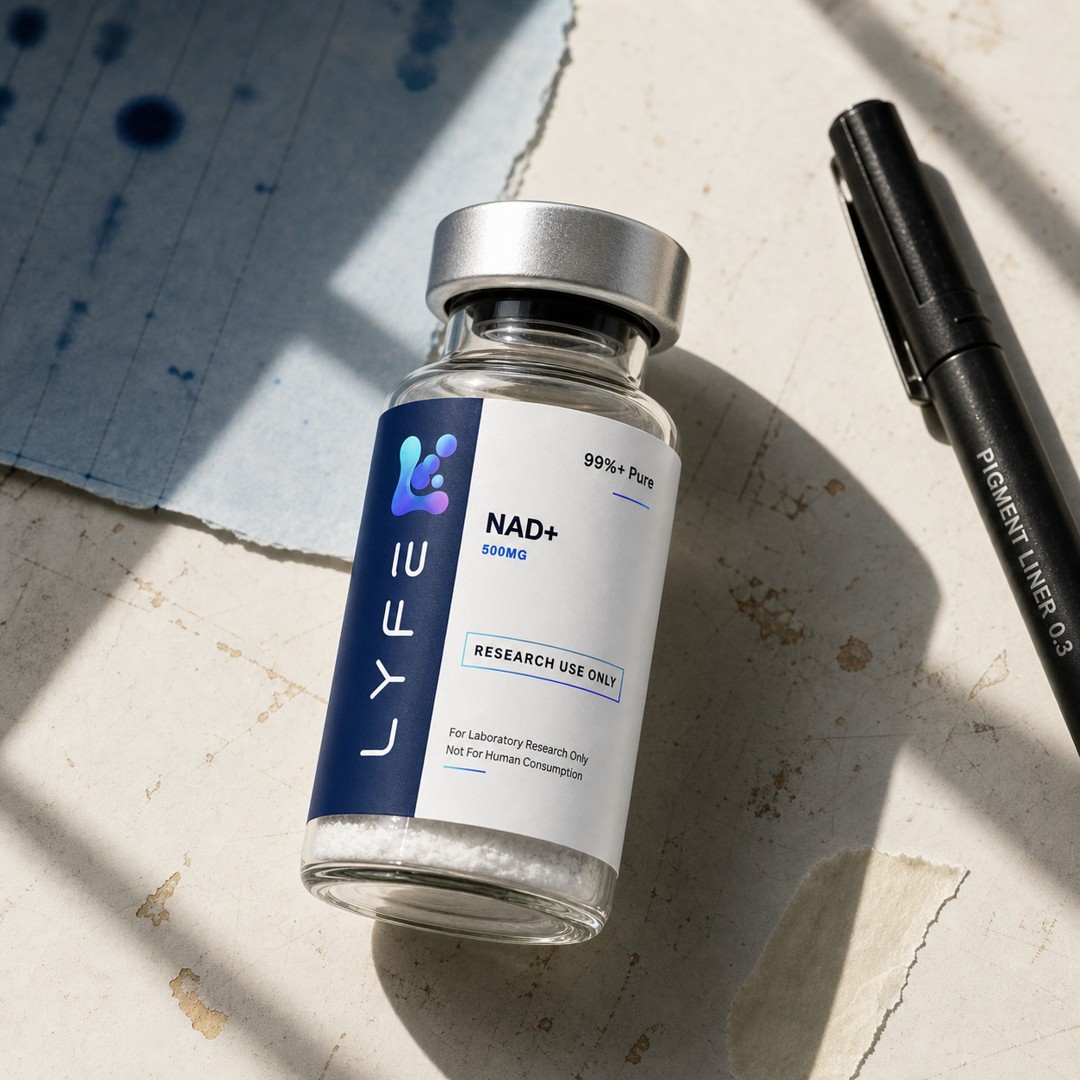
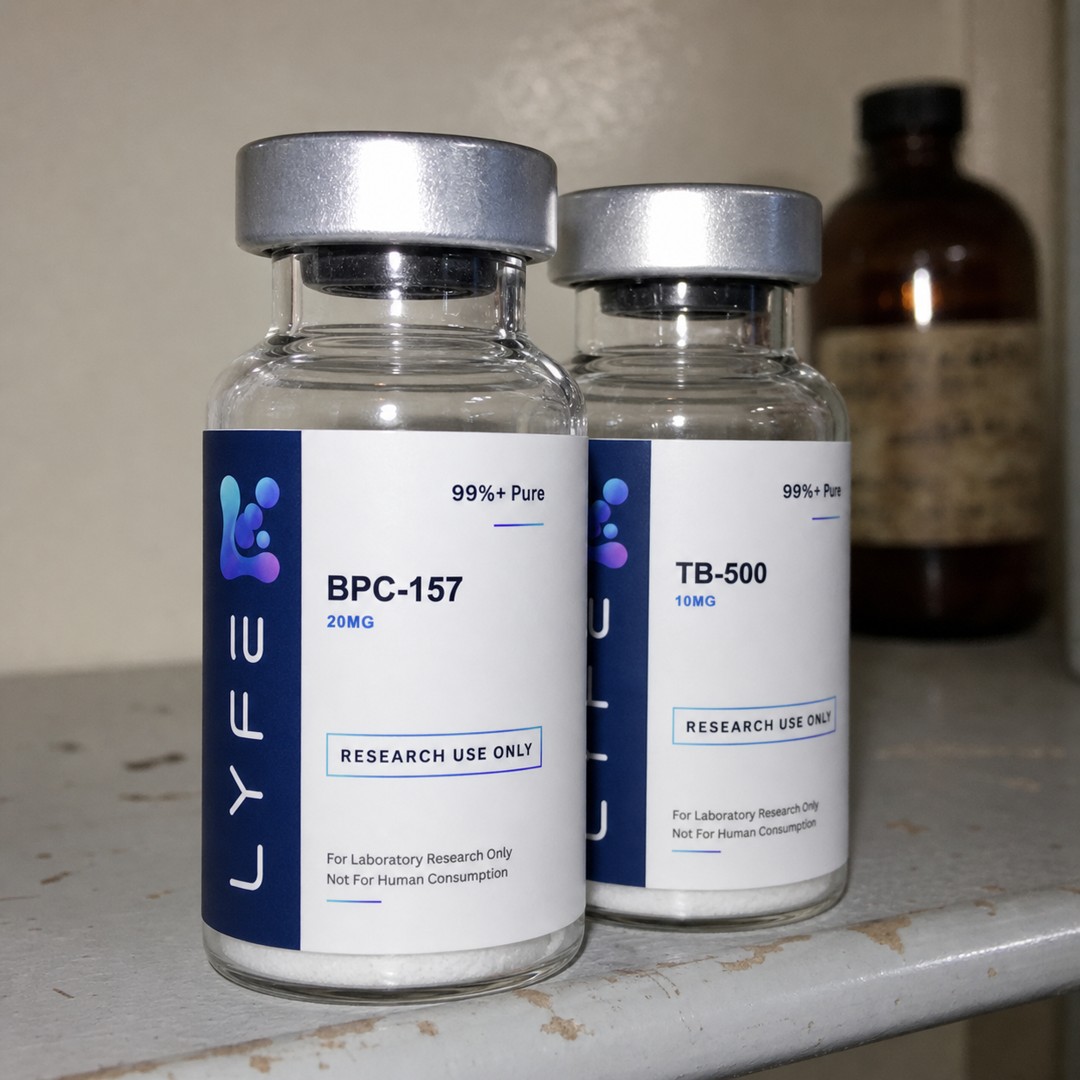
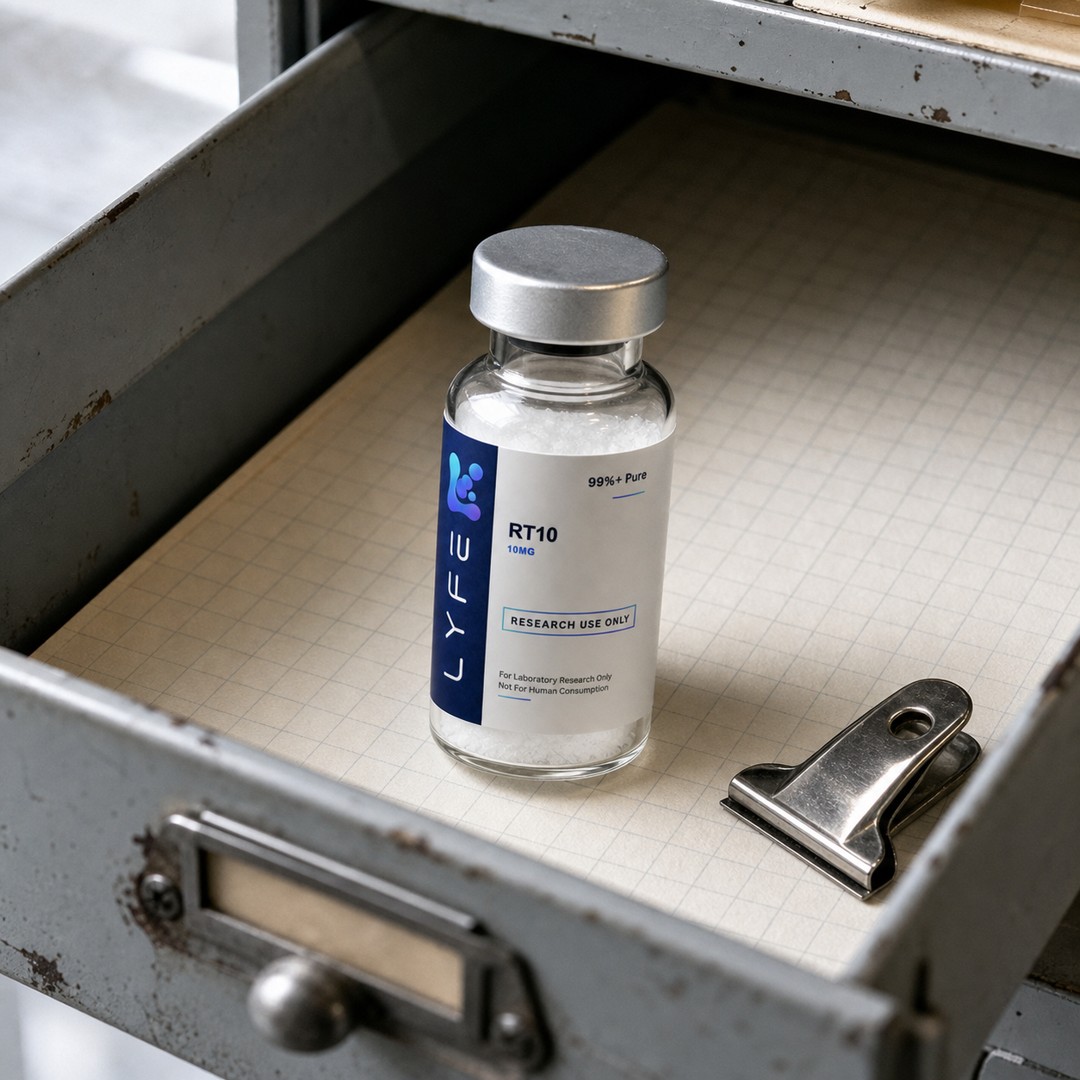
A properly lyophilised peptide usually appears as a white to off-white powder or a light, sometimes fluffy, cake stuck to the bottom or side of the vial. Some products carry a colour tied to their chemistry: anything containing GHK-Cu, for example, will show a blue tint because of its bound copper. A small amount of powder is normal even for a labelled milligram quantity, because peptides are light and a few milligrams take up very little space.
Storing freeze-dried peptides
Because the whole point of lyophilization is dryness, the storage rules follow naturally. Keep the sealed vial cold and dry, away from light and humidity. In dry, cold conditions a lyophilised peptide is stable for a long time. Once reconstituted into a liquid, the clock speeds up considerably, so a dissolved peptide should be kept refrigerated and treated as a shorter-lived preparation. This is exactly why suppliers ship the dry form rather than a ready-made solution: it protects the product right up until it is used.
Reconstitution in brief
Reconstitution simply means adding liquid back to the dry peptide to dissolve it. The liquid is directed gently against the side of the vial rather than blasted onto the cake, and the vial is swirled, not shaken, until the powder dissolves. Getting the volume right gives a known concentration. Our peptide guide walks through the general principles in more detail.
Why this connects to quality
Good lyophilization is part of what makes a certificate of analysis meaningful. The purity confirmed by HPLC and the identity confirmed by mass spectrometry describe the peptide as it was made; proper freeze-drying and cold, dry handling are what keep it that way until it reaches you. A supplier that freeze-dries carefully and ships thoughtfully is protecting the very quality its testing certifies.
Buying peptides in Canada from LYFE Science
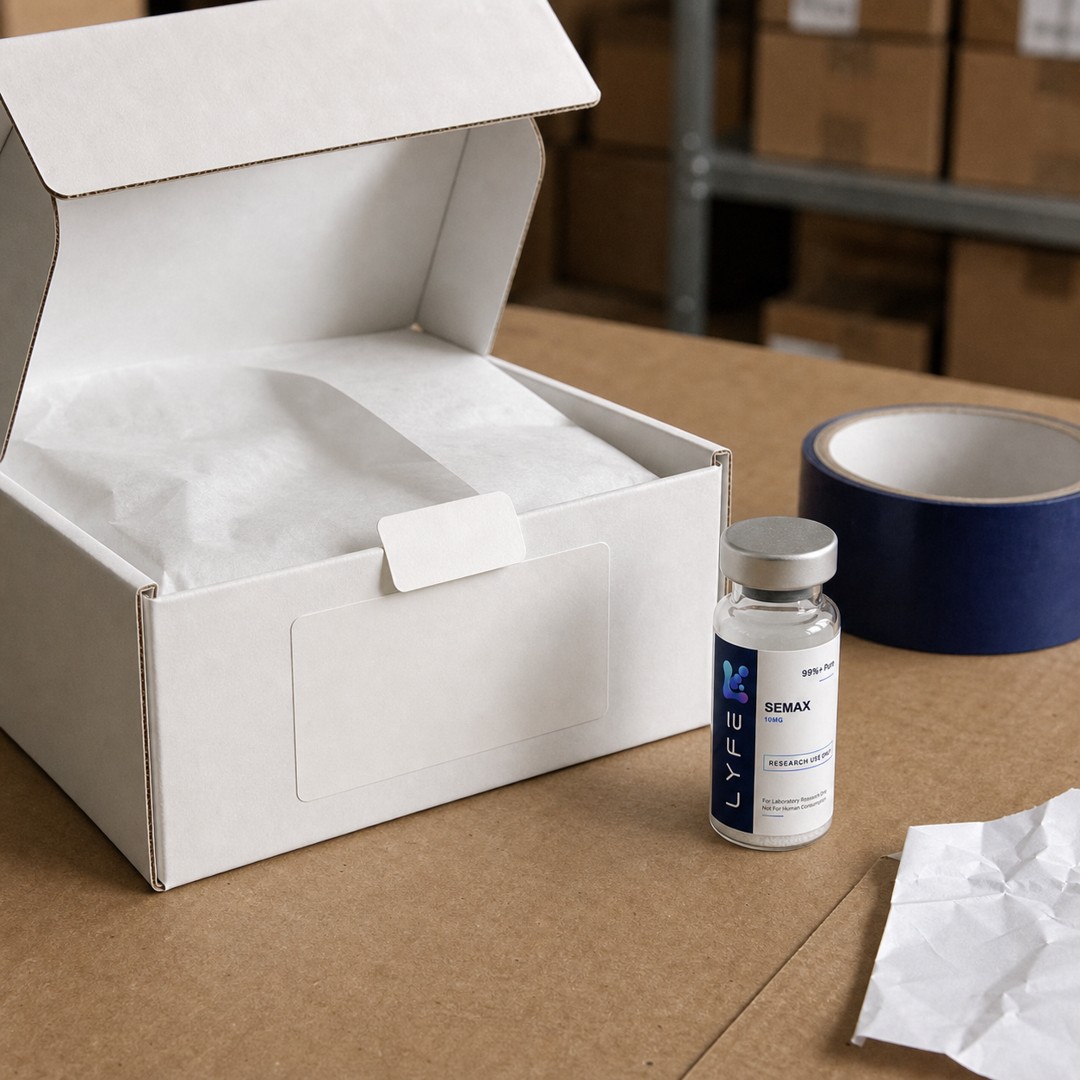
LYFE Science supplies freeze-dried research peptides across Canada, shipping by Canada Post at a flat $25, free over $150, with same-day dispatch on orders paid before noon Eastern and one to three business days to most of the country. Every lot is verified by HPLC and mass spectrometry with a COA available, orders arrive in neutral packaging, and payment is by Interac e-Transfer or crypto (BTC, ETH, SOL, USDC, USDT).
See the full range on the shop page, and get the fundamentals of storage and reconstitution in our peptide guide.
Follow along
Research, lab-side
@lyfe_science →