Blog
KLOW Blend Explained: Four-Peptide Breakdown

KLOW is the four-component sibling of the better-known GLOW blend. It takes the same connective-tissue research theme and adds a fourth peptide. This breakdown explains what KLOW is, which four peptides it contains, and what each one contributes, so you can decide whether the blend or the individual compounds suit your work.
What is the KLOW blend?
KLOW is a named combination of four research peptides: BPC-157, GHK-Cu, TB-500 and KPV. The letters loosely echo the components, and the name is community shorthand rather than a formal chemical term. Where GLOW pairs three peptides, KLOW adds KPV, a short anti-inflammatory-pathway peptide, to broaden the research profile. As with any blend, it is a convenience grouping of separate compounds, not a single new molecule.
The four components
BPC-157
BPC-157 is a stable synthetic peptide based on a sequence identified in gastric juice. It is heavily referenced in gut, tendon and connective-tissue research literature, and in a blend it anchors the protective and digestive research themes.
GHK-Cu
GHK-Cu is a copper-binding tripeptide (glycyl-L-histidyl-L-lysine plus a copper ion) found naturally in human plasma. It is a cornerstone of matrix, collagen and skin-remodelling research, and it brings the appearance and extracellular-matrix angle to the blend.
TB-500
TB-500 is a synthetic peptide related to thymosin beta-4, a protein involved in actin regulation and cell migration. It is studied in cytoskeletal and structural tissue models, contributing the mobility and cell-movement dimension.
KPV
KPV is a tripeptide fragment (lysine-proline-valine) derived from the C-terminus of alpha-melanocyte-stimulating hormone. It is the addition that sets KLOW apart from GLOW. Research interest in KPV centres on inflammatory-signalling and gut models, which complements the connective-tissue focus of the other three peptides.
Why four instead of three?
The reasoning behind KLOW is that adding KPV extends the blend into inflammatory-pathway research while keeping the connective-tissue and matrix themes of GLOW intact. Each peptide still targets a distinct pathway. It is important to keep expectations grounded: putting four peptides in one vial does not merge their mechanisms, it simply makes four separate research tools available together.
KLOW at a glance
| Component | Type | Primary research theme |
|---|---|---|
| BPC-157 | Gastric-derived peptide | Gut, tendon, protective models |
| GHK-Cu | Copper tripeptide | Matrix, collagen, skin |
| TB-500 | Thymosin beta-4 fragment | Cytoskeletal, cell migration |
| KPV | Alpha-MSH fragment | Inflammatory signalling, gut |
GLOW vs KLOW
The only structural difference between the two blends is the fourth peptide. GLOW is GHK-Cu, TB-500 and BPC-157. KLOW is those three plus KPV. Choosing between them comes down to whether inflammatory-pathway research is part of your scope. If it is not, the extra component adds little; if it is, KPV is the reason to prefer KLOW.
Blend or individual compounds?
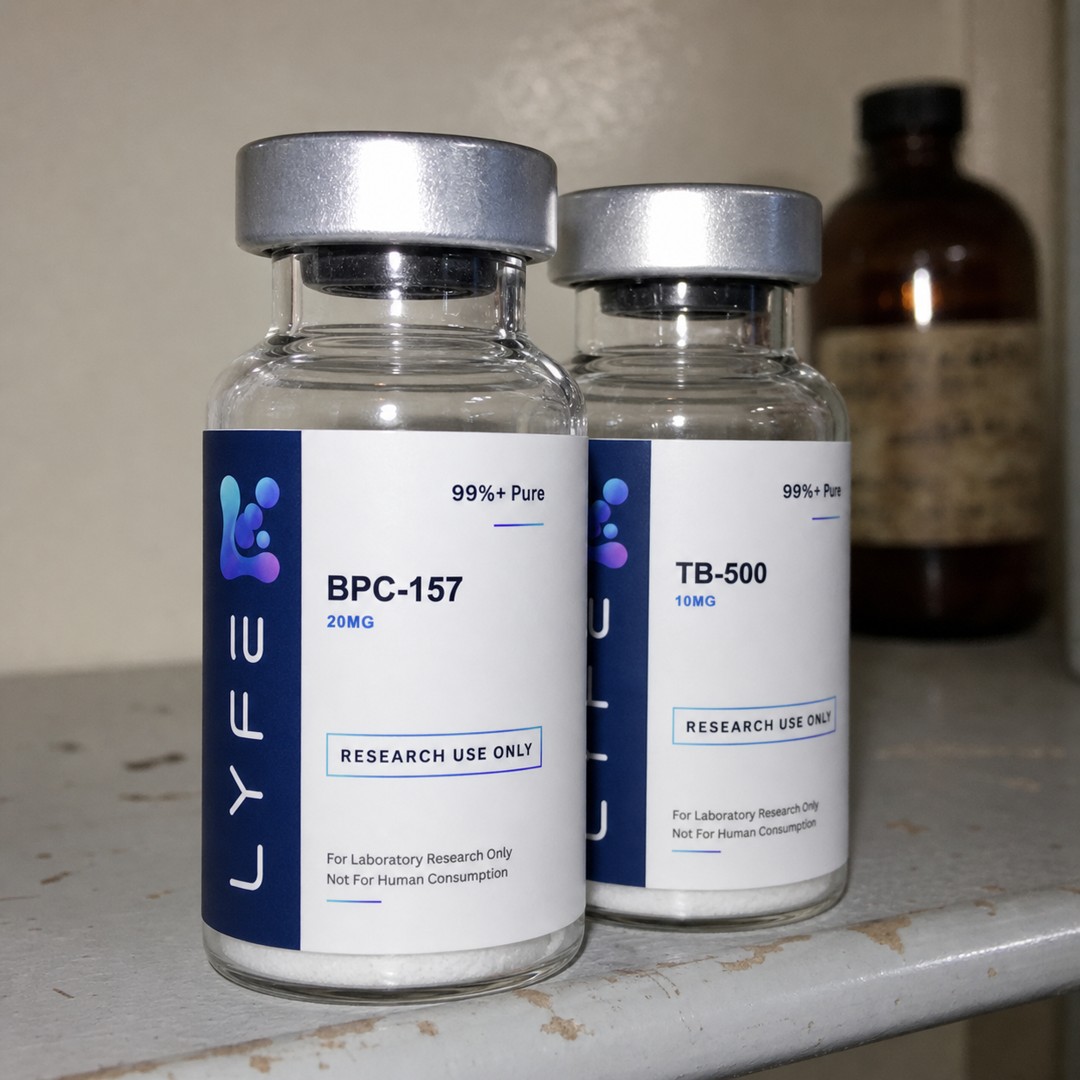
Many labs prefer to source each peptide separately for full control over preparation and study design. Two of the four KLOW components, GHK-Cu and TB-500, are available individually in the LYFE catalogue, so you can assemble a comparable set without a fixed pre-mix. Our peptide guide defines terms like fragment, tripeptide and reconstitution if you are new to the vocabulary.
Sourcing KLOW-blend peptides in Canada
LYFE Science is a Canadian supplier shipping nationwide by Canada Post, with flat $25 shipping and free delivery on orders over $150. Orders paid before noon ET dispatch the same day and reach most of Canada in 1-3 business days, in neutral packaging. Every lot is checked by HPLC and mass spectrometry, with a COA available on request. We accept Interac e-Transfer and crypto (BTC, ETH, SOL, USDC, USDT).
Source the individual KLOW components, GHK-Cu and TB-500, from our catalogue today. Browse the full range and check availability below.
Follow along
Research, lab-side
@lyfe_science →