Blog
Vial Size and Cost Per Mg: Buyer’s Guide

Two vials sit side by side. One is priced lower than the other, so it looks like the better deal. But one holds 5 mg of peptide and the other holds 10 mg, and suddenly the cheaper sticker is the more expensive product. If you buy research peptides, the number that actually matters is not the price on the vial. It is the cost per milligram. This guide explains how vial size shapes that figure and how to compare products fairly so you never overpay for a small label.
Sticker price versus cost per mg
The headline price tells you what leaves your account. Cost per mg tells you what you are getting for it. The formula is simple:
Cost per mg = price of the vial ÷ milligrams in the vial.
Run it on both products before you decide anything. A $40 vial holding 5 mg costs $8 per mg. A $60 vial holding 10 mg costs $6 per mg. The second one is pricier at the till and cheaper where it counts.
| Vial price | Amount in vial | Cost per mg |
|---|---|---|
| $40 | 5 mg | $8.00 |
| $60 | 10 mg | $6.00 |
| $95 | 20 mg | $4.75 |
Why bigger vials usually cost less per mg
A lot of what you pay for is not the peptide itself. Each vial carries fixed costs that do not change with how much is inside it: the glass, the rubber stopper and crimp, the filling and freeze-drying step, the label, quality testing, and packaging. Spread those fixed costs over 5 mg and each milligram carries a big share of the overhead. Spread the same costs over 20 mg and each milligram carries far less. That is why, gram for gram, larger vials are almost always the better value, even when the total price is higher.
The trap of a small number on the label
Some listings lean on this. A low headline price pulls the eye, but the vial is small, so the cost per mg is quietly high. Others do the opposite and reward you for buying a larger fill. Neither is right or wrong on its own, but you cannot tell which is which until you do the division. Never compare two peptides by their sticker price alone. Always normalise to cost per mg first.
What else to check before you compare
Cost per mg is the anchor, but a fair comparison needs a couple more columns:
- Stated amount versus tested amount. A label says 10 mg, but did an independent lab confirm the vial actually contains close to that? A certificate of analysis is what turns the number on the label into something you can trust.
- Purity. A cheap milligram of a low-purity compound is not a bargain. Look for identity and purity confirmed by HPLC and mass spectrometry.
- Shipping. A rock-bottom vial can lose its edge to a heavy shipping fee. Factor delivery into the true landed cost.
- Per-lot documentation. A COA that matches the specific lot you are buying, not a generic example, is worth paying a little more for.
A simple way to shop smart
- Write down the price and the milligrams for every product you are weighing.
- Divide to get cost per mg for each.
- Add shipping to see the true landed cost.
- Only then compare, and give weight to purity and per-lot testing, not just the cheapest milligram.
How LYFE Science prices and ships
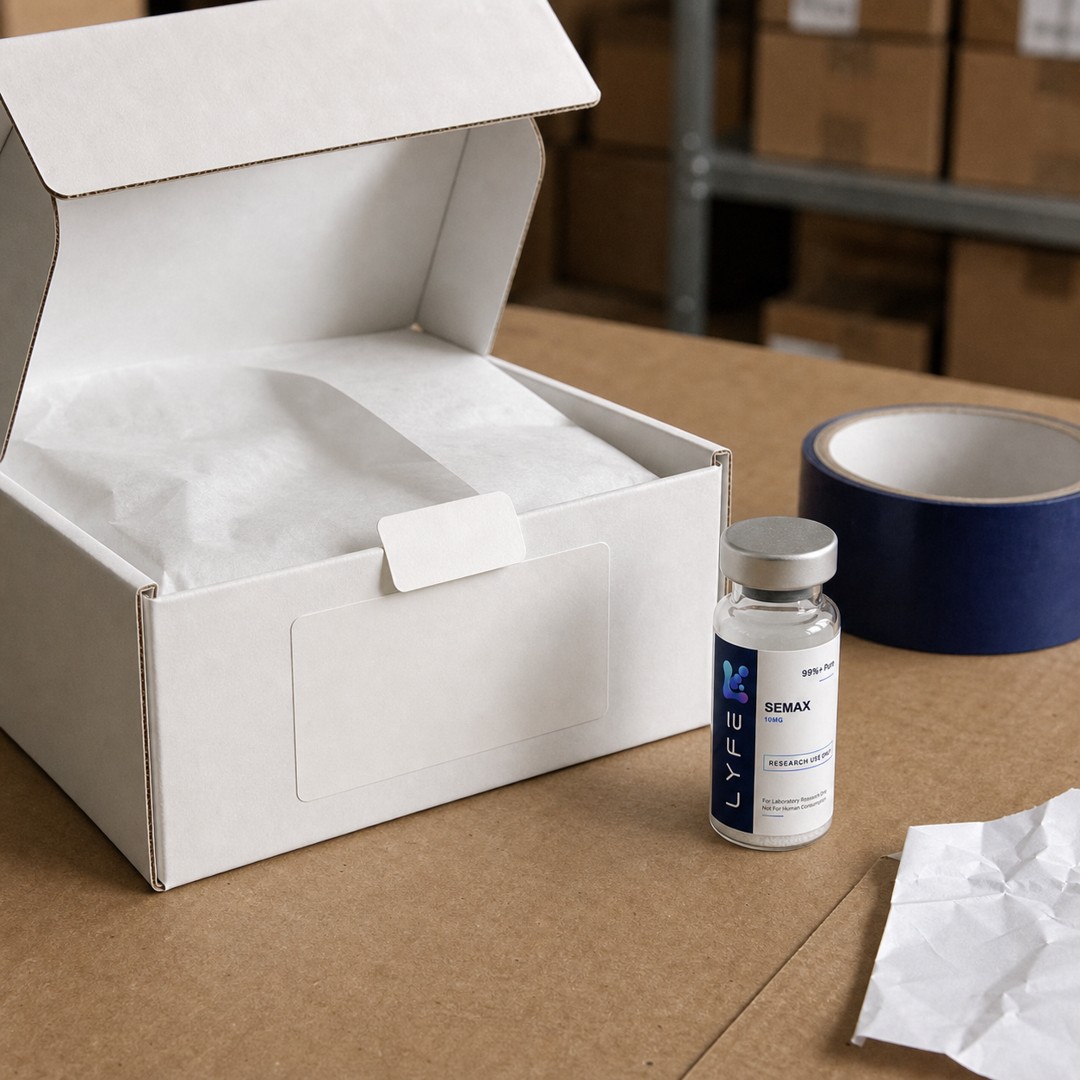
We publish the amount in every vial so you can run the cost-per-mg math yourself in seconds, and every lot can ship with its own certificate of analysis, with identity and purity confirmed by HPLC and mass spectrometry. Shipping is a flat $25 by Canada Post anywhere in Canada, and free over $150, which is where buying a larger fill often pays for itself twice. Orders paid before noon Eastern dispatch the same day, arrive in neutral packaging, and payment is by Interac e-Transfer or crypto (BTC, ETH, SOL, USDC, USDT).
New to this? Our peptide guide covers the basics, and you can compare vial sizes across the catalogue on the shop page.
Follow along
Research, lab-side
@lyfe_science →