Blog
What Is BPC-157? A Peptide Research Guide

BPC-157 is one of the most widely studied peptides in the research community, and it comes up in almost any conversation about tissue and recovery science. Yet a lot of what circulates about it is vague. This guide lays out what BPC-157 actually is, where it comes from, and why it draws so much research attention.
What is BPC-157?
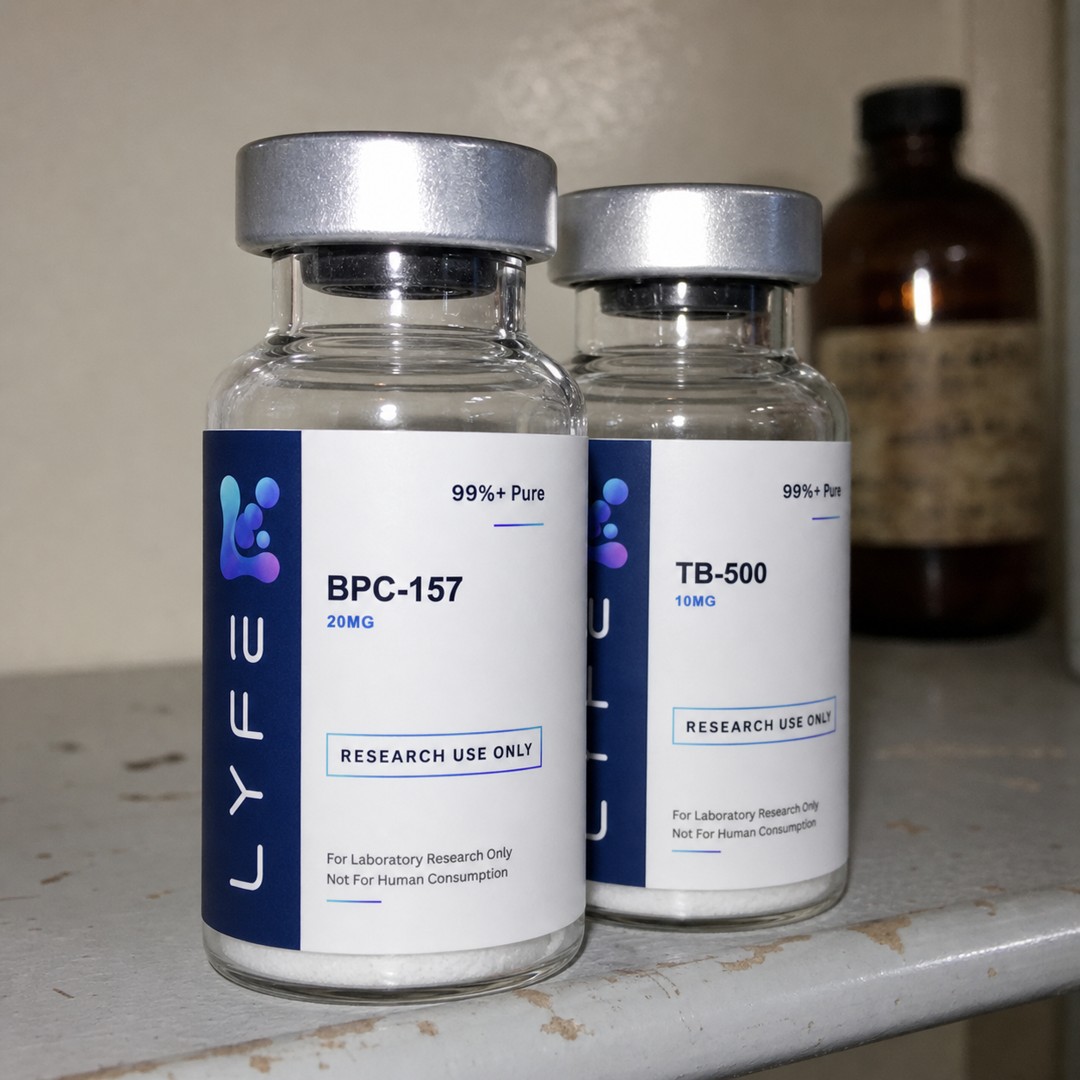
BPC-157 is a synthetic peptide made up of a short chain of 15 amino acids. The name stands for “Body Protection Compound,” and the “157” refers to the specific sequence. It is a stable, defined molecule produced to an exact sequence rather than extracted from any living source.
Its origin is what makes it interesting. BPC-157 is a partial sequence derived from a protein found naturally in human gastric juice. Researchers isolated and synthesised this fragment to study it on its own, separate from the much larger parent protein.
Where BPC-157 comes from
The parent compound was identified in the stomach, an environment that is remarkably good at protecting and maintaining its own lining despite constant exposure to acid. That observation is what first prompted interest in the protective properties of the fragment, and it is why BPC-157 is often described as a “gastric peptide” in reference material.
Why researchers study it
BPC-157 is a mainstay in laboratory models exploring tissue biology. The study areas most commonly associated with it include:
- Tissue and connective-tissue research – how the peptide interacts with models of tendon, muscle and ligament biology.
- Angiogenesis – the formation of new blood vessels, a process central to many repair pathways.
- Gastrointestinal models – fitting given its origin in gastric protein.
- Stability studies – BPC-157 is noted for being unusually robust as peptides go, which makes it a convenient subject for a range of experimental setups.
How BPC-157 fits among research peptides
| Peptide | Length | Common research focus |
|---|---|---|
| BPC-157 | 15 amino acids | Tissue, vascular, GI models |
| TB-500 | Synthetic fragment | Cytoskeletal and cell-migration research |
| GHK-Cu | Copper tripeptide | Matrix and copper research |
BPC-157 is frequently discussed alongside cytoskeletal peptides such as TB-500, because study teams often compare compounds that approach tissue biology through different mechanisms. If your work touches that area, our cytoskeletal research line is a natural companion category to explore.
Quality and handling
With any peptide, purity and identity are what make results comparable from one lot to the next. A trustworthy source provides a certificate of analysis (COA) for each specific lot, backed by analytical methods such as HPLC and mass spectrometry. BPC-157’s noted stability is helpful, but correct storage and verified identity still matter for reproducible work.
Buying BPC-157 in Canada
Sourcing domestically avoids customs delays and shortens turnaround. LYFE Science is a Canadian supplier shipping Canada-wide by Canada Post, with flat $25 shipping, free over $150, and same-day dispatch on orders paid before noon ET. Most of Canada receives parcels in 1 to 3 business days in plain, neutral packaging, and payment is by Interac e-Transfer or crypto (BTC, ETH, SOL, USDC, USDT).
BPC-157 is available at LYFE Science, alongside closely related tissue and cytoskeletal compounds, each shipping with its own COA. Browse the shop and our peptide guide to see what is in stock.
Follow along
Research, lab-side
@lyfe_science →