Blog
Tirzepatide vs Retatrutide: Dual vs Triple Agonist

As metabolic-peptide research has advanced, two names come up again and again: tirzepatide and retatrutide. They are often mentioned in the same breath because they belong to the same broad family of incretin-based compounds, yet they represent two different generations of design. The cleanest way to understand them is as a dual agonist versus a triple agonist.
The shared foundation
Both molecules are synthetic, peptide-based agonists that mimic gut hormones involved in metabolism. Both are engineered analogues rather than plain native peptides, and both are studied primarily through the lens of glucose regulation and body-weight biology. Their similarities are why they invite comparison; their differences are in how many receptor pathways they engage.
Tirzepatide: the dual agonist
Tirzepatide activates two receptors: GIP (glucose-dependent insulinotropic polypeptide) and GLP-1 (glucagon-like peptide-1). Combining these two incretin pathways in one molecule was the innovation that set it apart from earlier single-pathway agonists. Its most prominent body of research is the SURPASS program in type 2 diabetes, with additional work such as SURMOUNT examining metabolic and body-weight endpoints.
Retatrutide: the triple agonist
Retatrutide goes a step further by adding a third target: the glucagon receptor. So instead of two pathways, it engages three, GIP, GLP-1, and glucagon. The rationale is that glucagon-receptor activity contributes to energy expenditure, so a molecule that layers it on top of the two incretin pathways is being studied to see whether triple activity produces a distinct metabolic profile compared with dual agonism.
Side-by-side
| Tirzepatide | Retatrutide | |
|---|---|---|
| Class | Dual agonist | Triple agonist |
| Receptors engaged | GIP, GLP-1 | GIP, GLP-1, glucagon |
| Design intent | Combined incretin signalling | Incretin signalling plus energy-expenditure pathway |
| Research maturity | Extensive (SURPASS, SURMOUNT) | Newer, earlier-stage programs |
What the difference actually means
The jump from two receptors to three is not just a bigger number; it changes the biological question being asked. Dual agonism concentrates on the incretin axis that governs glucose-dependent responses and appetite. Adding glucagon activity brings in a pathway associated with energy output, which is why triple agonists are studied as a potentially different metabolic tool rather than simply a stronger version of the same thing. More targets also means a more complex profile to characterise, which is part of why retatrutide research is at an earlier stage.
How to compare them sensibly
When you see these two set against each other, the useful lens is mechanism and maturity, not marketing. Tirzepatide has a deep, well-defined research base; retatrutide is the newer, more ambitious design still being mapped out. Neither reality makes one “better” in the abstract, they are answering related but distinct questions in metabolic science.
Why maturity matters as much as mechanism
It is tempting to assume the compound with more receptors on paper is automatically the more advanced choice, but research maturity tells a different part of the story. Tirzepatide has been characterised across a broad, multi-trial program, so its behaviour in defined populations is comparatively well mapped. Retatrutide’s triple design is newer, which means the body of evidence describing how that third pathway plays out is still being built. In practical terms, that gap in maturity is exactly why the two are usually discussed as complementary points on a research timeline rather than as direct substitutes for one another.
Sourcing metabolic peptides in Canada
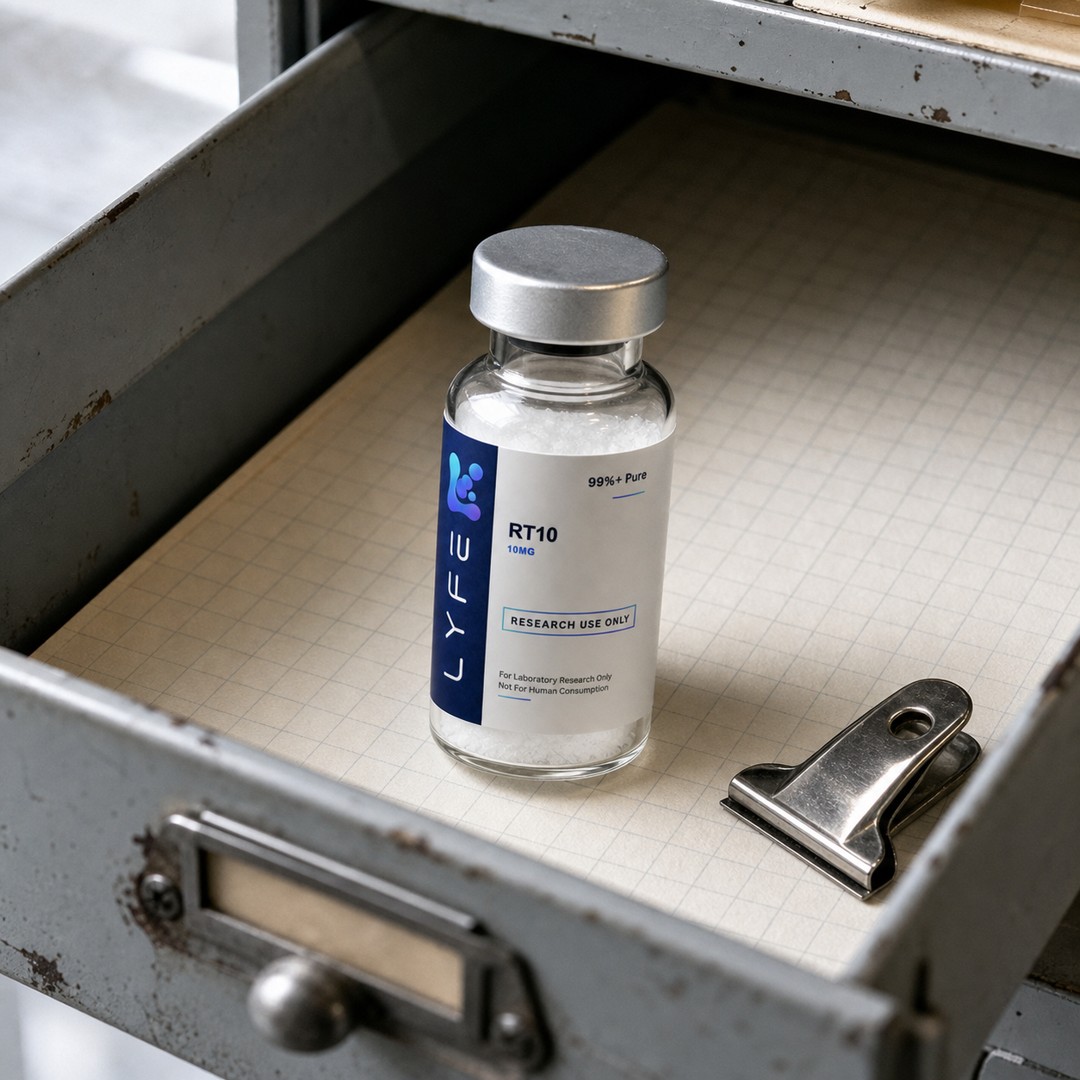
LYFE Science is a Canadian supplier of research peptides where you can buy Tirzepatide 10mg and Retatrutide 10mg in Canada, shipping nationwide by Canada Post with flat $25 delivery, free over $150, in neutral packaging. Orders paid before noon Eastern dispatch the same day, and most of Canada sees delivery in 1 to 3 business days. Every lot is verified by HPLC and mass spectrometry with a certificate of analysis available per lot, and we accept Interac e-Transfer and crypto (BTC, ETH, SOL, USDC, USDT).
Explore our metabolic and signalling peptides in the shop, or start with the fundamentals in our peptide guide.
Follow along
Research, lab-side
@lyfe_science →