Blog
Wolverine Stack: The 1:1 BPC-157 & TB-500 Ratio

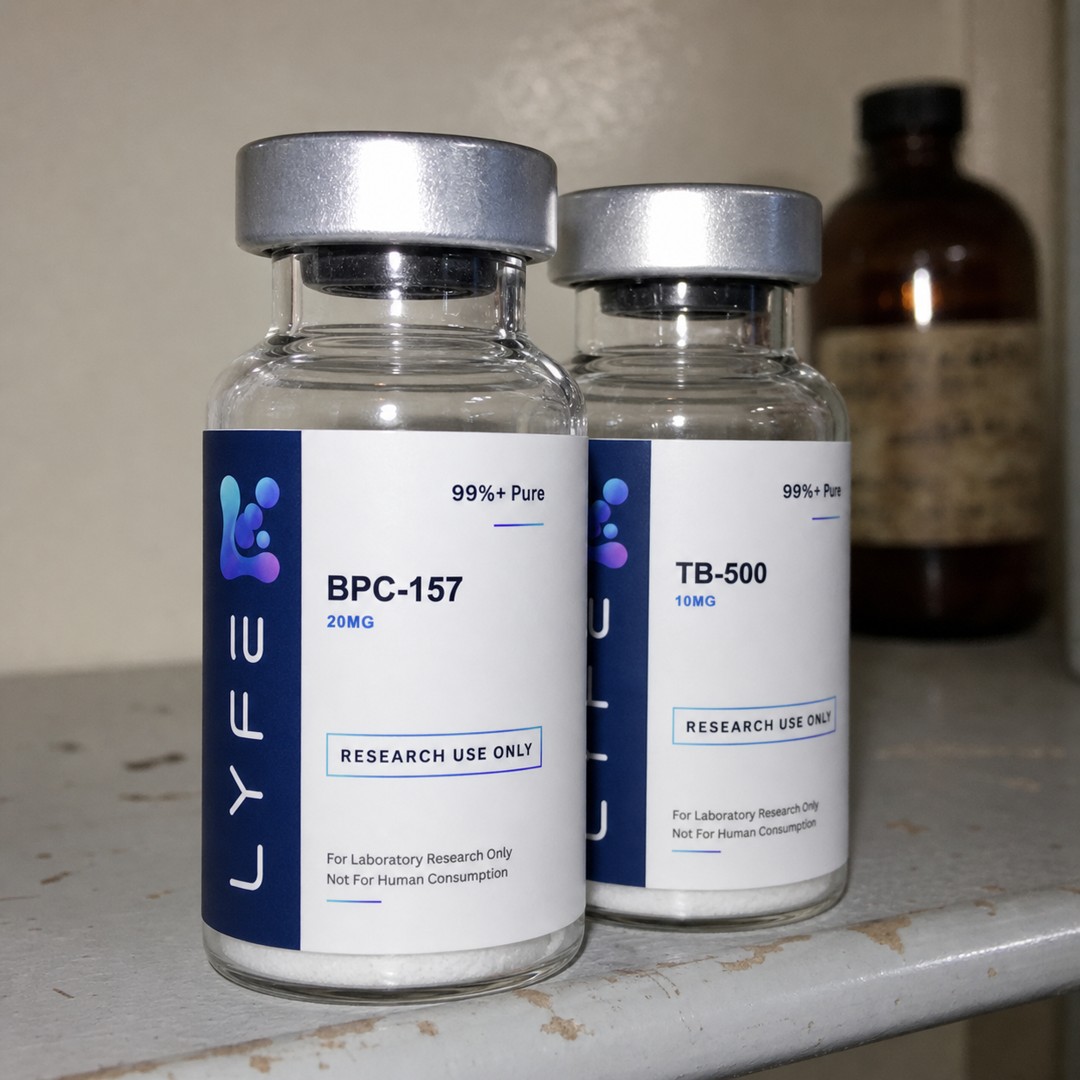
The “Wolverine Stack” is one of the most talked-about pairings in the research peptide world, and the version people ask about most is the 1:1 ratio: equal parts BPC-157 and TB-500. The name and the split both raise the same question. Why these two peptides, and why match them one to one? Here is what the ratio actually means and how to think about it.
What is in the stack
The Wolverine Stack combines two peptides that are studied heavily in the tissue-repair literature:
- BPC-157 is a short peptide fragment first identified in connection with protective proteins found in gastric juice. It is a frequent subject in research on soft-tissue and connective-tissue models.
- TB-500 is a synthetic fragment related to thymosin beta-4, a naturally occurring peptide involved in cell migration and regeneration processes.
They are grouped together because they are investigated for overlapping questions from different angles, which is exactly the logic behind pairing peptides in a blend at all.
What a 1:1 ratio really means
A 1:1 ratio means equal amounts of each peptide by weight in the combined preparation. It does not imply the two molecules are interchangeable or that they behave identically. It is a starting point that treats neither compound as dominant, which is why it is the most common default when people describe the stack.
Ratios are a way of standardising a blend so that every vial in a batch is consistent. A balanced split removes the guesswork of deciding which compound should lead, and it makes results easier to compare across a project because the proportion is fixed rather than drifting.
Why researchers reach for a balanced split
- Neither compound is favoured. Starting equal avoids baking in an assumption that one peptide matters more than the other.
- Consistency across a batch. A fixed ratio means every unit is the same, removing one source of variation between sessions.
- A clean reference point. Once you understand how the balanced pairing behaves, any later adjustment is measured against a known baseline.
Why 1:1 and not some other split
You will occasionally see other ratios mentioned, and none of them are inherently correct. The reason 1:1 became the reference point is practical rather than magical. When two compounds are being studied together for the first time, there is no obvious basis for favouring one over the other, so an even split is the least biased place to begin. It is also the easiest ratio to reason about: if you later decide one compound deserves more weight, you are adjusting from a clean, symmetrical baseline rather than from an already-skewed starting point. Think of the balanced split less as a conclusion and more as a controlled first draft.
It is also worth remembering that a weight ratio is not the same thing as a molar ratio. Because BPC-157 and TB-500 have different molecular weights, equal weights do not mean equal numbers of molecules. For most people the weight-based 1:1 is the practical convention, but it is a useful reminder that a ratio is a bookkeeping choice, not a biological law.
Singles give you the ratio you want
There is a catch with pre-made blends: the ratio is decided for you. If you want the flexibility to change the proportion, or to study one of the two peptides on its own first, buying the compounds separately is the better route. You can always combine single vials yourself and set whatever split your work calls for, rather than being locked into a manufacturer’s fixed 1:1.
This is where sourcing quality matters more than the ratio on the label. A perfectly balanced blend built from poorly characterised material tells you nothing reliable. What determines the value of the vial is the purity and identity of what is inside it.
Buying the pieces in Canada
LYFE Science carries TB-500, one half of the Wolverine pairing, in our cytoskeletal research range. Every compound is checked by HPLC and mass spectrometry, with a certificate of analysis available per lot, so you know exactly what you are combining before you start.
We are a Canadian supplier and ship across the country by Canada Post at a flat $25, free over $150, in neutral packaging, with same-day dispatch on orders paid before noon Eastern. Payment is by Interac e-Transfer or crypto (BTC, ETH, SOL, USDC, USDT). If you want the background on each compound before you order, our peptide guide covers them in plain language.
Follow along
Research, lab-side
@lyfe_science →