Blog
What Is Tirzepatide? Peptide Profile

Tirzepatide is one of the most talked-about peptides in metabolic research, largely because of a design feature that sets it apart from the compounds that came before it: it engages two receptors at once. This profile explains what tirzepatide is, why the dual-receptor approach matters, how it compares to single-target peptides, and what to look for when sourcing peptides in Canada.
What tirzepatide is
Tirzepatide is a synthetic peptide built to act as a dual agonist at two incretin receptors: GIP (glucose-dependent insulinotropic polypeptide) and GLP-1 (glucagon-like peptide-1). Incretins are gut-derived hormones that help coordinate the body’s response to nutrients, and both receptors sit at the centre of metabolic research. Where earlier compounds targeted GLP-1 alone, tirzepatide was engineered to hit both pathways with a single molecule.
It is supplied for laboratory work as a lyophilized (freeze-dried) powder in a sealed vial. Being a peptide, it is sensitive to heat, light, and moisture, so sourcing and handling conditions matter a great deal.
Why the dual-agonist design is the whole story
The reason tirzepatide is studied so intensely is that combining GIP and GLP-1 activity in one molecule creates a research profile that neither receptor produces on its own. In the metabolic literature, the two pathways are thought to complement one another, and a single peptide that engages both is a compact way to study that interaction. The molecule also includes a fatty-acid modification that extends how long it persists, which is why it appears so often in long-acting research contexts.
None of this describes human use, dosing, or outcomes. It simply explains why the compound is a reference point in its field: it was purpose-built to probe two receptor systems simultaneously.
Tirzepatide vs. single-agonist peptides
| Aspect | Tirzepatide | Single GLP-1 agonists |
|---|---|---|
| Receptor targets | GIP and GLP-1 | GLP-1 only |
| Design goal | Study two incretin pathways together | Study one pathway |
| Persistence feature | Fatty-acid modification for a longer profile | Varies by compound |
| Form | Lyophilized powder | Lyophilized powder |
Storage and stability basics
As a general rule of peptide chemistry, lyophilized tirzepatide is most stable kept cool, dark, and dry, and its working life shortens once it is exposed to heat or humidity. This is background chemistry, not a use instruction. The practical implication is that how a compound is shipped and stored is part of its quality, not separate from it. A molecule as intricate as a dual-agonist peptide gives you every reason to care about provenance: the shorter and better-protected its journey, the more confidence you can place in the material that arrives.
What to check before you buy tirzepatide in Canada
- Lot-level testing. Look for verification by HPLC (purity) and mass spectrometry (identity), with a COA tied to the exact lot you receive. For a molecule this complex, confirming identity is not optional.
- Domestic shipping. A Canadian supplier avoids customs delays and the temperature swings of long international transit.
- Protective packaging and fast dispatch. Freeze-dried peptides hold up best when shipped quickly and shielded from heat and light.
- Transparent payment and pricing. Clear shipping thresholds and secure payment beat vague listings.
Ordering peptides from LYFE Science
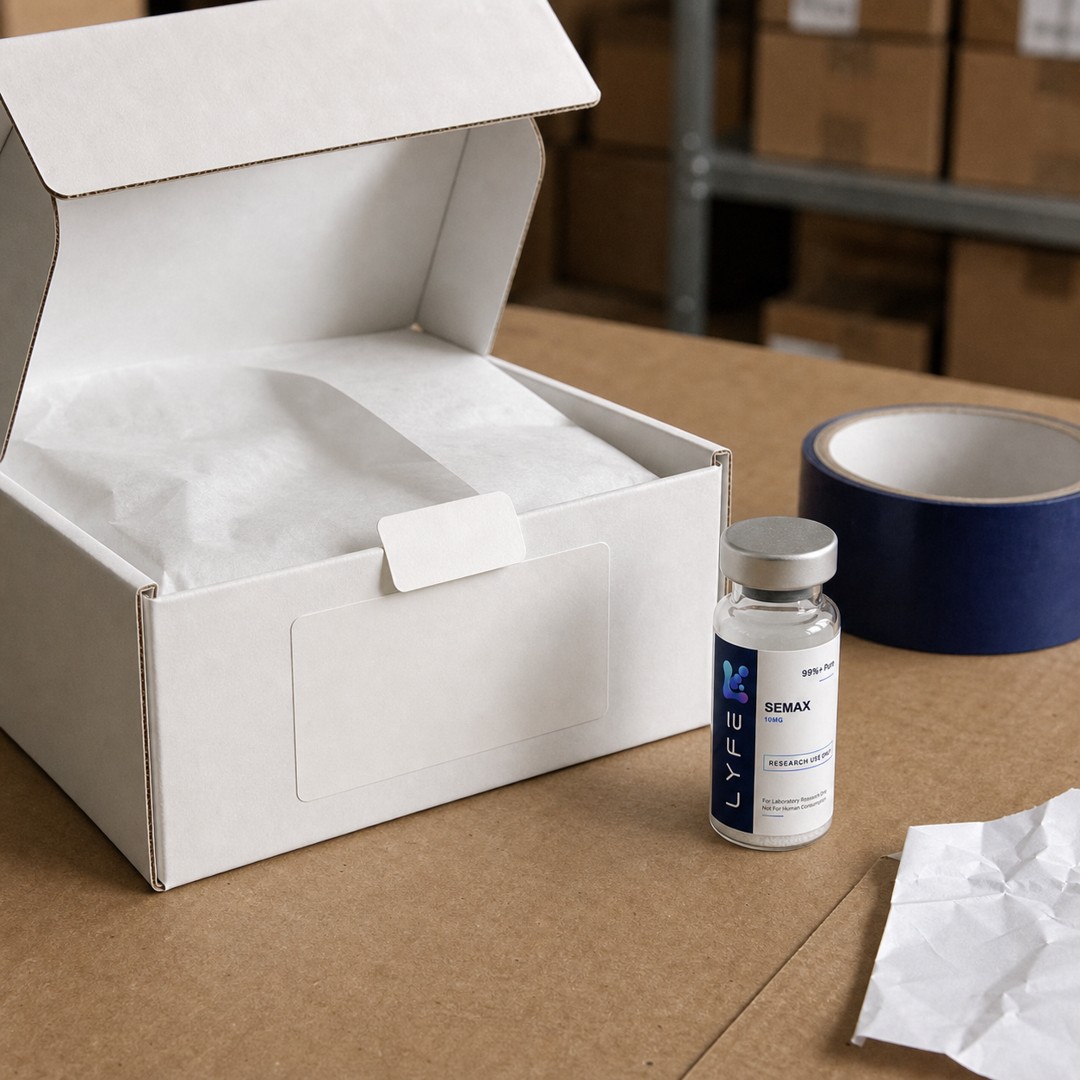
LYFE Science is a Canadian supplier that ships across the country by Canada Post, at a flat $25 and free over $150. Orders paid before noon ET are dispatched same day, with most of Canada receiving delivery in 1-3 business days, in neutral, unbranded packaging. Every lot is checked by HPLC plus mass spectrometry with a COA available per lot, so you are not relying on the label alone. Payment is by Interac e-Transfer or crypto (BTC, ETH, SOL, USDC, USDT), with no card processor involved.
Where tirzepatide fits
Tirzepatide is not part of the current LYFE catalogue, so treat this as background rather than a purchase page. To see what is available now, or to understand how metabolic peptides are grouped by field of study rather than by any claimed effect, browse the shop or read the peptide guide.
Follow along
Research, lab-side
@lyfe_science →