Blog
What Is GLOW Blend? Peptide Guide (Canada)

The GLOW blend is one of the best-known combination peptides in the research world, popular precisely because it stacks three well-characterised compounds into a single formulation. Rather than studying one molecule in isolation, GLOW brings together peptides that are individually famous in tissue and matrix research. Understanding it means understanding its three parts.
What is in a GLOW blend
The GLOW name typically refers to a combination of three research peptides:
- GHK-Cu (copper tripeptide-1) is a copper-binding tripeptide central to matrix and skin research. Its copper complex is what gives many GHK-Cu solutions their distinctive blue tint.
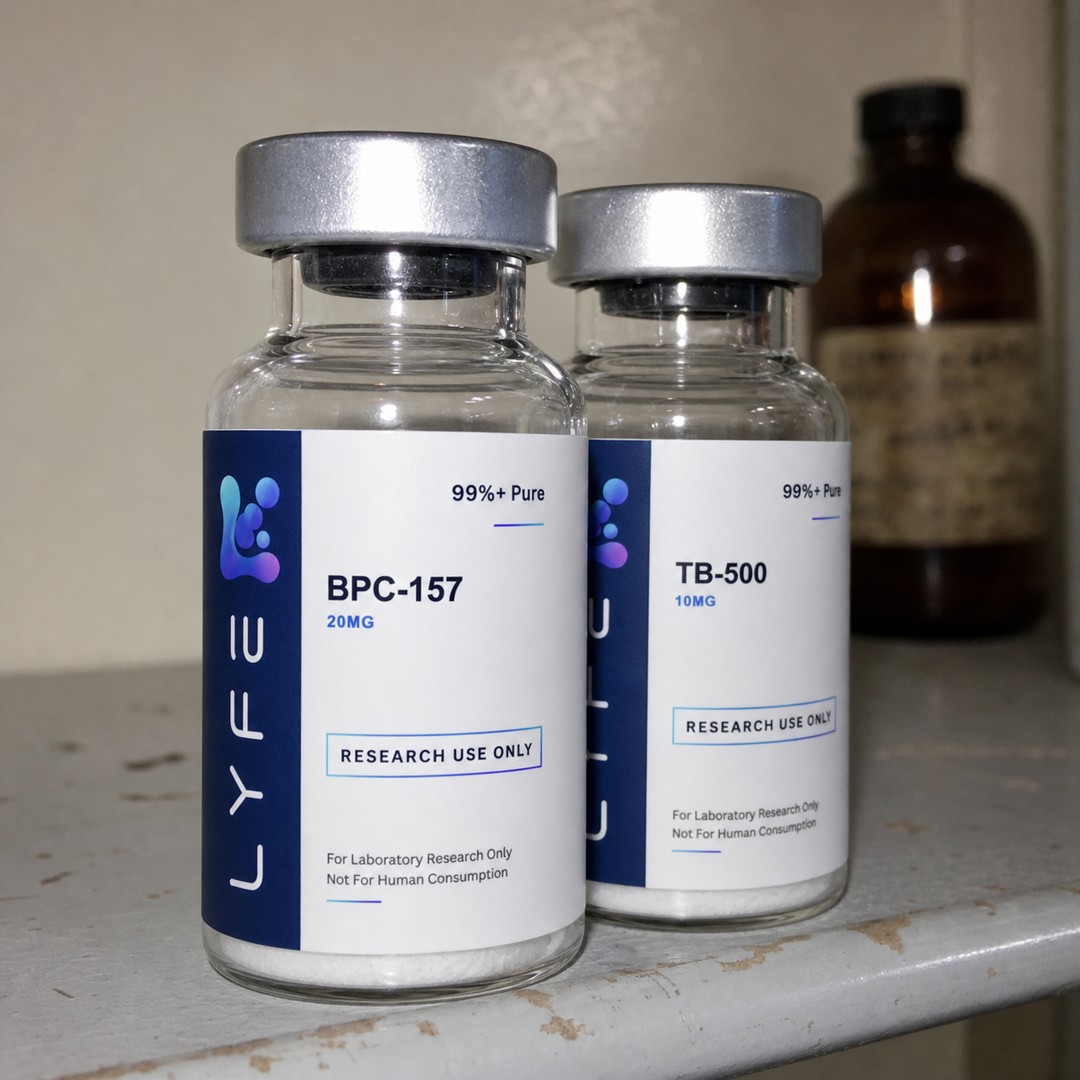
- BPC-157 is a pentadecapeptide derived from a gastric protein, widely studied in tissue and repair research models.
- TB-500 is a synthetic fragment related to thymosin beta-4, studied for its role in cytoskeletal and cell-migration research.
Put together, these three cover complementary research angles: matrix and copper signalling, tissue models, and cytoskeletal dynamics. That is the appeal of a blend, it lets a researcher work with several mechanisms in parallel rather than running three separate single-compound studies.
Why researchers stack peptides
Combination formulations exist because biology is layered. A blend like GLOW is used to explore whether compounds that each show activity on their own behave differently when studied together. The trade-off is that a blend is harder to attribute, when three peptides are present, isolating which one drives an observation is more complex. For that reason many researchers study both the blend and its individual components, using single compounds as reference points.
The three components at a glance
| Component | Class | Research area |
|---|---|---|
| GHK-Cu | Copper tripeptide | Matrix, copper signalling, skin |
| BPC-157 | Pentadecapeptide | Tissue and repair models |
| TB-500 | Thymosin beta-4 fragment | Cytoskeletal, cell migration |
Sourcing the components individually
A practical note for Canadian researchers: two of the three GLOW components are compounds LYFE Science carries as standalone research peptides. You can source GHK-Cu and TB-500 directly, which is often the cleaner approach when you want defined single-compound references alongside any blend work. Buying the parts separately also gives you full control over what goes into a stack.
Blend versus separate compounds
There is a genuine choice to make here. A pre-mixed blend is convenient and studies all three mechanisms in one preparation, which is why GLOW is popular. Separate single compounds, on the other hand, give a researcher control: you decide exactly which peptides are present, at what ratio, and you keep clean single-compound references for comparison. Many researchers do both, holding standalone GHK-Cu and TB-500 as reference points while examining any combined preparation. Neither approach is wrong; the right one depends on whether your priority is convenience or attribution.
Handling and storage
Blends and their components ship as lyophilised powders and are stable when kept cool, dark, and dry. Once reconstituted, peptides are more fragile, keep working solutions refrigerated, protected from light, and away from repeated freeze-thaw cycles. Copper-containing peptides like GHK-Cu are particularly worth protecting from light and heat.
Buying research peptides in Canada
Whether you work with a blend or single compounds, verification is what separates a reliable batch from a guess. At LYFE Science every peptide is tested by HPLC and mass spectrometry, with a certificate of analysis available per lot.
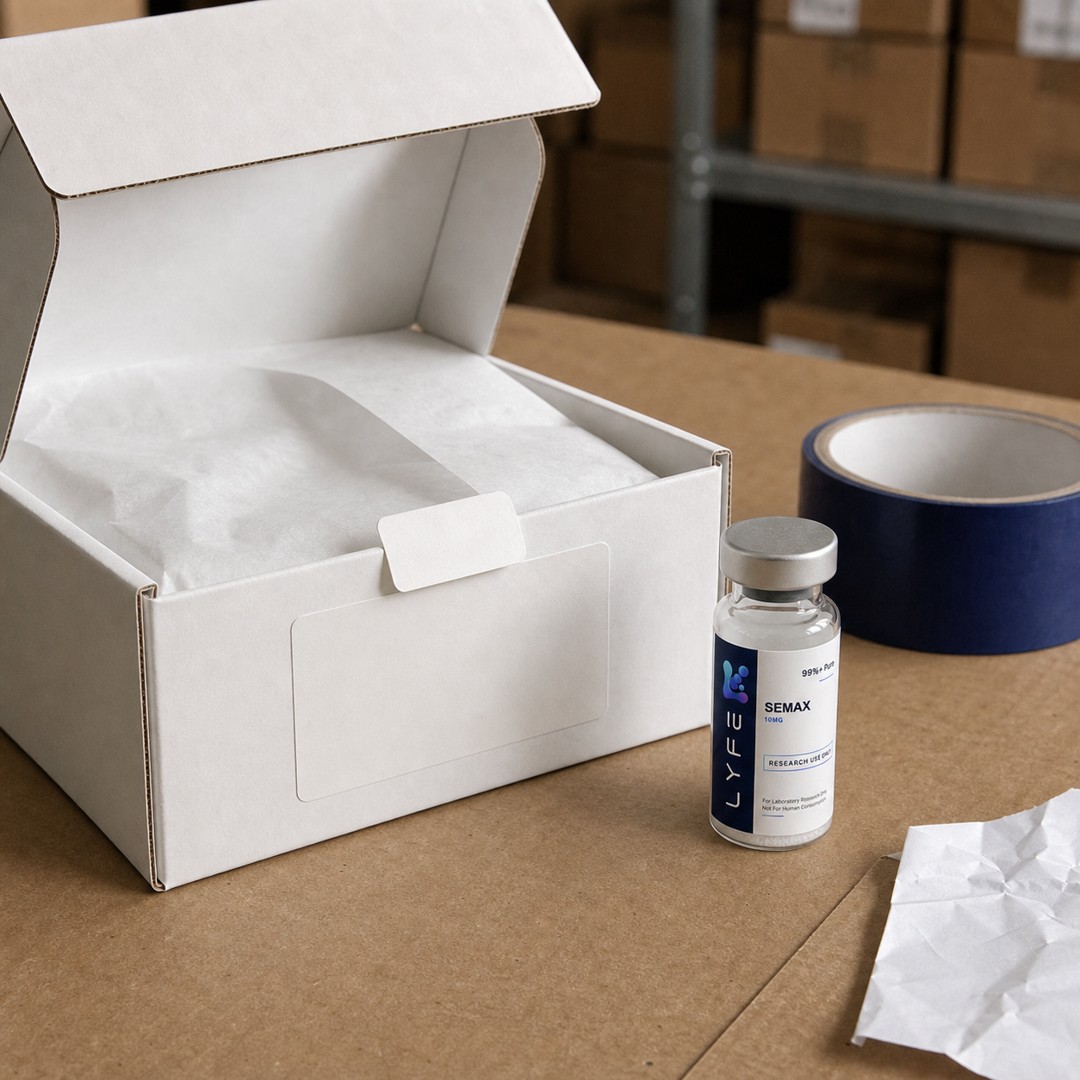
We ship Canada-wide by Canada Post in neutral packaging, flat $25 shipping and free over $150. Orders paid before noon ET usually dispatch the same day, reaching most of Canada in 1 to 3 business days. Payment is by Interac e-Transfer or crypto (BTC, ETH, SOL, USDC, USDT).
New products are added to the catalogue regularly. Browse the shop and read our peptide guide for background on each component before you order.
Follow along
Research, lab-side
@lyfe_science →