Blog
Peptide Research Trends 2026 in Canada

Peptides have moved from a niche corner of the lab to one of the most active areas of applied research, and 2026 is shaping up to be a busy year. Interest keeps broadening across metabolic, signalling, repair and longevity work, and Canadian buyers are asking sharper questions about quality, sourcing and documentation. This guide walks through the directions worth watching and what they mean if you are stocking a bench this year.
Metabolic peptides stay front and centre
The metabolic category remains the busiest single space in peptide research. Incretin-style compounds and mitochondrial peptides have pulled a great deal of attention, and mitochondrial-derived peptides such as MOTS-c are a good example of the shift toward molecules the body already makes. Rather than chasing a single blockbuster, more groups are studying how metabolic signalling, energy handling and nutrient sensing fit together, which keeps a wide range of compounds in circulation instead of a handful.
Growth hormone secretagogues and combination signalling
Signalling peptides that act on the growth hormone axis continue to be studied in pairs rather than in isolation. The classic example is a GHRH analogue combined with a selective ghrelin-receptor peptide, where two pathways are triggered together to produce a more natural signal shape. The trend for 2026 is less about new single molecules and more about how well-characterised compounds behave when combined, and how to design clean protocols around them.
Copper and matrix peptides
Copper-bound peptides such as GHK-Cu have kept their place because they sit at an interesting intersection: a small, well-defined peptide carrying a bound trace metal. Research into matrix biology, extracellular signalling and copper delivery keeps this category relevant, and the reproducibility of a defined metal complex makes it attractive for careful work. Expect continued steady interest rather than a sudden spike.
Repair and cytoskeletal peptides
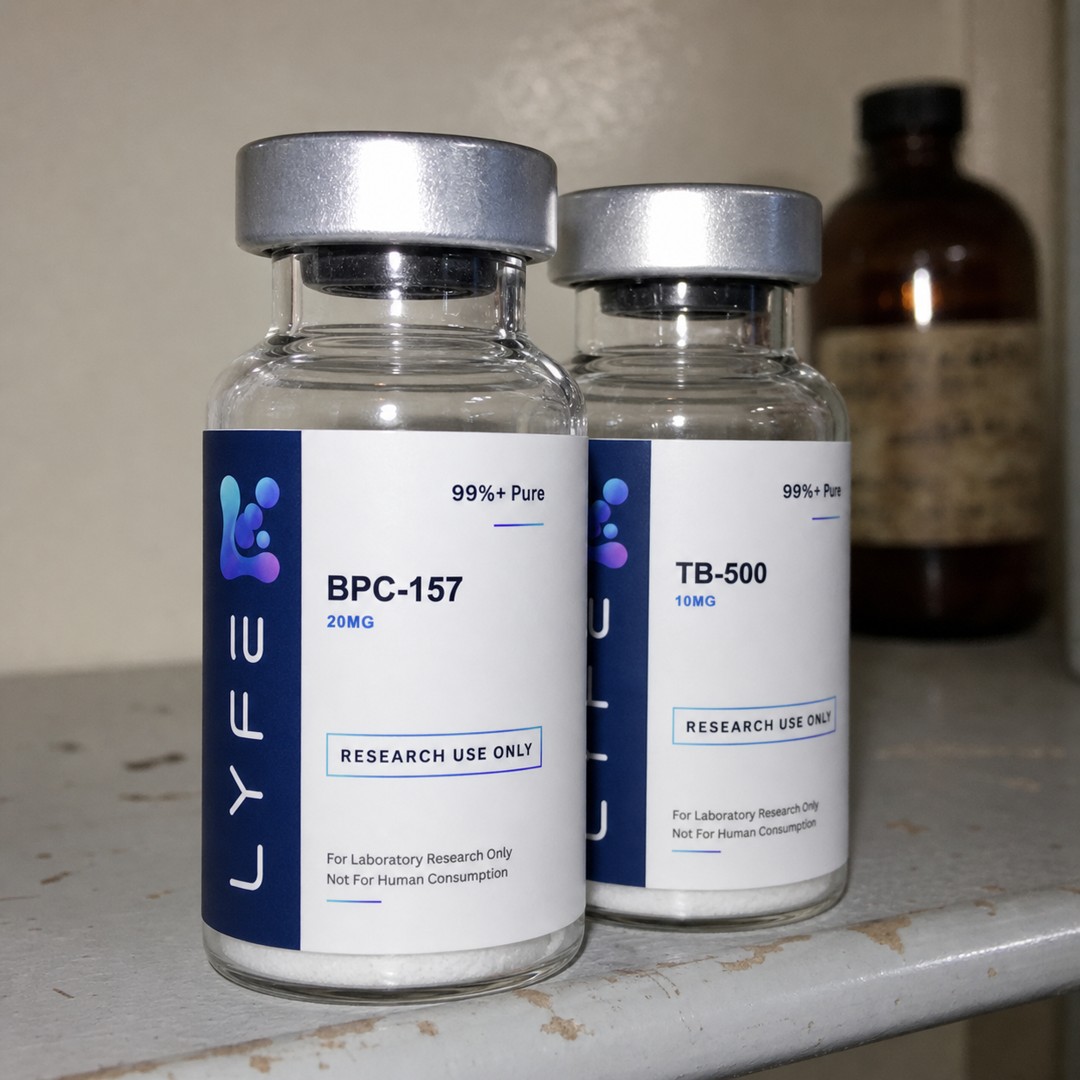
Peptides associated with tissue repair and cytoskeletal dynamics, TB-500 being the best known, remain a durable category. The broader theme is a move toward molecules with clear, mechanistic stories rather than vague claims, which is exactly where compounds with defined receptor targets and reproducible behaviour do well. Rather than a rush of brand-new sequences, 2026 looks like a year of consolidation, with the well-understood workhorses of the field getting studied more rigorously than ever.
Domestic sourcing over imports
A quieter but important trend is where Canadian buyers choose to source. Importing peptides means customs, unpredictable holds and the risk of a parcel that arrives late or not at all, so more researchers are deliberately buying from within Canada. A domestic supplier removes the border entirely, shortens transit to a few days, and makes documentation and support far easier to obtain. Expect this preference for local sourcing to keep strengthening through the year.
Quality and documentation become the deciding factor
The clearest trend of all is not a molecule, it is standards. As the field matures, buyers increasingly treat a per-lot certificate of analysis as non-negotiable. Identity and purity confirmed by HPLC and mass spectrometry, batch-specific documentation and proper cold, dry storage are becoming the baseline expectation rather than a premium feature. If 2026 has a single theme, it is that provenance now matters as much as the compound itself.
What this means for Canadian buyers
For anyone sourcing in Canada, the practical takeaway is to prioritise suppliers who document what they ship and get it to you quickly and discreetly. LYFE Science is a Canadian supplier shipping nationwide by Canada Post at a flat $25, free over $150, with same-day dispatch on orders paid before noon Eastern and one to three business days to most of the country. Packaging is plain and neutral, payment is by Interac e-Transfer or crypto (BTC, ETH, SOL, USDC, USDT), and every lot ships with its own COA.
Our catalogue tracks the categories above: metabolic, signalling, cytoskeletal and copper research peptides. New to the space? The peptide guide covers handling and storage, and you can browse everything on the shop page.
Follow along
Research, lab-side
@lyfe_science →