Blog
GHK-Cu & Peptides for Skin Health Research

Skin is one of the most studied systems in peptide science, and for good reason: it is accessible, rich in the matrix proteins peptides interact with, and central to how tissue repairs and renews itself. Among the compounds that come up in this field, one stands out for the depth of literature behind it, the copper peptide GHK-Cu. This guide looks at the peptides most associated with skin-health research and explains why GHK-Cu sits at the centre of the conversation.
Why the skin is a peptide research favourite
The skin is built largely from a matrix of collagen, elastin and other structural proteins, all of which are constantly broken down and rebuilt. Because peptides are short chains of amino acids that participate in exactly these signalling and structural processes, skin models give researchers a natural setting to study how a given compound behaves. That combination of biological relevance and practical accessibility is why dermatological research keeps generating interest.
GHK-Cu: the copper peptide at the centre
GHK-Cu is a small tripeptide (glycyl-L-histidyl-L-lysine) bound to a copper ion. It is one of the most extensively referenced peptides in skin and matrix research, valued for how cleanly it behaves in the lab and for the sheer volume of published literature examining it. Its association with copper is part of what makes it distinctive, since copper itself plays a role in the enzymes involved in building and remodelling connective tissue.
For researchers, GHK-Cu is attractive precisely because it is so well characterised. When a compound has been studied at length, new work has a solid foundation to build on and a large body of reference material to compare against. That is why GHK-Cu is often the first compound labs reach for when the subject is skin or matrix biology.
Other peptides that appear in skin research
GHK-Cu rarely travels alone in the literature. A few other compounds come up frequently in the same discussions:
- KPV, a short tripeptide studied in the context of inflammatory and dermatological models.
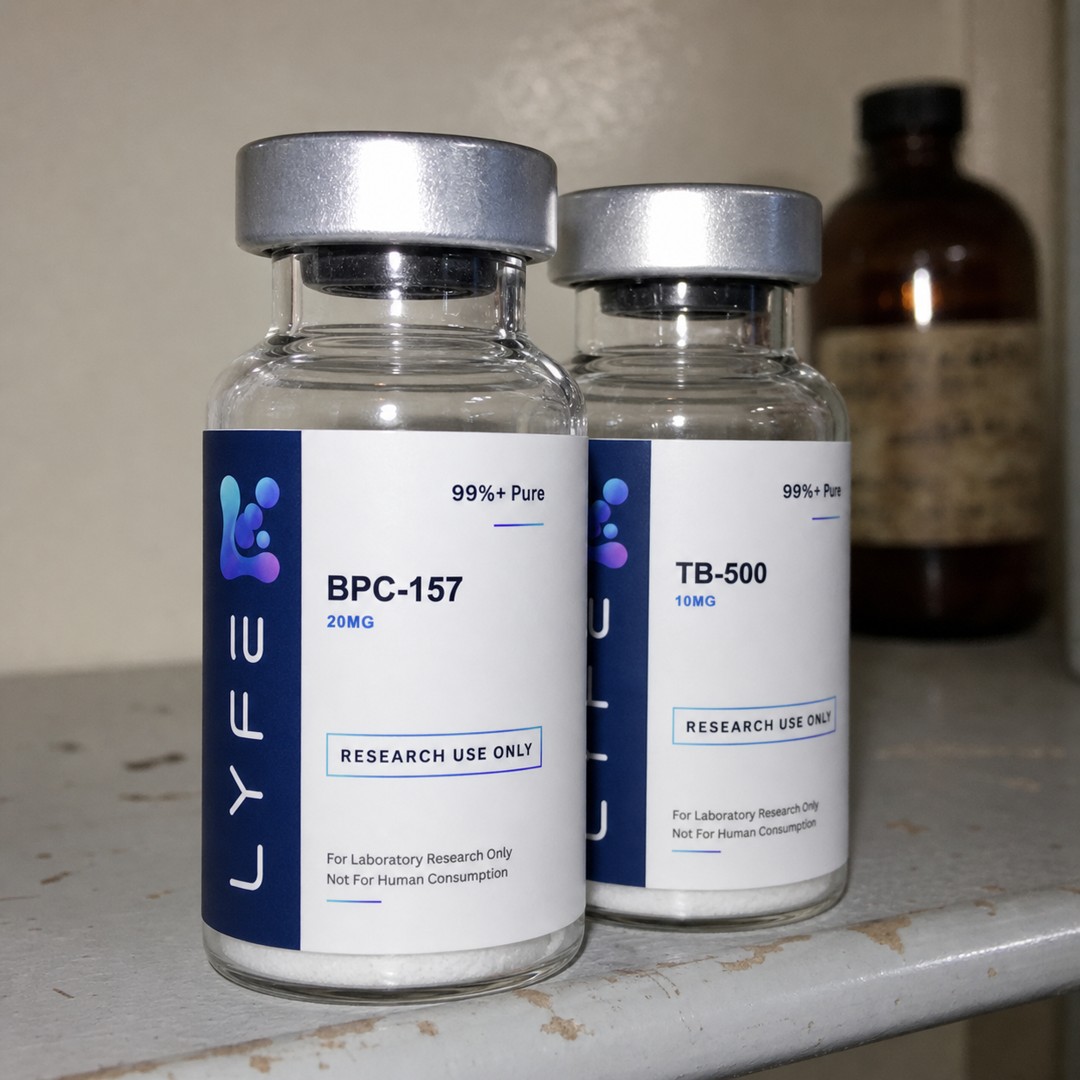
- BPC-157, a compound referenced across a range of tissue-related research, including skin.
These appear in the informational literature, but GHK-Cu remains the anchor of the skin-and-matrix category and the compound most researchers start from.
What to look for when sourcing GHK-Cu
Because GHK-Cu is a copper-bound peptide, identity and purity verification matter as much here as anywhere. Before buying, make sure a supplier can show:
- Identity by mass spectrometry, confirming the molecule is what the label says.
- Purity by HPLC, showing how much of the sample is the target compound.
- A certificate of analysis for the specific lot you receive, not a generic reused figure.
Buy GHK-Cu in Canada from LYFE Science
LYFE Science carries GHK-Cu as part of its matrix and copper research category. Every lot is checked by HPLC and mass spectrometry, with a certificate of analysis available for the lot you receive, so you are never working from an unverified label.
Ordering is simple. We ship across Canada by Canada Post at a flat $25, with delivery free on orders over $150. Orders paid before noon Eastern go out the same day, and most of the country sees delivery in one to three business days, all in plain, neutral packaging. Payment is by Interac e-Transfer or crypto (BTC, ETH, SOL, USDC, USDT), with no card processor in the middle.
To explore GHK-Cu and the rest of the matrix and copper research line, visit the category page, or read the peptide guide for background on how these compounds are described and characterised.
Follow along
Research, lab-side
@lyfe_science →