Blog
Peptide Research FAQ Vol. 2 | LYFE Science

The first round of frequently asked questions covered the basics of purity, shipping and payment. This second volume goes a step deeper into the questions that come up once you are past your first order: how to judge consistency, how to compare suppliers, and how to plan purchases sensibly. As before, everything here is about sourcing and handling material, not human use.
Consistency and quality
How do I know one lot matches the next?
You compare certificates of analysis. Because purity and identity are established per lot by HPLC and mass spectrometry, the COA for each lot lets you see whether the material you are receiving is holding steady over time. Keeping those documents on file turns “I think it is the same” into something you can actually verify.
What does HPLC purity really tell me?
It tells you what fraction of the sample is the target compound versus related substances and impurities. It does not, on its own, confirm identity, which is why mass spectrometry is run alongside it. Read the two together: identity from one, purity from the other.
Why do purity figures vary between suppliers?
Different synthesis and purification processes produce different results, and some suppliers report a single representative number rather than a per-lot figure. The most reliable comparison is lot-specific COA against lot-specific COA, not one marketing headline against another.
Choosing and comparing suppliers
What should I look for beyond price?
- Per-lot certificates of analysis, not a single reused figure.
- Both HPLC and mass spectrometry, so purity and identity are covered.
- Domestic fulfilment to avoid customs delays and seizure risk.
- Clear dispatch timelines and sensible cold-chain handling.
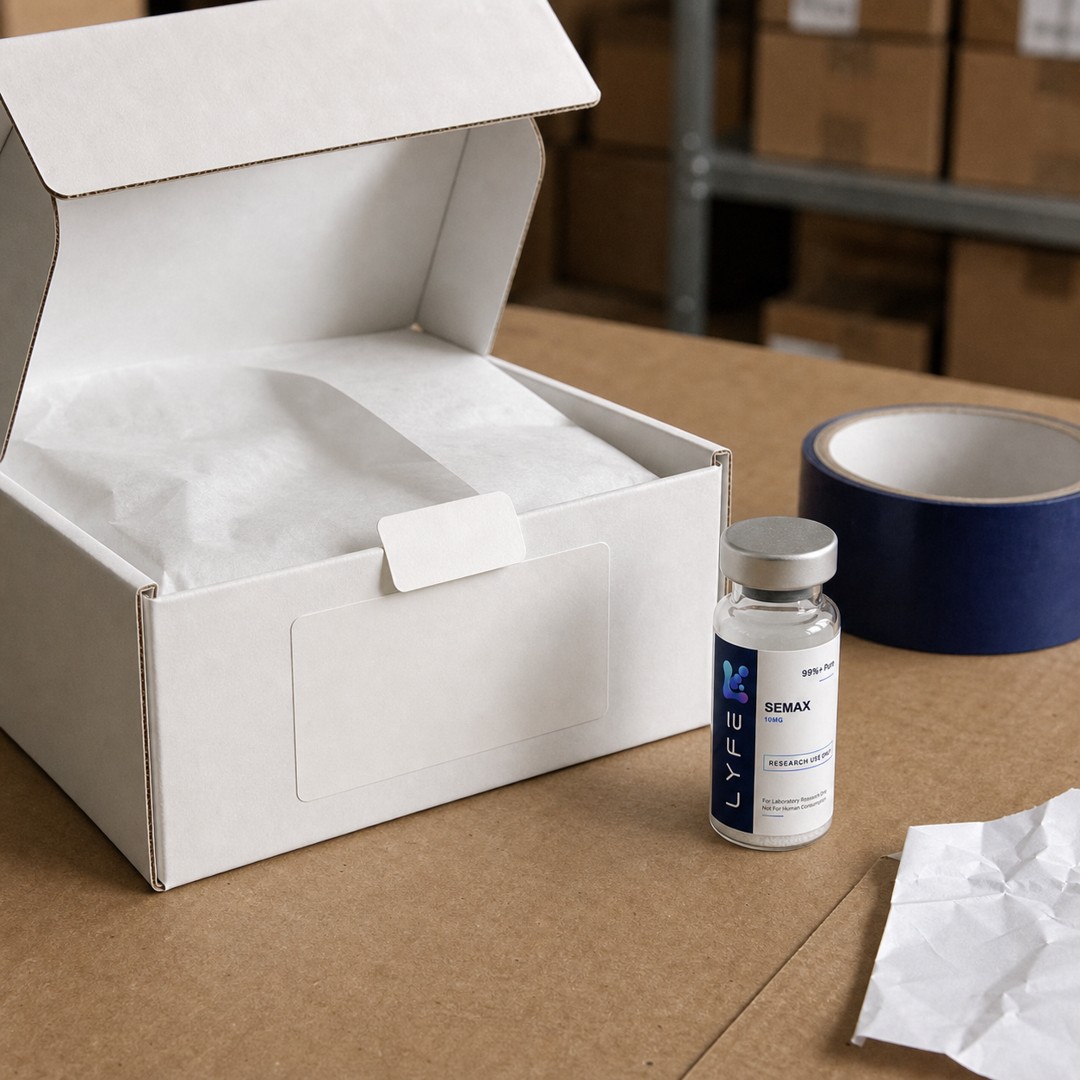
- Straightforward payment and neutral packaging.
Is buying in Canada worth it if a foreign supplier is cheaper?
Often, yes. A lower sticker price abroad can disappear once you add brokerage fees, longer transit, and the real chance of a shipment being held at the border. A domestic order from LYFE Science ships by Canada Post, at a flat $25 and free over $150, and lands in one to three business days for most of the country.
Ordering strategy
How much should I order at once?
Match your order to your actual project timeline so material is not sitting in storage longer than it needs to be. Where it makes sense, consolidate purchases to clear the free-shipping threshold and reduce packaging and handling.
How should I plan around storage?
Confirm your storage capacity before ordering, and log storage conditions from the moment a parcel arrives. Good handling on your end protects the potency you paid to verify on the supplier’s end.
Should I keep material from old and new lots separate?
Yes. Label and store lots separately, and keep each lot’s certificate of analysis with it. Mixing lots makes it impossible to attribute a result to a specific input, which is exactly the kind of ambiguity that breaks reproducibility later. Clear separation costs nothing and saves a great deal of second-guessing.
What LYFE Science carries
Which compounds are in the catalogue?
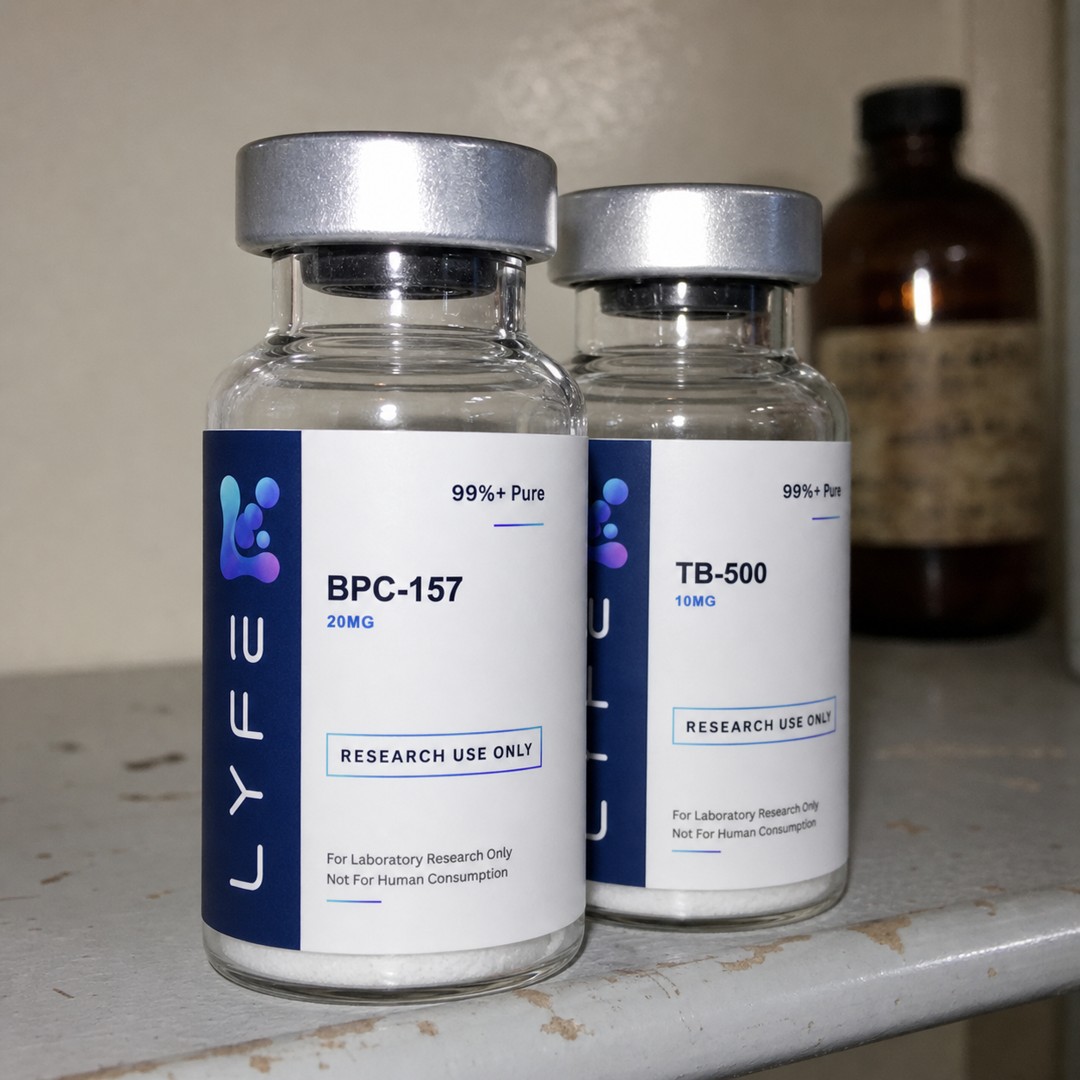
The current line-up spans several fields of study: GHK-Cu for matrix and copper chemistry, TB-500 for cytoskeletal work, MOTS-c for metabolic research, and CJC-1295 (No DAC) with Ipamorelin for signalling research. The shop is organised by field of study rather than by claimed effect, which keeps the catalogue clean and easy to navigate.
How do I pay?
By Interac e-Transfer or crypto (BTC, ETH, SOL, USDC, USDT). No card processor sits in the middle, and Interac payments are matched automatically so confirmed orders move straight to dispatch.
More questions?
Anything not answered across these two volumes can go through the contact page. For a plain-language walkthrough of how compounds are described and how COAs are read, see the peptide guide, and browse the full range in the shop.
Follow along
Research, lab-side
@lyfe_science →