Blog
Peptides in Podcasts: What to Trust in 2026

Peptides went mainstream on podcasts, and 2026 pushed the trend even further. Long-form health and science shows now discuss research compounds by name, and search interest follows every episode. That attention is good for curiosity but bad for accuracy: the format rewards a confident story more than a careful one. Here is how to get value from peptide podcast coverage without absorbing the hype along with it.
Why podcasts drive peptide interest
Podcasts are conversational, personality-led and unedited by design. A host can spend forty minutes on a single molecule, which builds familiarity fast. For a category as technical as research peptides, that accessibility is genuinely useful. It also means a single strong opinion, right or wrong, reaches a large audience unchallenged.
The signal-to-noise problem
Audio has no footnotes. Claims fly past without a citation, doses and anecdotes blur together, and a guest’s enthusiasm can sound like established fact. Common failure modes to listen for:
- Anecdote framed as evidence – one person’s experience presented as a general result.
- Overreach from early research – a preliminary finding described as settled science.
- Undisclosed incentives – a host or guest with a commercial stake in what they are praising.
- Compound name confusion – similar-sounding peptides discussed as if interchangeable.
How to listen critically
Treat a podcast as a starting point, not a source. A few habits go a long way:
- Note the exact compound name and look it up in writing afterwards.
- Ask whether a claim traces back to a study or to a single story.
- Check whether the speaker discloses any commercial relationship.
- Be sceptical of anything that sounds like a guaranteed outcome.
Why compound names get muddled
Research peptides have names that are easy to mishear and easy to confuse. Abbreviations, numbers and near-identical prefixes get swapped around in casual conversation, and a host reading from memory can merge two different molecules into one. Before you act on anything an episode covered, pin down the exact name in text. Two peptides that sound alike out loud can be entirely different compounds with different properties, and searching the wrong name is how people end up buying something they never intended.
The gap between a story and a product
A podcast can make a molecule sound remarkable, but it cannot hand you a vial you can trust. That gap is where careful buyers focus. No amount of enthusiasm on air changes what is physically in the container that arrives at your door: the sequence, the purity and the amount. Those facts come from a lab and a certificate, not from a microphone. Keeping that distinction clear is the single most useful habit when peptide content is everywhere at once.
Turning interest into good decisions
If a podcast sends you looking to buy peptides in Canada, shift your attention from the story to the supplier. The claims that matter at the point of purchase are not about what a molecule might do, but about what you are actually receiving: purity, identity and traceability. That is where a supplier earns trust or loses it.
| Podcast promises | What actually matters at purchase |
|---|---|
| Dramatic outcomes | Verified purity by HPLC |
| Personal anecdotes | Identity confirmed by mass spectrometry |
| Hype and momentum | A COA tied to your specific lot |
Where LYFE fits
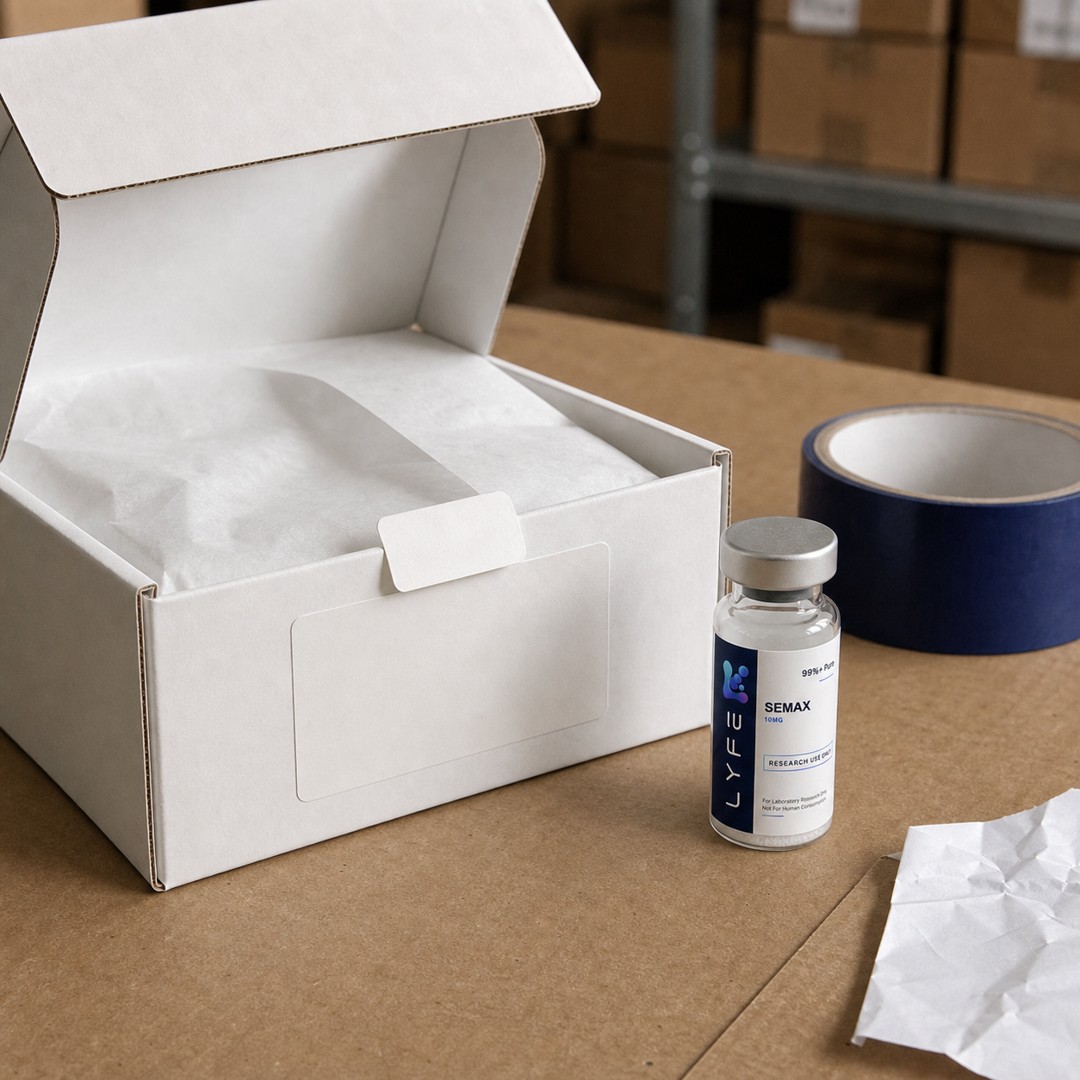
LYFE Science is a Canadian supplier focused on the part a podcast cannot give you: a clean, verified product with paperwork. We test by HPLC and mass spectrometry and make a certificate of analysis available per lot. Shipping is Canada-wide by Canada Post, flat $25 and free over $150, with same-day dispatch when paid before noon ET, one to three business days across most of Canada, and neutral packaging. Payment is by Interac e-Transfer or crypto (BTC, ETH, SOL, USDC, USDT).
Heard a compound mentioned and want the plain-language version? Our peptide guide explains the terminology, and you can see what is in stock anytime.
Follow along
Research, lab-side
@lyfe_science →