Blog
Inside CagriSema: Cagrilintide + Semaglutide

CagriSema is a combination that pairs two well-known peptides, cagrilintide and semaglutide, into a single blend. It has drawn a lot of attention in research circles because the two components come from different families and act through different pathways. Rather than one molecule engineered to hit multiple targets, CagriSema keeps two distinct peptides together, each with its own established profile. Understanding what each one brings, and why they are combined, makes the logic of the blend much clearer.
Semaglutide: the GLP-1 component
Semaglutide belongs to the GLP-1 receptor agonist family. GLP-1, or glucagon-like peptide-1, is an incretin, a class of signalling molecules involved in glucose regulation and appetite signalling. Semaglutide is engineered to resist the rapid breakdown that limits the natural hormone, giving it a much longer duration of action. Within the GLP-1 category it is one of the most studied and widely recognised compounds.
Cagrilintide: the amylin component
Cagrilintide is a long-acting analogue of amylin, a hormone co-secreted with insulin. Amylin works through a different receptor system than GLP-1, which is the key point: it acts on a separate pathway. Like semaglutide, cagrilintide is modified so that it persists far longer than the natural hormone, making it suitable for a long-acting formulation.
Why combine the two
The rationale behind CagriSema is complementary action. Because cagrilintide (an amylin analogue) and semaglutide (a GLP-1 analogue) engage distinct receptor systems, researchers are interested in how their effects interact when the two are studied together rather than separately. Combining agents that work through different mechanisms is a common strategy in peptide research, and CagriSema is a prominent example of that approach.
How CagriSema compares to its parts
| Component | Family | Pathway |
|---|---|---|
| Semaglutide | GLP-1 receptor agonist | Incretin / GLP-1 receptor |
| Cagrilintide | Amylin analogue | Amylin receptor system |
| CagriSema | Combination blend | Both, together |
Where CagriSema sits in the metabolic peptide landscape
CagriSema is one of a growing group of next-generation metabolic peptides. Research began with single-target agonists, then moved toward molecules and combinations that engage more of the metabolic network at once. Some compounds pursue this with a single molecule that hits several receptors; CagriSema takes a different route by combining two peptides so that an amylin analogue and a GLP-1 analogue are studied side by side. Seeing that distinction makes it easier to place CagriSema against other multi-target compounds you may come across.
Handling and storage
As with any peptide, a blend is only as good as how it is documented and how it is kept. Store sealed vials cold and dark, let them reach room temperature before opening, and keep any reconstituted solution refrigerated and protected from light. Because CagriSema contains two components, confirming both are present and pure through documentation is more important than with a single-compound vial.
What to look for in a supplier
With any peptide, and especially a blend where two compounds must both be correct, verification is essential. Look for HPLC purity testing, mass spectrometry to confirm identity, and a lot-specific certificate of analysis. Our peptide guide walks through how to read that documentation if you are new to it.
Buying peptides in Canada
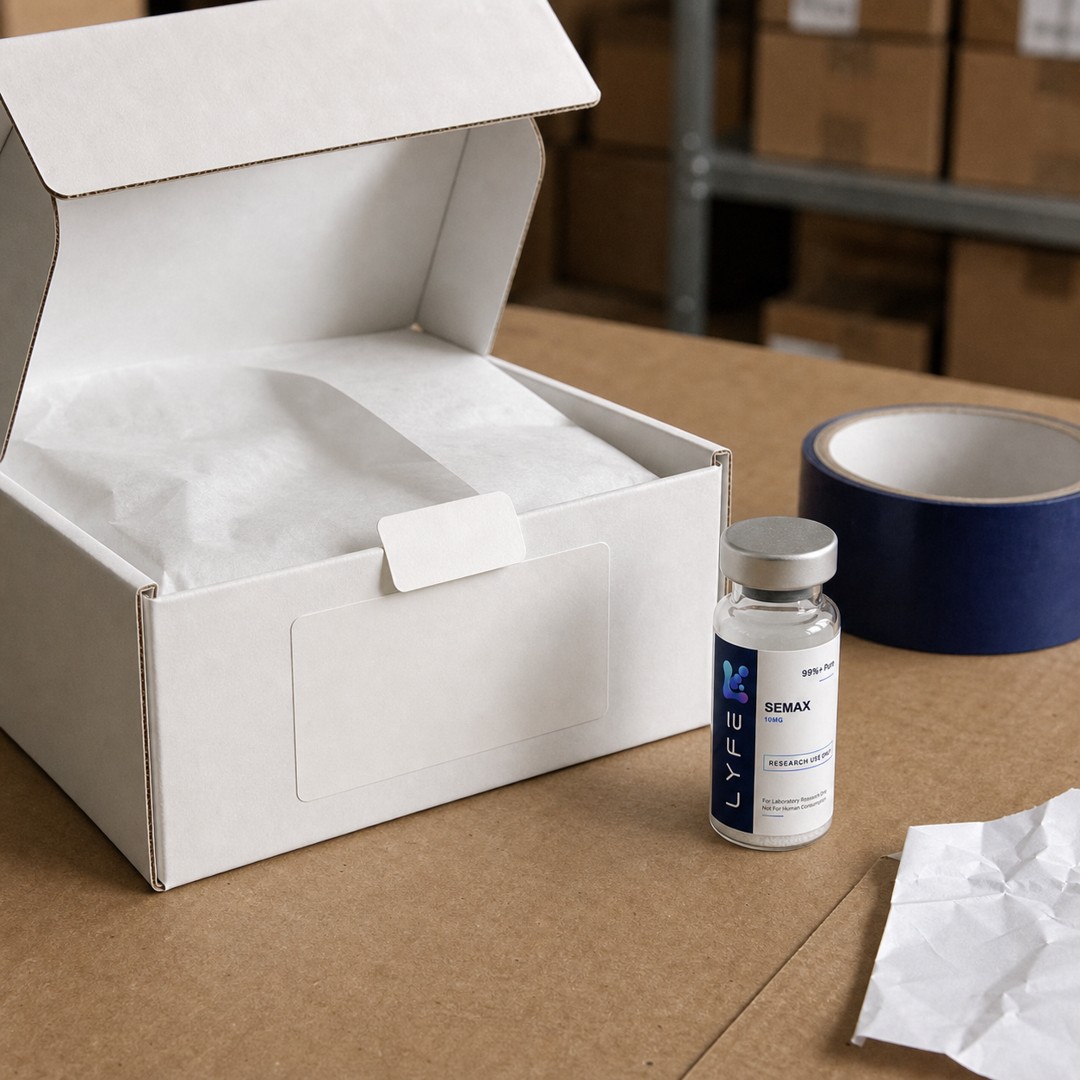
LYFE Science is a Canadian supplier that ships coast to coast with Canada Post. Shipping is a flat $25 and free on orders over $150, dispatched the same day when payment clears before noon Eastern and arriving in one to three business days across most of the country. Packaging is plain and unbranded. Payment is by Interac e-Transfer or crypto (BTC, ETH, SOL, USDC, USDT). Every lot in our catalogue is checked by HPLC and mass spectrometry with a COA available, so you can confirm exactly what you are receiving. Explore the full range and the research families we carry.
Follow along
Research, lab-side
@lyfe_science →