Blog
Healing and Recovery Peptides Explained

Three peptides dominate the recovery and tissue-repair research literature: TB-500, BPC-157 and GHK-Cu. They are often mentioned in the same breath, but they come from different biological origins and are studied for different mechanisms. This guide explains each one and how they relate.
TB-500
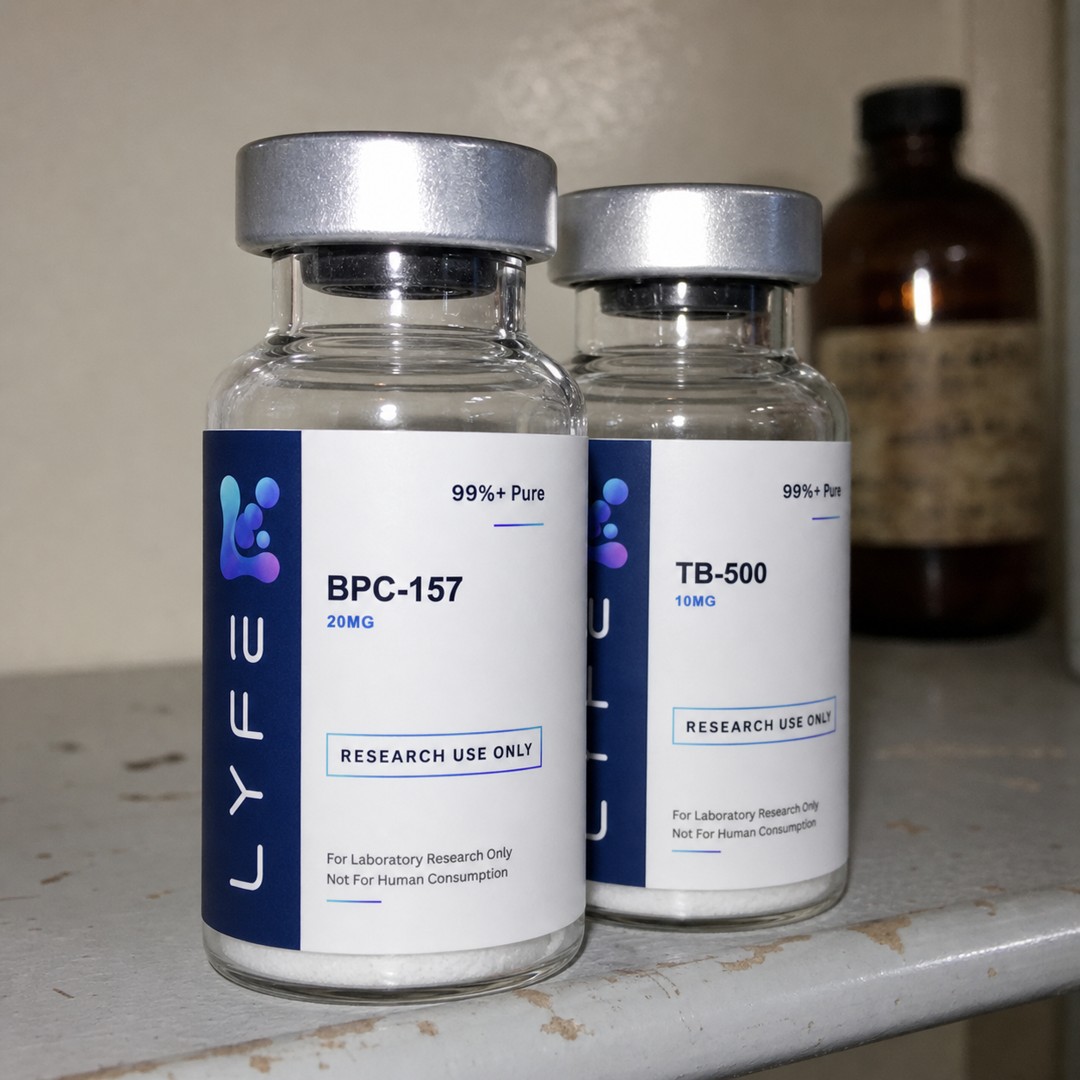
TB-500 is a synthetic peptide related to thymosin beta-4, a naturally occurring protein involved in cell structure. Research centres on its interaction with actin, the protein that forms part of the cellular cytoskeleton. By influencing actin dynamics, it is studied in models of cell migration and wound repair, since cells have to move and reorganise to close a wound. That cytoskeletal angle is what sets TB-500 apart from the other two.
BPC-157
BPC-157 is a synthetic 15-amino-acid sequence derived from a protective protein found in gastric juice (the name stands for Body Protection Compound). The research emphasis is on angiogenesis, the formation of new blood vessels, and on tendon, ligament and gut-model repair. Because new blood supply is central to healing, angiogenesis is the mechanism most associated with this peptide.
GHK-Cu
GHK-Cu is a copper-binding tripeptide (glycyl-L-histidyl-L-lysine plus copper). It is best known in the skin and connective-tissue literature, where interest focuses on the extracellular matrix: collagen, elastin and the scaffolding that holds tissue together. It also acts as a copper carrier, and copper is a cofactor in several remodelling enzymes. GHK-Cu is the skin-and-matrix specialist of the three.
Different mechanisms, one theme
The reason these three are grouped together is that repair is a multi-step process, and each peptide is studied at a different step:
| Peptide | Origin | Main research mechanism | Studied context |
|---|---|---|---|
| TB-500 | Thymosin beta-4 fragment | Actin / cytoskeleton, cell migration | Wound closure models |
| BPC-157 | Gastric protein derivative | Angiogenesis, blood supply | Tendon, ligament, gut models |
| GHK-Cu | Copper tripeptide | Extracellular matrix, collagen | Skin and connective tissue |
This is why they turn up together in recovery-oriented blends such as GLOW: cell migration, new blood vessels and matrix rebuilding are complementary parts of the same story, not competing approaches.
Why they are studied together
Healing is never a single event. A wound has to be cleared, re-vascularised, repopulated with cells that migrate into the gap, and finally rebuilt with new structural material. Because TB-500, BPC-157 and GHK-Cu each map onto a different stage of that sequence, they are natural companions in the recovery literature rather than rivals. Grouping them is less about stacking effects and more about covering the full arc of repair, from the cellular machinery that moves cells around to the matrix that gives the finished tissue its strength.
How to choose what to research
If your interest is the cytoskeletal and cell-migration side of repair, TB-500 is the natural starting point. If vascular and connective-tissue models are the focus, BPC-157 leads there. If the target is skin, collagen and the extracellular matrix, GHK-Cu is the specialist. Many researchers work with them individually first to keep variables clean before looking at combinations. Our peptide guide covers the underlying terms like angiogenesis, cytoskeleton and extracellular matrix.
Buy recovery-research peptides in Canada
LYFE Science stocks TB-500 in our cytoskeletal research category and GHK-Cu in matrix and copper research. We are a Canadian supplier shipping nationwide by Canada Post: flat $25 shipping, free over $150, same-day dispatch on orders paid before noon ET, and 1 to 3 business days to most of Canada in neutral packaging. Every lot is verified by HPLC and mass spectrometry with a COA available per lot. Payment is by Interac e-Transfer or crypto (BTC, ETH, SOL, USDC, USDT).
Prefer the copper peptide? Browse GHK-Cu. Otherwise, TB-500 is below.
Follow along
Research, lab-side
@lyfe_science →