Blog
GLOW vs KLOW Peptide Blends: The Difference

GLOW and KLOW are two blended peptide formulas that get mentioned together constantly, and the names are close enough that people assume they are the same thing with a typo. They are not. They share most of their ingredients, but KLOW adds one extra component that changes the character of the blend. Here is a clear breakdown of what each one contains and how to tell them apart.
What GLOW contains
GLOW is a three-part blend built from well-known individual peptides:
- GHK-Cu, the copper tripeptide from the matrix and copper research family
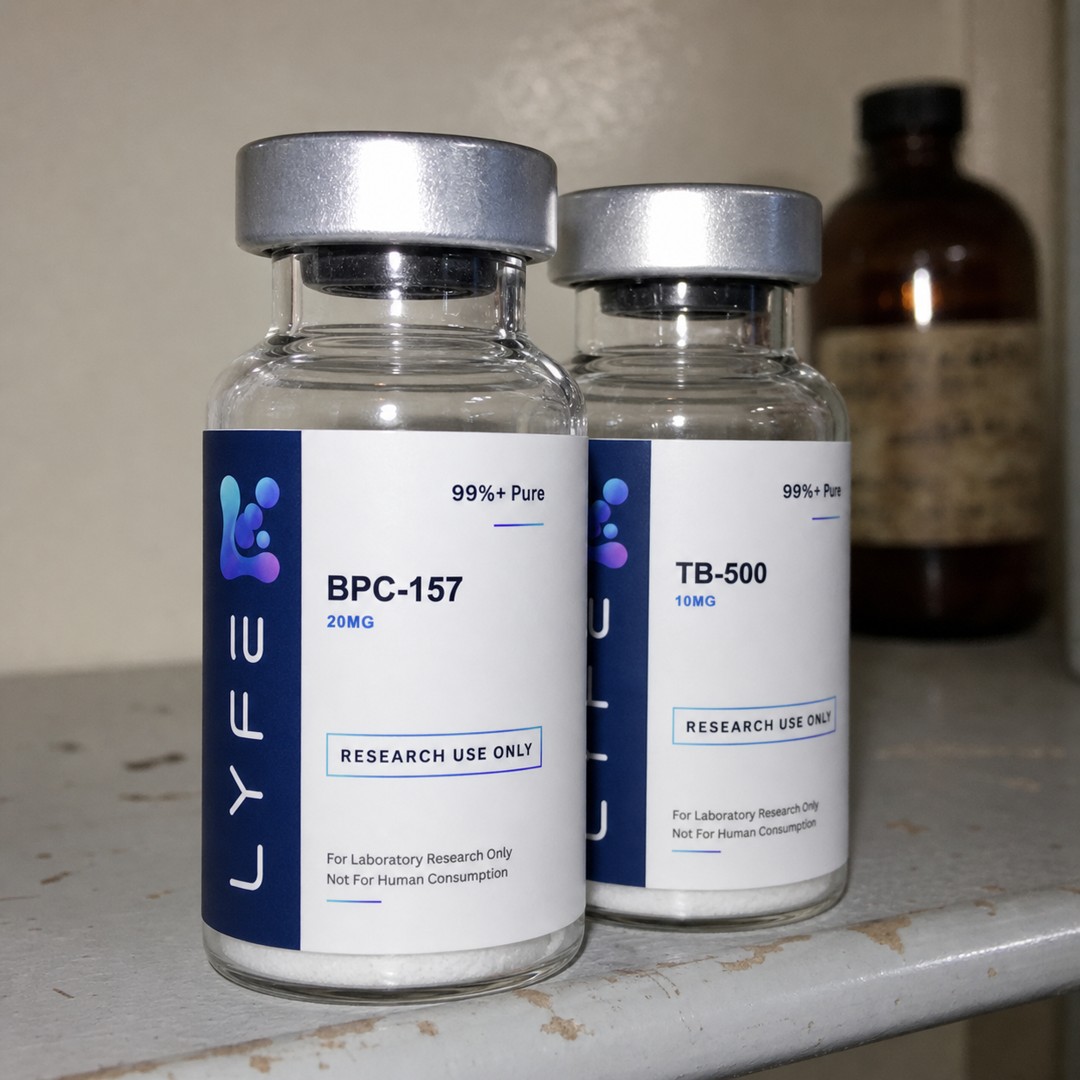
- BPC-157, a widely studied fragment peptide
- TB-500, a synthetic peptide from the cytoskeletal research group
The name is essentially a nod to those components combined into one vial so they can be studied as a single formula rather than three separate preparations.
What KLOW contains
KLOW is GLOW plus one more peptide: KPV, a short tripeptide fragment. So KLOW is a four-part blend:
- KPV (the extra ingredient, and the reason for the leading K)
- GHK-Cu
- BPC-157 (also called LDL by some suppliers in this naming shorthand)
- TB-500
If GLOW is the three-peptide base, KLOW is the same base with KPV stacked on top.
A closer look at the shared ingredients
Both blends lean on three well-characterised peptides. GHK-Cu is the copper tripeptide, a small glycine-histidine-lysine chain that carries a bound copper ion and is one of the most studied compounds in the matrix and copper research space. TB-500 is a synthetic peptide fragment from the cytoskeletal research family, widely referenced in the literature and popular as a standalone. BPC-157 is a short peptide fragment that is one of the most searched research compounds in Canada. Combining three distinct, individually documented peptides into one preparation is the whole idea behind the GLOW formula.
What KPV adds in KLOW
KPV is a tripeptide fragment, and it is the single ingredient that turns GLOW into KLOW. Because it is a separate molecule with its own identity and purity profile, its addition is not just a name change: it means the finished blend now has four components to characterise and verify rather than three. That is the practical reason the distinction is worth caring about when you compare certificates of analysis between the two formulas.
Side-by-side
| Component | GLOW | KLOW |
|---|---|---|
| GHK-Cu | Yes | Yes |
| BPC-157 | Yes | Yes |
| TB-500 | Yes | Yes |
| KPV | No | Yes |
| Number of peptides | 3 | 4 |
The one difference that matters
Strip away the marketing and the practical difference is simple: KLOW is GLOW with KPV added. If you already understand GLOW, you understand KLOW, you just add the fourth peptide. That single change is worth knowing because it affects the profile of the blend and the certificate of analysis you should expect. A four-component blend means four identities and four purity figures to verify, not three.
Why buying the components separately can make sense
Blends are convenient, but they lock you into one fixed ratio and make it harder to trace the quality of each ingredient. Many researchers prefer to source the individual peptides so they can confirm identity and purity for each one by HPLC and mass spectrometry against a per-lot certificate of analysis. Two of the GLOW and KLOW components, GHK-Cu and TB-500, are peptides LYFE Science stocks individually. You can find GHK-Cu in our Matrix and Copper Research category and TB-500 in our Cytoskeletal Research category, each shipped with its own COA.
Ordering in Canada from LYFE Science
LYFE Science is a Canadian supplier shipping nationwide by Canada Post at a flat $25, free over $150. Orders paid before noon Eastern ship the same day and reach most of Canada in one to three business days, in neutral packaging. Payment is by Interac e-Transfer or crypto (BTC, ETH, SOL, USDC, USDT). Purity on every product is confirmed by HPLC and mass spectrometry with a certificate of analysis per lot.
Want to understand how these peptides are handled and stored before you buy? Start with our peptide guide, then browse the full range:
Follow along
Research, lab-side
@lyfe_science →