Blog
Does BPC-157 Expire? Shelf Life Guide

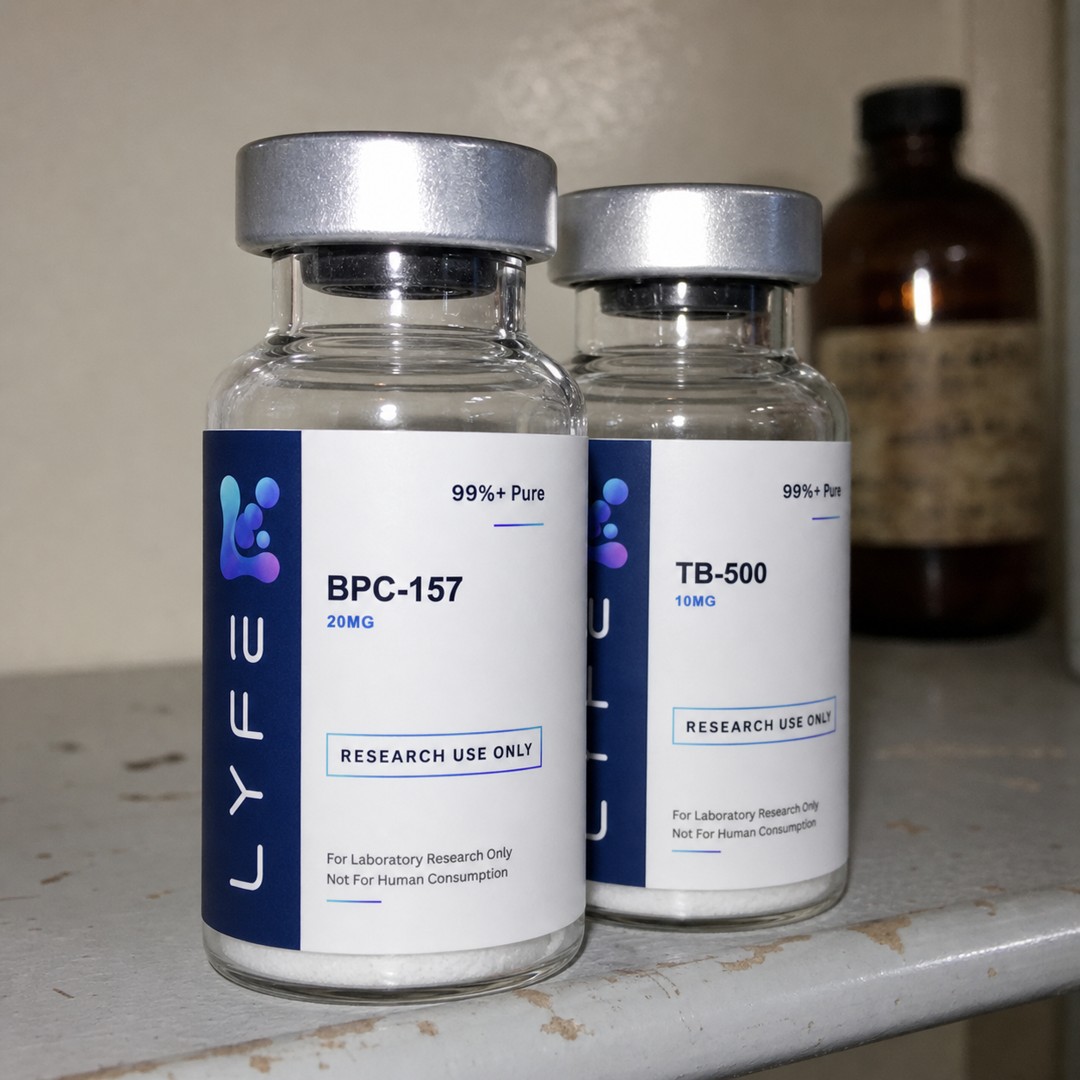
BPC-157 is one of the most searched peptides in Canada, and one of the most practical questions buyers ask is simple: does it expire? Like any peptide, BPC-157 does have a shelf life, and how long it stays stable depends almost entirely on its physical form and how it is stored. This guide breaks down the two forms and what to expect from each.
Two forms, two very different shelf lives
The single biggest factor is whether the peptide is in its dry powder form or has been mixed into a liquid.
- Lyophilized (freeze-dried powder): this is the stable form. With water removed, there is very little for degradation reactions to work with, so lyophilized BPC-157 keeps far longer than the reconstituted version.
- Reconstituted (mixed into liquid): once the powder is dissolved, the clock speeds up. Peptides in solution are more vulnerable to breakdown, so reconstituted material has a much shorter usable window and needs cold storage.
How storage temperature changes the timeline
Temperature is the second big lever. The colder and more stable the storage, the longer the peptide holds its integrity. As a general rule of thumb for research peptides like BPC-157:
| Form | Storage | General stability window |
|---|---|---|
| Lyophilized powder | Freezer | Longest, often a year or more |
| Lyophilized powder | Refrigerator | Long, many months |
| Lyophilized powder | Room temperature, short term | Fine briefly, e.g. during shipping |
| Reconstituted liquid | Refrigerator | Short, a few weeks |
These are general ranges rather than hard guarantees. Manufacturing quality, purity and how carefully the vial is handled all shift the real number.
What actually degrades a peptide
Understanding the enemies of stability makes the storage rules obvious. The main threats are:
- Heat: speeds up every chemical breakdown pathway.
- Water: the reason reconstituted peptide has a shorter life than powder.
- Light: UV exposure can degrade sensitive molecules, so amber vials and dark storage help.
- Repeated temperature swings: taking a vial in and out of the fridge or freezer stresses it more than steady cold.
Practical storage tips
Keep lyophilized BPC-157 sealed, dry and cold, ideally in the freezer for long-term storage and the fridge for near-term. Reconstitute only what you plan to use in the short window, keep the mixed vial refrigerated and out of light, and avoid unnecessary freeze-thaw cycles. Let a cold vial return to a stable temperature before opening to limit condensation.
Why source quality is the real starting point
Shelf life begins with what you buy. A peptide that arrives already partly degraded will not last, no matter how well you store it. That is why identity and purity confirmed by HPLC and mass spectrometry, with a certificate of analysis for the specific lot, is the foundation of good stability. Cold, careful shipping matters too, since a peptide that cooked in transit starts its shelf life at a disadvantage.
Buying research peptides in Canada from LYFE Science
LYFE Science is a Canadian supplier shipping nationwide by Canada Post at a flat $25, free over $150, with same-day dispatch on orders paid before noon Eastern and one to three business days to most of Canada. Everything ships in neutral packaging, purity is confirmed by HPLC and mass spectrometry, and a COA is available per lot. We accept Interac e-Transfer and crypto (BTC, ETH, SOL, USDC, USDT).
For step-by-step reconstitution and storage guidance, see our peptide guide, and browse the current catalogue on the shop page.
Follow along
Research, lab-side
@lyfe_science →