Blog
BPC-157 in Musculoskeletal Research: A Guide

Few peptides have as much research attention in the musculoskeletal space as BPC-157. If you have read anything about tendon, ligament or muscle studies, this is likely the compound behind it. Here is a clear overview of what BPC-157 is and why it keeps appearing in connective-tissue work.
What BPC-157 is
BPC-157 stands for Body Protection Compound-157. It is a synthetic pentadecapeptide, a chain of fifteen amino acids, whose sequence is derived from a protective protein found in gastric juice. Its defining practical trait is stability: it holds up well compared with many peptides of similar size, which is one reason it is so widely used in research settings.
Why the musculoskeletal focus
The musculoskeletal system covers everything that lets the body move and hold shape: tendons, ligaments, muscle, bone and the connective tissue that ties them together. These structures are notoriously slow to repair because many of them carry limited blood supply. That is exactly why researchers find BPC-157 interesting, since much of the work centres on the biological steps that repair depends on.
Tendons and ligaments
Tendon and ligament research is where BPC-157 shows up most. These tissues heal slowly, so any compound studied in models of tendon-to-bone connection and fibroblast activity draws attention.
Muscle
Muscle studies look at how tissue responds after strain or damage, and BPC-157 is a frequent subject in that literature.
Bone and joints
Bone and joint models round out the musculoskeletal picture, where interest sits on the signalling around structural repair.
Why angiogenesis keeps coming up
A recurring theme in BPC-157 research is angiogenesis, the formation of new blood vessels. Blood flow is a bottleneck for repair in poorly vascularized tissue, so much of the compound’s appeal in musculoskeletal models traces back to this line of study. Tendons and ligaments carry relatively little blood supply, which is a large part of why they heal so slowly, so any compound studied in the context of new vessel formation naturally draws attention in this field.
Why stability makes it a research favourite
Many peptides of similar size are fragile and awkward to work with. BPC-157 stands out because it is comparatively robust, which makes it easier to handle and store than more delicate compounds. That practical resilience, combined with the sheer volume of published musculoskeletal work, is why it has become a reference point that newer compounds are measured against. When researchers design a connective-tissue study, BPC-157 is frequently the benchmark rather than an afterthought.
BPC-157 at a glance
| Property | Detail |
|---|---|
| Class | Pentadecapeptide (15 amino acids) |
| Origin | Sequence derived from a gastric protective protein |
| Main research area | Musculoskeletal and connective-tissue repair |
| Notable trait | Comparative stability |
Buying BPC-157 in Canada
Because BPC-157 is popular, quality varies. The things that matter most are analytical proof and careful handling.
- Confirm purity and identity with HPLC and mass spectrometry.
- Ask to see a certificate of analysis for the exact lot.
- Choose a domestic supplier so shipping stays cold and quick.
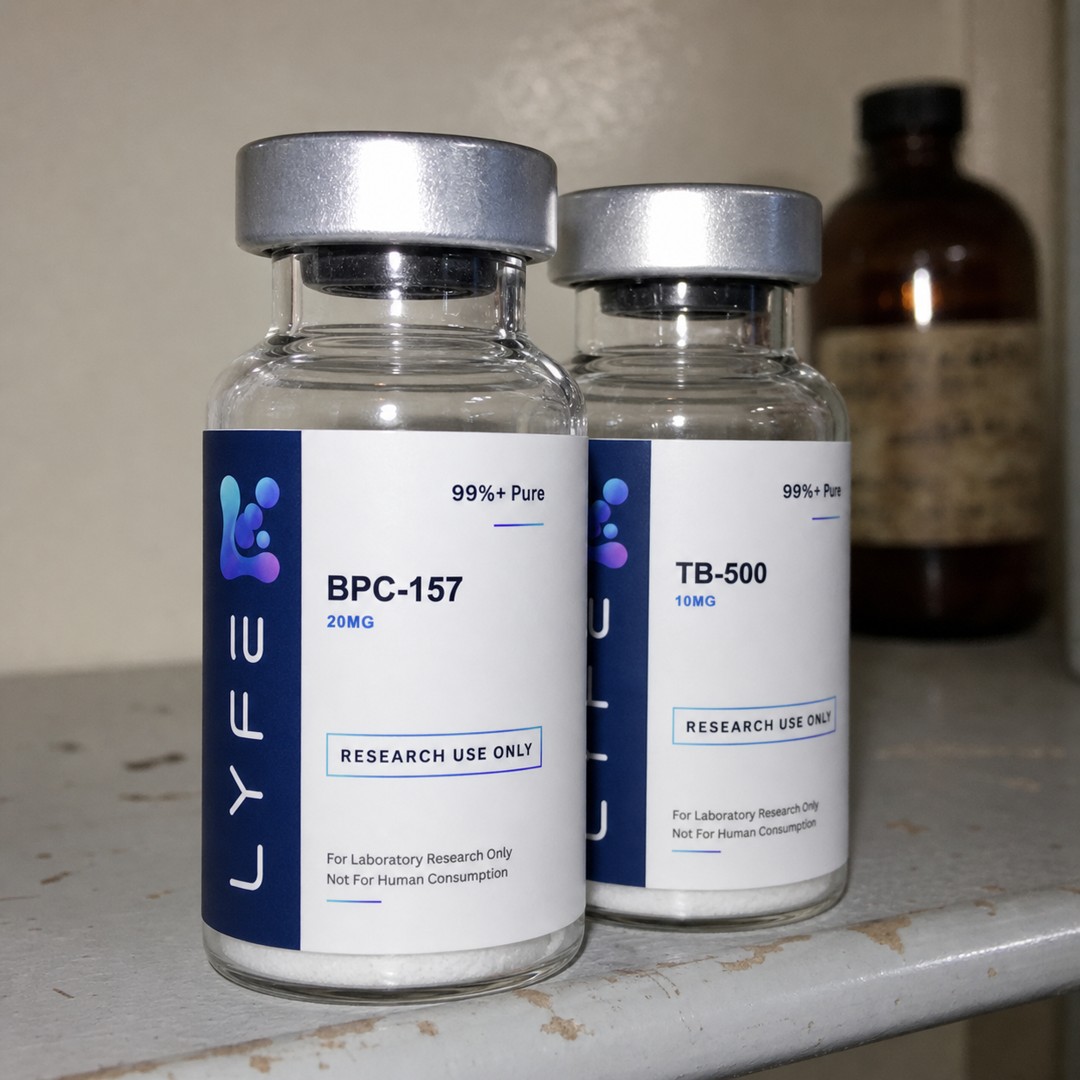
Every lot we sell is checked by HPLC and mass spectrometry, and a certificate of analysis is available for the lot you receive, so you can confirm identity and purity before anything leaves the freezer.
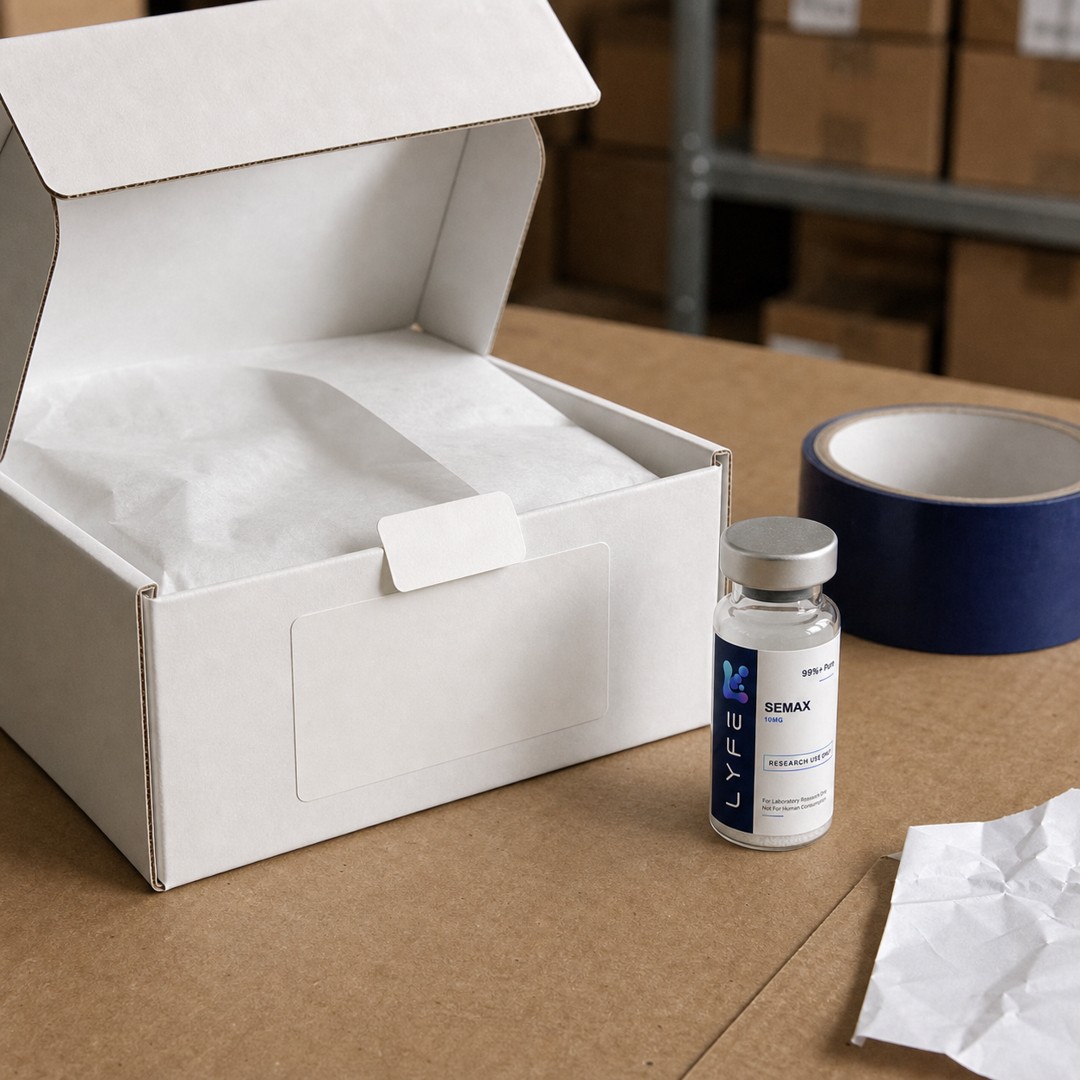
LYFE Science is a Canadian supplier and ships peptides Canada-wide with Canada Post. Shipping is a flat $25, and free on orders over $150. Pay before noon Eastern and your order is dispatched the same day, with most Canadian addresses reached in one to three business days. Every shipment goes out in neutral, unbranded packaging.
Checkout is by Interac e-Transfer or crypto (BTC, ETH, SOL, USDC, USDT). No cards are needed, and no third-party processor sits between you and your order.
LYFE Science is expanding its catalogue of connective-tissue research compounds. Browse the current lineup and check back as new peptides are added.
Follow along
Research, lab-side
@lyfe_science →