Blog
What Is PT-141 (Bremelanotide)?

PT-141, also known as bremelanotide, is a research peptide that belongs to the melanocortin family. It is a synthetic analogue of a naturally occurring hormone fragment, and it is studied for the way it acts on a specific set of receptors in the nervous system rather than on peripheral tissues. Understanding where it comes from helps explain why it behaves so differently from most other peptides.
What is PT-141?
PT-141 is a cyclic peptide derived from an earlier compound called melanotan II. Where melanotan II was studied largely for its effects on pigmentation, researchers noticed that a related structure produced different signalling behaviour, and PT-141 was developed from that observation. Chemically it is a small, stabilised peptide designed to interact with melanocortin receptors.
The melanocortin system
To understand PT-141 you first need to understand the melanocortin system, a network of five receptor subtypes (MC1R through MC5R) that respond to melanocortin peptides. Each subtype is associated with different biology:
- MC1R – linked to pigmentation of skin and hair.
- MC2R – involved in the adrenal stress-hormone axis.
- MC3R and MC4R – found in the central nervous system and tied to energy balance and neural signalling.
- MC5R – associated with exocrine gland function.
PT-141 is of particular interest because it acts centrally on the MC3R and MC4R subtypes in the brain, which is what distinguishes it from compounds that work through the vascular system or peripheral tissues.
How PT-141 works
Because it engages melanocortin receptors in the central nervous system, PT-141 is studied as a model for receptor-mediated neural signalling. Researchers use it to probe how melanocortin pathways influence behaviour and physiology through the brain rather than through direct action on distant organs. That central mechanism is the reason it is grouped separately from most other research peptides.
Research areas
PT-141 appears across several strands of scientific investigation:
- Neuropharmacology – as a tool for studying melanocortin receptor signalling in the brain.
- Receptor biology – for mapping how MC3R and MC4R behave when activated by a selective ligand.
- Peptide stability – as an example of how cyclic structures can improve the durability of a peptide compared with its linear parent.
PT-141 in context
The melanocortin family is a good illustration of why receptor selectivity matters so much in peptide science. Small structural changes shift which receptor subtype a peptide prefers, and that in turn changes the biology it touches. PT-141 is frequently cited as a case study in how researchers move from a broad-acting parent compound to a more targeted analogue.
Handling and storage
Research peptides are generally supplied as a lyophilised (freeze-dried) powder, the most stable form for transport and long-term storage. As a broad principle in the field, dry peptide is kept cool and protected from light and moisture, and once reconstituted its usable window is much shorter. Retaining the certificate of analysis for each lot lets you match your work back to the exact material you handled, which underpins reproducible results. These are general handling principles, not instructions for any specific protocol.
Sourcing research peptides in Canada
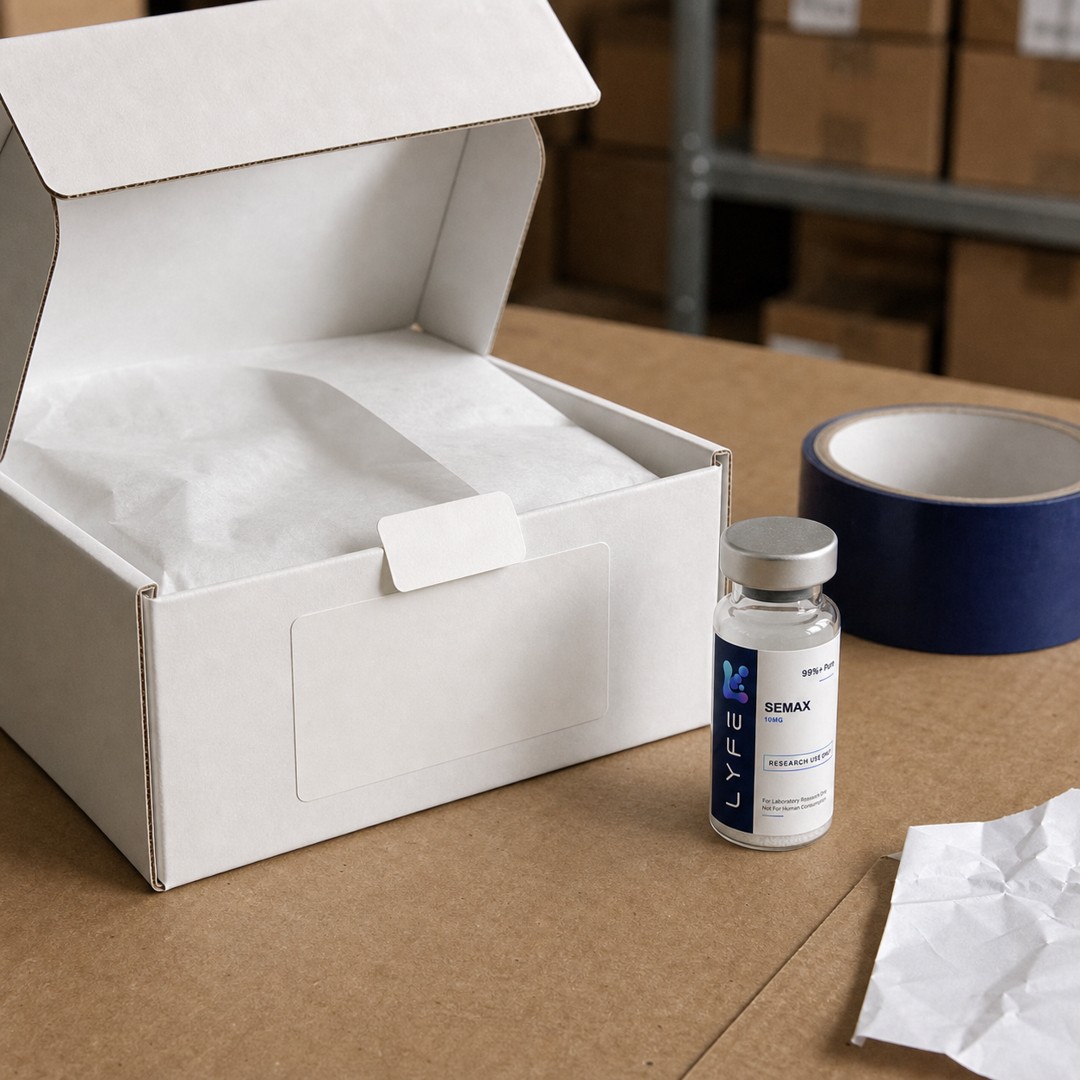
For any research compound, provenance and documentation are the difference between reliable and unreliable work. LYFE Science is a Canadian supplier: orders stay in the country, and every lot we carry is verified by HPLC and mass spectrometry with a certificate of analysis available per lot. Shipping is a flat $25 across Canada by Canada Post, free over $150, in neutral packaging, with same-day dispatch on orders paid before noon ET and one to three business days to most destinations. Payment is by Interac e-Transfer or crypto (BTC, ETH, SOL, USDC, USDT).
Learn more
New to this area? Start with our peptide guide, then browse everything we carry in the shop.
Follow along
Research, lab-side
@lyfe_science →