Blog
What Are Peptides? A Beginner’s Guide

If you keep seeing the word peptide and are not quite sure what it means, you are in the right place. This is a plain-language introduction: what a peptide actually is, how it relates to proteins and amino acids, why so many different peptides exist, and what to look for when you buy one. No jargon, no assumptions.
The one-sentence definition
A peptide is a short chain of amino acids joined together. That is the whole idea. Amino acids are the small building blocks, and when you link a handful of them in a specific order, you get a peptide.
Amino acids, peptides, proteins
Think of it as a scale of size. Amino acids are the individual beads. String a few beads together and you have a peptide. String hundreds or thousands together and fold them into a complex shape and you have a protein. The dividing line is loose, but the usual rule of thumb is:
- Amino acid: a single building block. There are twenty common ones.
- Peptide: a short chain, roughly two to fifty amino acids.
- Protein: a long chain, dozens to thousands, folded into a working structure.
So a peptide is essentially a small protein fragment, or a purpose-built short chain. The bonds that hold the amino acids together are called peptide bonds, which is where the name comes from.
Why the order of amino acids matters
The sequence is everything. Change which amino acids are in the chain, or the order they sit in, and you get a completely different peptide with different properties. This is why there are so many named peptides: each one is a distinct sequence. A three-amino-acid peptide like GHK is a different molecule from a longer chain, and even swapping a single position creates a new compound. The name usually encodes the sequence or the research history, which is why peptide names can look like codes.
Naturally occurring versus synthesised
Many peptides occur naturally, produced by living organisms as signalling molecules and building blocks. Others are made in a lab by chemically assembling the amino acid chain one unit at a time, a process called solid-phase peptide synthesis. Research peptides are typically synthesised so the exact sequence can be produced consistently and to a known purity. The molecule can be identical to a natural one or a deliberately designed variant.
Why peptides are studied so widely
Peptides are compact, specific, and defined. Because a peptide is a precise sequence, it can be made reproducibly and characterised exactly, which makes it a clean tool for research. Different peptides are studied for how they interact with receptors, enzymes, and other molecules. The variety is enormous, which is exactly why the field is so active: a small change in sequence opens up a new line of study.
What quality looks like when you buy
Because a peptide is defined by its sequence and its purity, those are the two things worth confirming before you buy:
- Identity: is the molecule actually the peptide on the label? Mass spectrometry confirms the mass matches the intended sequence.
- Purity: how much of the vial is the target peptide versus everything else? HPLC measures this and reports it as a percentage.
- Per-lot testing: a certificate of analysis tied to the specific batch you are buying, not a generic sample.
- Storage: most peptides keep best cold and dry, away from light.
A few peptides you will hear about
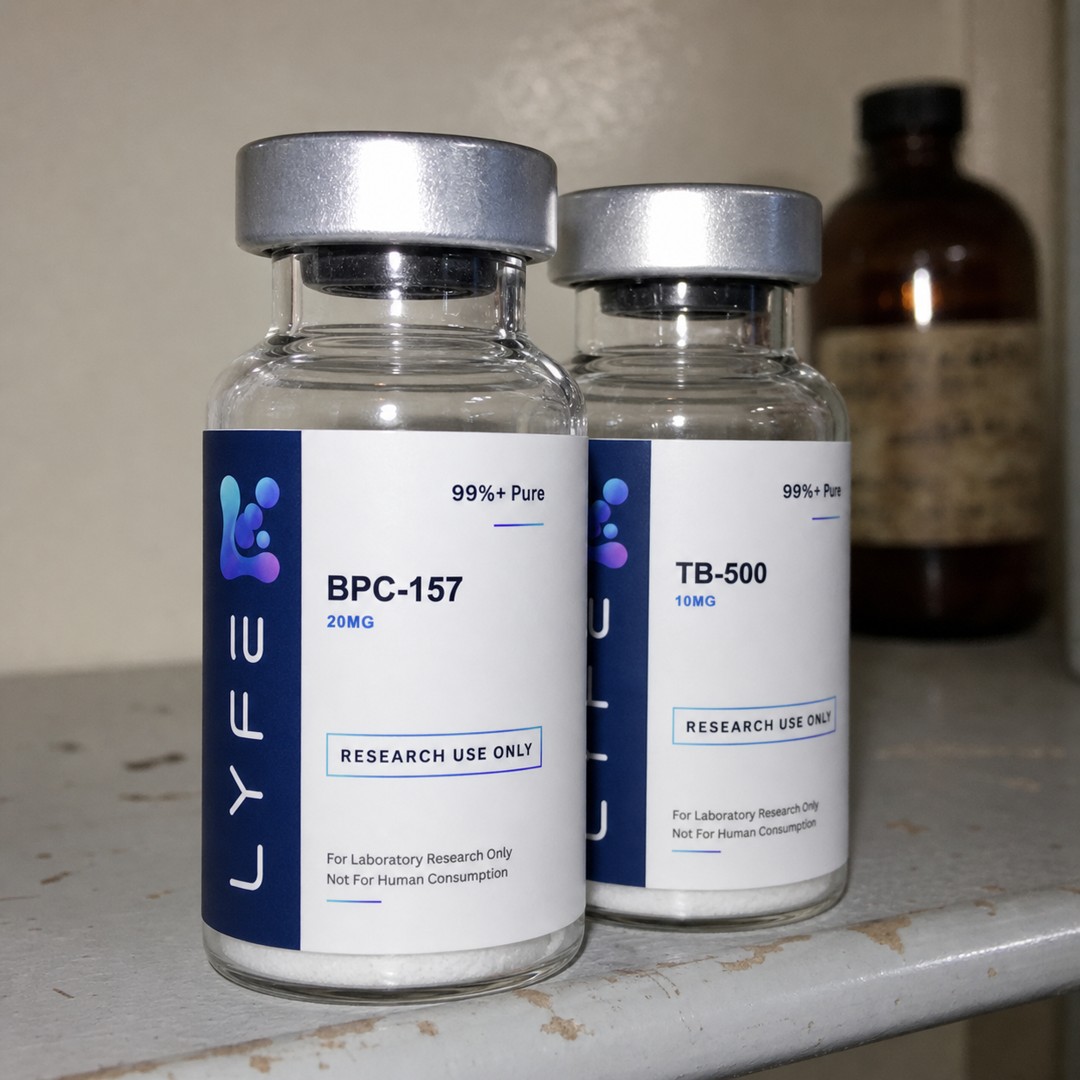
Once you start reading, the same names come up: GHK-Cu, a copper-binding tripeptide; TB-500, studied in cytoskeletal research; MOTS-c, a mitochondrial-derived peptide of interest in metabolic research; and combinations like CJC-1295 with Ipamorelin studied in signalling research. Each is just a specific sequence with its own history.
Buying research peptides in Canada from LYFE Science
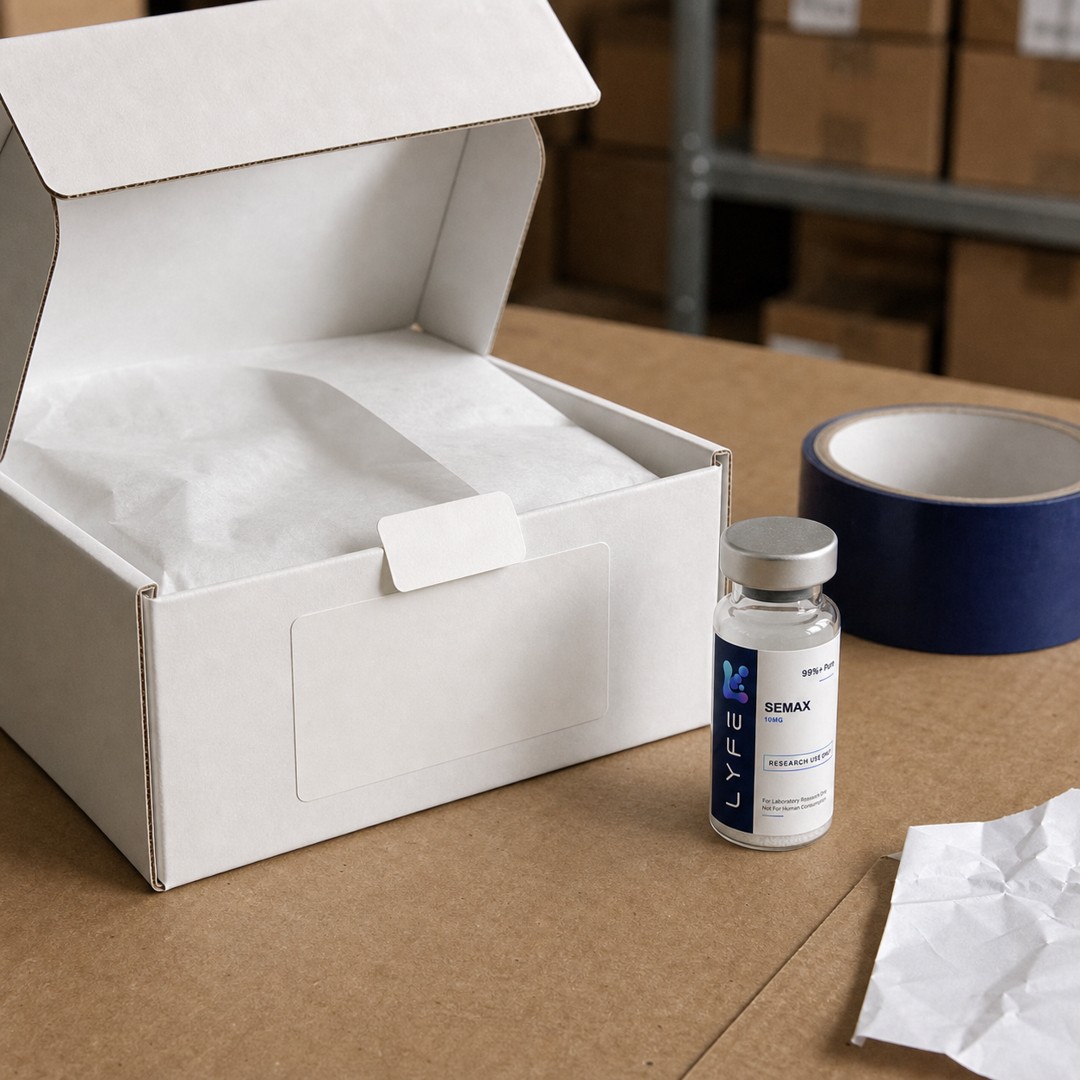
LYFE Science is a Canadian supplier. Every product is checked for identity and purity by HPLC and mass spectrometry, with a certificate of analysis available per lot. We ship nationwide by Canada Post, flat $25 and free over $150, in neutral packaging, with same-day dispatch on orders paid before noon Eastern and one to three business days to most of Canada. Payment is by Interac e-Transfer or crypto (BTC, ETH, SOL, USDC, USDT).
Ready to go deeper? Our interactive peptide guide covers sequences, storage, and reading a COA, and the full catalogue is on the shop page.
Follow along
Research, lab-side
@lyfe_science →