Blog
NAD+ and Sirtuins: The Longevity Research Link

Few pairings show up in longevity research as often as NAD+ and the sirtuins. One is a coenzyme at the heart of cellular metabolism; the other is a family of enzymes that depend on it to function. Understanding how they connect explains why NAD+ has become such a central compound in ageing science.
What NAD+ is
NAD+ (nicotinamide adenine dinucleotide) is a coenzyme found in every living cell. In its most familiar role it is an electron carrier in metabolism, cycling between its oxidised form (NAD+) and reduced form (NADH) to shuttle electrons through the reactions that produce cellular energy. But NAD+ has a second, non-redox role that is just as important to longevity research: it is a substrate that certain enzymes consume to do their work. Chief among those enzymes are the sirtuins.
What sirtuins do
Sirtuins are a family of enzymes (SIRT1 through SIRT7 in mammals) often described as regulators of cellular stress response and metabolism. They act largely by removing chemical tags from proteins, a process that influences gene expression, DNA repair, mitochondrial function, and inflammation. Because these are all processes tied to how cells age, sirtuins have been studied intensively as potential levers on healthspan.
The dependency that links them
Here is the key point: sirtuins cannot function without NAD+. They are NAD+-dependent enzymes, meaning every catalytic cycle consumes a molecule of NAD+. This creates a direct link between the cell’s NAD+ supply and how active its sirtuins can be. When NAD+ is abundant, sirtuins have the fuel they need; when NAD+ is scarce, sirtuin activity is constrained regardless of how much of the enzyme is present.
That dependency is why researchers treat NAD+ availability as a rate-limiting factor for sirtuin-driven pathways, and why so much longevity work focuses on NAD+ levels rather than on the sirtuins alone.
NAD+ decline with age
One of the most discussed findings in the field is that NAD+ levels appear to fall with age across many tissues. Since sirtuins depend on NAD+, a declining supply is proposed to blunt sirtuin activity over time, which has been connected to reduced stress resistance, altered metabolism, and diminished DNA-repair capacity. This is the central hypothesis behind studying NAD+ as a longevity-relevant molecule: if falling NAD+ constrains a family of protective enzymes, then NAD+ availability becomes a lever worth investigating.
Beyond sirtuins: the wider NAD+ economy
Sirtuins are not the only consumers of NAD+. PARPs (poly-ADP-ribose polymerases), which are involved in DNA repair, also draw on the NAD+ pool, as do enzymes such as CD38. Because these consumers compete for the same finite supply, research often frames NAD+ as an economy in which demand from one pathway can affect availability for another. This systems view is a big part of why NAD+ metabolism is such an active area.
Why it matters for the bench
- NAD+ is a shared currency: its level connects metabolism, DNA repair, and gene regulation.
- Sirtuin activity tracks NAD+ availability, making NAD+ a natural variable to study.
- Its age-related decline gives longevity researchers a concrete, measurable target.
Sourcing NAD+ in Canada
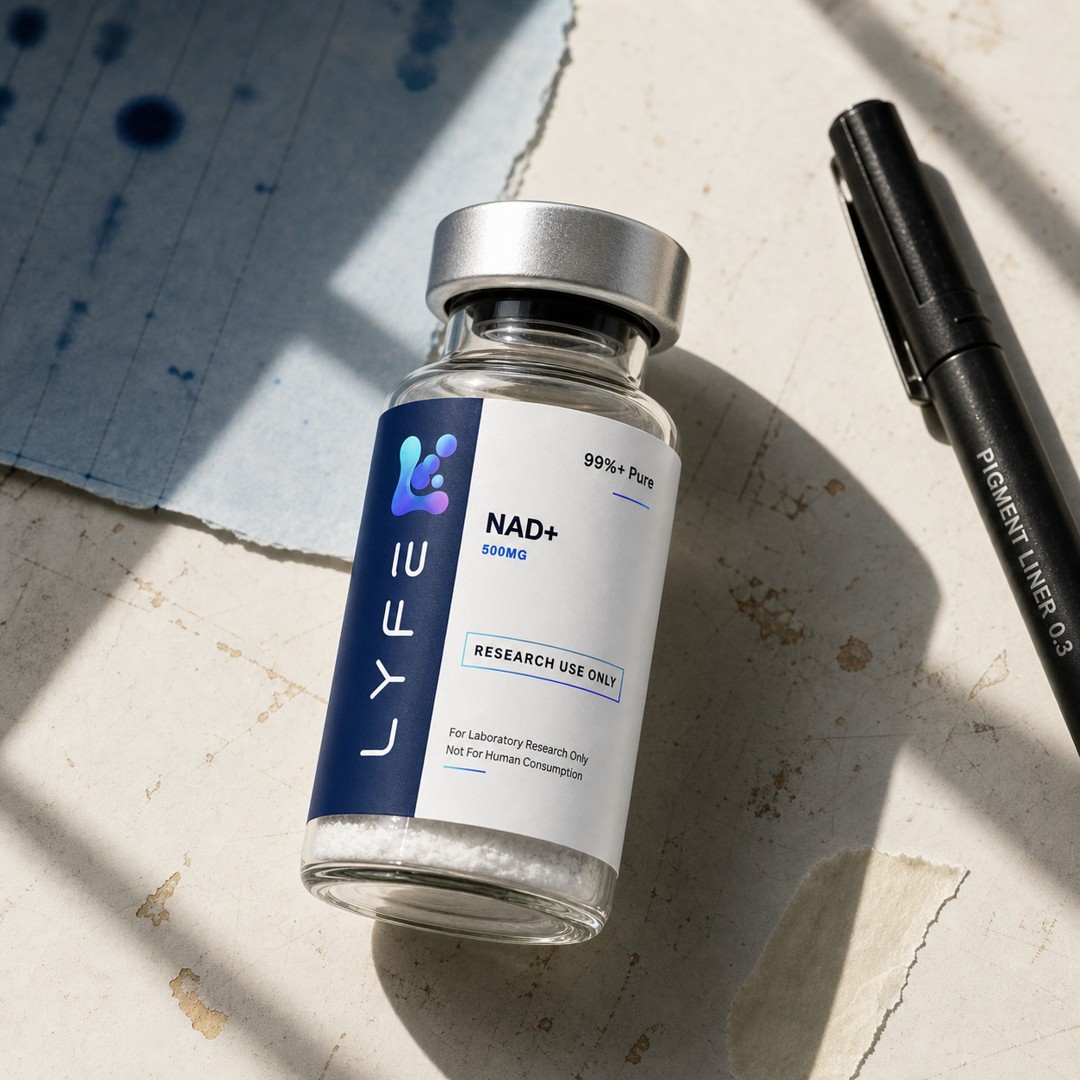
For work at this level, material quality and documentation matter. Look for purity confirmed by HPLC, identity confirmed by mass spectrometry, and lot-specific analysis you can actually review. LYFE Science is a Canadian supplier shipping Canada-wide by Canada Post, with flat $25 shipping and free over $150, same-day dispatch on orders paid before noon ET, and delivery in one to three business days for most of Canada in neutral packaging. Payment is by Interac e-Transfer or crypto (BTC, ETH, SOL, USDC, USDT), and a COA is available per lot. Browse the range in the shop or start with our peptide guide.
Follow along
Research, lab-side
@lyfe_science →