Blog
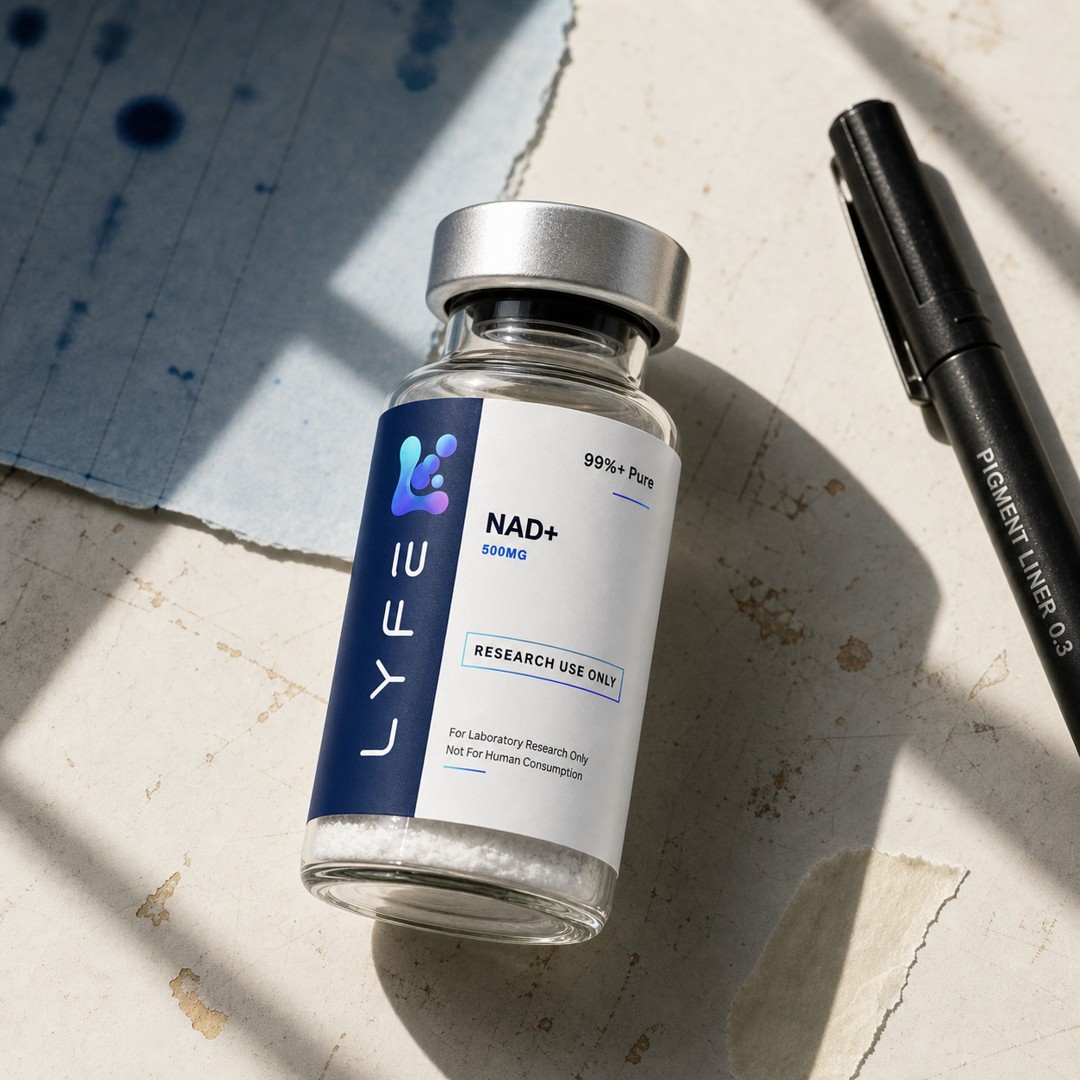
NAD+ 1000mg: When the Bulk Format Makes Sense

NAD+ has become a staple of metabolic and longevity research, and one of the recurring practical questions is format: is the larger 1000mg vial worth it, or does it just tie up budget? This guide breaks down the logic behind choosing the high-milligram format so you can allocate a research budget without over- or under-buying.
Why NAD+ format matters more than most peptides
NAD+ (nicotinamide adenine dinucleotide) is a central coenzyme in cellular energy metabolism and a substrate for enzymes such as the sirtuins and PARPs. Because it is studied across a wide range of assays, and because working preparations are often used at higher masses than typical signalling peptides, the total quantity in a vial has a real effect on how many experiments a single purchase supports. That makes the 500mg-versus-1000mg decision a genuine budgeting question rather than a rounding error.
The cost-per-mg argument
The single strongest reason to consider a 1000mg format is unit economics. Larger vials almost always lower the cost per milligram, because a meaningful share of any peptide’s price is fixed overhead: synthesis setup, purification, analytical testing, quality documentation, cold-chain handling, and packaging. Those costs do not double when the quantity doubles, so spreading them over more milligrams pulls the per-mg price down.
- Fixed costs are diluted. Testing and documentation cost roughly the same per lot regardless of vial size.
- Fewer orders, less shipping. One larger order means one shipping fee instead of several.
- Consistency across a study. Sourcing from a single lot removes lot-to-lot variation between experiments.
When 1000mg is the right call
The bulk format tends to make sense when:
- You are running a sustained project rather than a one-off pilot, and know you will consume the material.
- Your protocol uses higher working quantities, which NAD+ studies often do compared with microgram-scale signalling peptides.
- Lot consistency matters, for example when comparing conditions that must share the same source material.
- You want to minimise the administrative overhead of repeat ordering.
When to stay with a smaller format
Bigger is not always better. A smaller vial is the wiser buy when:
- You are validating a new assay and are not yet sure of throughput.
- Storage stability over a long consumption window is a concern for your workflow.
- Budget cycles favour smaller, more frequent purchases.
- You are early in a project and want flexibility before committing.
Total cost, not sticker price
The most useful habit is to compare cost per milligram and expected consumption, not the headline price of the vial. A 1000mg format with a higher ticket price can be cheaper per experiment than repeated smaller orders once shipping and per-lot testing are included. Free-shipping thresholds tip that math further: at LYFE Science, orders over $150 ship free, so consolidating into a larger order can remove the shipping line entirely.
Ordering in Canada
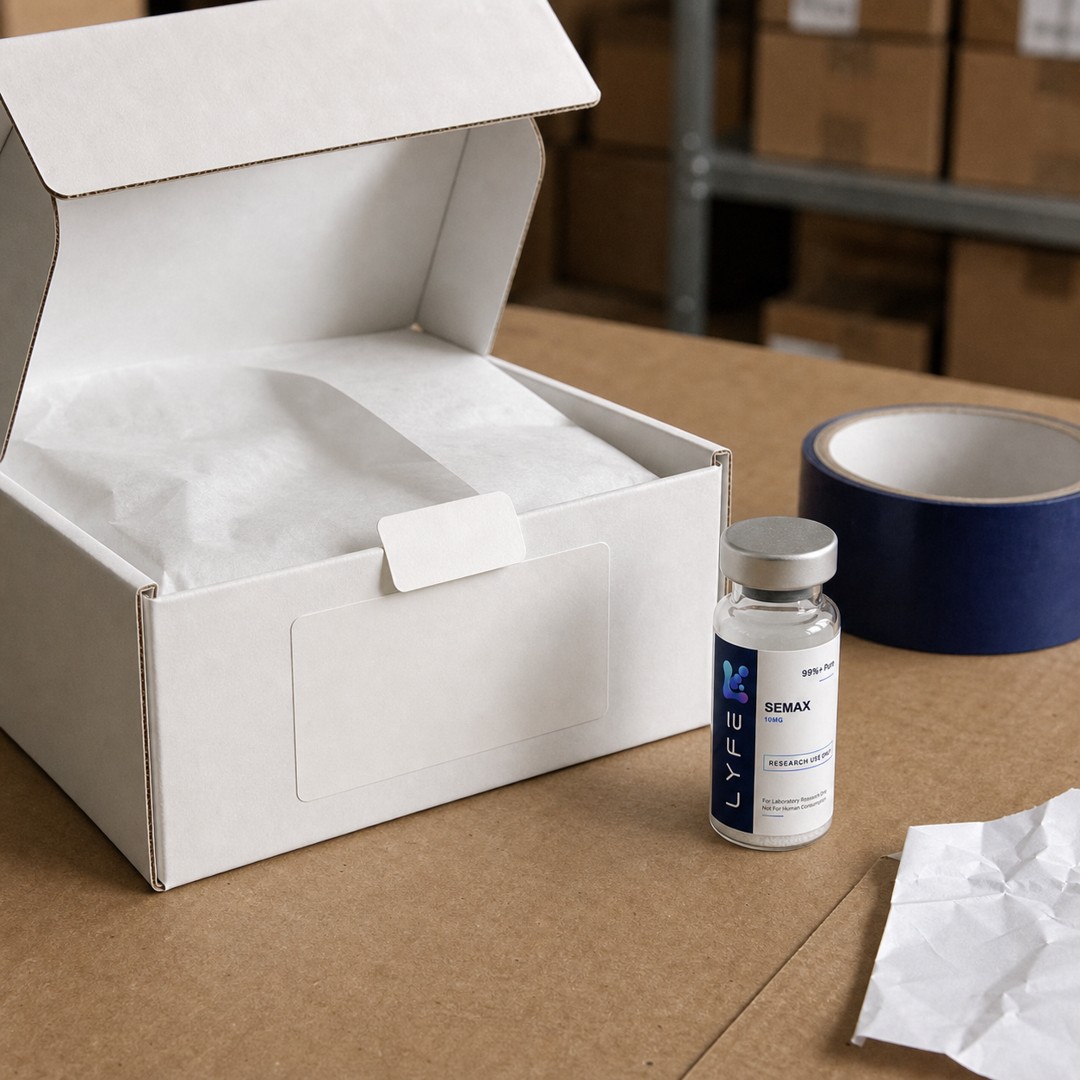
LYFE Science is a Canadian supplier shipping Canada-wide by Canada Post, with flat $25 shipping and free shipping over $150. Orders paid before noon ET dispatch the same day, and most of Canada receives delivery in one to three business days in neutral packaging. Payment is by Interac e-Transfer or crypto (BTC, ETH, SOL, USDC, USDT), and purity across the catalogue is verified by HPLC and mass spectrometry with a COA available per lot. For handling and terminology basics, see our peptide guide, and browse current stock in the shop.
Follow along
Research, lab-side
@lyfe_science →