Blog
KPV vs BPC-157: Gut Research Compared

KPV and BPC-157 are two peptides that show up constantly in gastrointestinal research, and they are easy to confuse because both are studied in models of gut inflammation and tissue integrity. They are, however, very different molecules with different origins and different research angles. This comparison lays out where they overlap and where they diverge.
Quick comparison
| Feature | KPV | BPC-157 |
|---|---|---|
| Size | Tripeptide (3 amino acids) | Pentadecapeptide (15 amino acids) |
| Origin | C-terminal fragment of alpha-MSH (melanocortin family) | Derived from a sequence found in a gastric protein |
| Primary research framing | Inflammatory-tone modulation | Tissue repair and angiogenic signalling |
| Signalling of interest | NF-kB downregulation, melanocortin pathway | Growth-factor and vascular signalling pathways |
| Notable gut feature | Uptake via the PepT1 intestinal transporter | Studied broadly across gut and connective tissue models |
Different origins
KPV is a three-amino-acid fragment (lysine-proline-valine) taken from the tail of alpha-melanocyte-stimulating hormone. Its research identity is rooted in the melanocortin system, which is associated with dampening inflammation. BPC-157 is a much larger 15-amino-acid peptide whose sequence is linked to a protein found in gastric juice. Its research identity is rooted in tissue-repair and vascular signalling. The two peptides arrive at the gut from completely different biological starting points.
Different mechanisms of interest
In laboratory models, KPV is most often studied for its association with reduced NF-kB activity and lower pro-inflammatory cytokine signalling. The story is largely about turning down inflammatory tone. BPC-157, by contrast, is usually framed around repair: researchers examine its relationship to angiogenesis (new blood-vessel formation) and growth-factor pathways involved in tissue remodelling. One is studied as an anti-inflammatory probe; the other as a repair-signalling probe. In gut models those goals can look similar from the outside, which is why the two are so often mentioned together.
Where the gut angle overlaps
Both peptides are attractive for intestinal work because the gut is accessible and inflammation is central to its pathology. KPV has a specific advantage in that intestinal cells can take it up through the PepT1 transporter, a natural route for small peptides, which makes oral and localised delivery models tractable. BPC-157 is studied across a wider range of tissues, so gut research is one branch of a broader repair-focused literature.
Handling and documentation
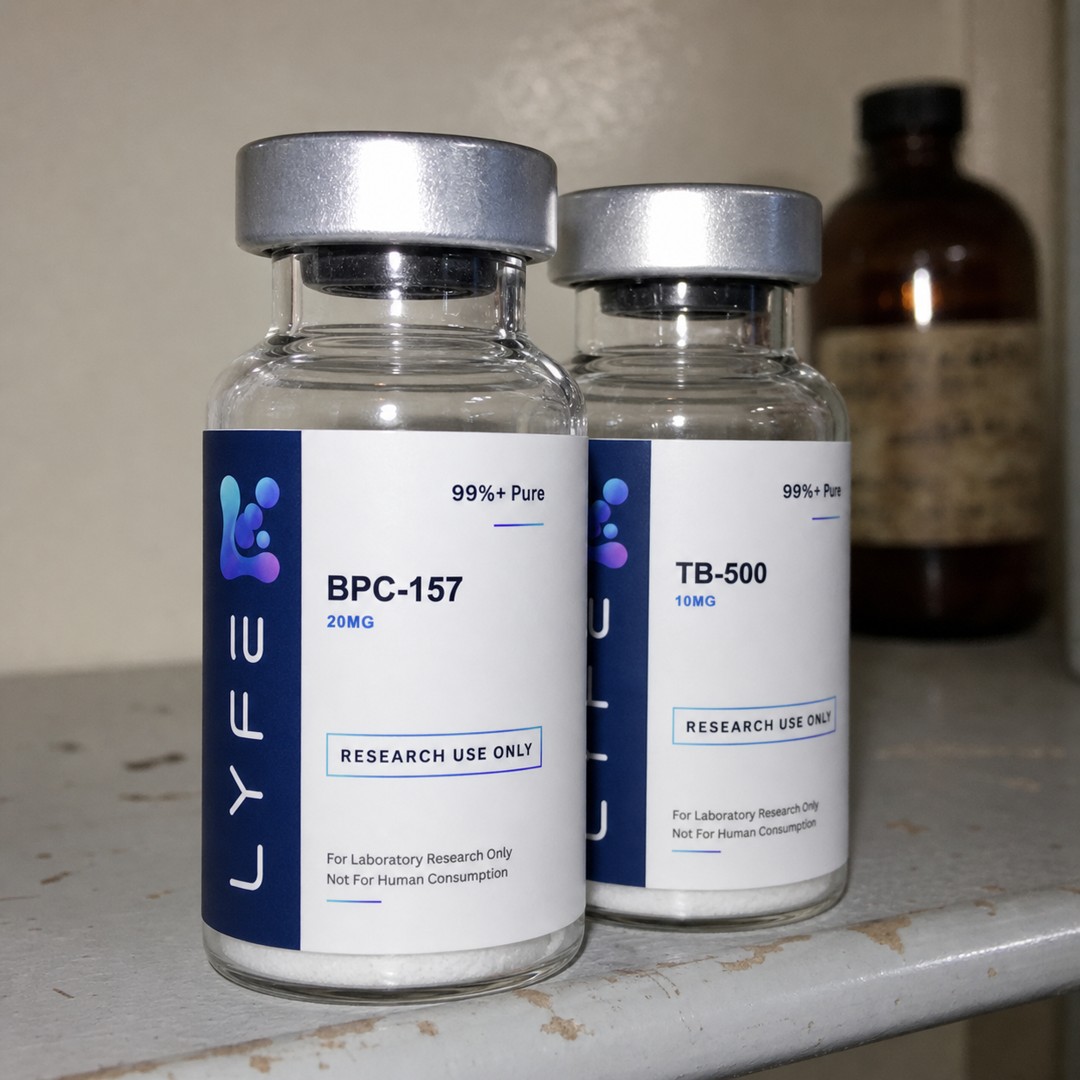
Both peptides ship as lyophilised powders and should be stored sealed, cool, dry, and away from light. The smaller KPV is chemically simple; the larger BPC-157 has more structure to characterise. In both cases a lot-specific certificate of analysis (COA), backed by HPLC and mass spectrometry, is what tells you the identity and purity of the exact material you are working with.
Which to choose for a study
The choice follows the question. If a model is built around inflammatory signalling and NF-kB readouts, KPV is the natural fit. If it is built around tissue repair, vascular response, or broader connective-tissue behaviour, BPC-157 is the more common tool. Many labs characterise both to compare the two framings side by side.
Sourcing in Canada
Whichever peptide a project calls for, consistent, well-documented material is what makes results comparable. LYFE Science is a Canadian supplier shipping nationwide by Canada Post: flat $25, free over $150, neutral packaging, same-day dispatch before noon ET, and 1 to 3 business days to most of Canada. Payment is by Interac e-Transfer or crypto (BTC, ETH, SOL, USDC, USDT), and every lot is verified by HPLC and mass spectrometry with a COA available.
KPV and BPC-157 are not yet stocked in the LYFE catalogue, but the research-peptide range is growing. The peptide guide covers COA reading, and you can contact us about availability.
Follow along
Research, lab-side
@lyfe_science →