Blog
GLOW Blend Explained: Three-Peptide Breakdown

The GLOW blend is one of the most searched multi-peptide formulations in the research space, and yet it is often described in vague terms. This breakdown explains exactly what GLOW is, which three peptides it combines, and why researchers group these particular compounds together. If you understand each component on its own, the logic of the blend becomes clear.
What is the GLOW blend?
GLOW is not a single molecule. It is a named combination of three well-characterised research peptides packaged together: GHK-Cu, TB-500 and BPC-157. The name is a shorthand used across the peptide community rather than a formal chemical designation. Each of the three compounds is studied in its own right, and the interest in the blend comes from combining peptides whose research themes overlap, particularly around tissue and connective-tissue models.
The three components
GHK-Cu (copper peptide)
GHK-Cu is a copper-binding tripeptide, glycyl-L-histidyl-L-lysine bound to a copper ion. It occurs naturally in human plasma and is one of the most studied peptides in the matrix and extracellular-remodelling literature. Research interest centres on its interaction with collagen and skin-matrix pathways, which is why it is a common starting point in cosmetic and dermatological peptide research. Of the three, GHK-Cu is the one most associated with skin and appearance-related studies.
TB-500 (thymosin beta-4 fragment)
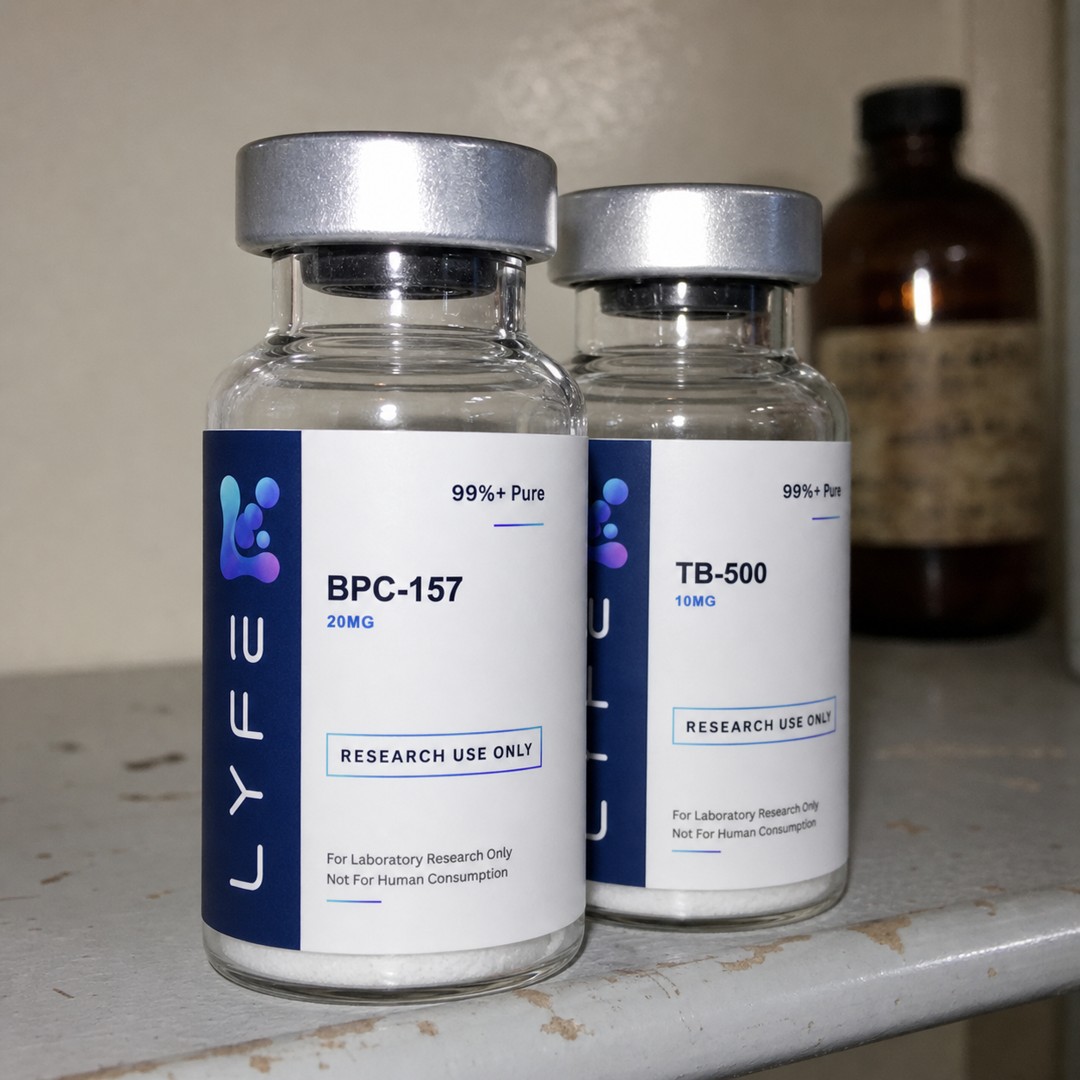
TB-500 is a synthetic peptide related to thymosin beta-4, a naturally occurring protein involved in actin regulation and cell migration. In research models it is examined for its role in cytoskeletal dynamics and tissue models. It is the component most tied to the mobility and structural side of the blend’s research profile.
BPC-157 (body protection compound)
BPC-157 is a stable synthetic peptide derived from a sequence found in gastric juice. It is one of the most widely referenced peptides in gut and connective-tissue research literature. Within a blend, it is the component most associated with the digestive and protective research themes.
Why combine these three?
The rationale behind GLOW is that each peptide addresses a different research pathway while sharing a broad connective-tissue theme. GHK-Cu leans toward matrix and skin research, TB-500 toward cytoskeletal and structural work, and BPC-157 toward gut and protective models. Grouping them lets a lab study the compounds in parallel rather than sourcing and preparing each separately. It is worth being precise here: combining peptides does not create a new mechanism, it simply presents three tools together.
GLOW at a glance
| Component | Type | Primary research theme |
|---|---|---|
| GHK-Cu | Copper tripeptide | Matrix, collagen, skin models |
| TB-500 | Thymosin beta-4 fragment | Cytoskeletal, cell migration |
| BPC-157 | Gastric-derived peptide | Gut, connective tissue |
Blend or individual compounds?
Many researchers prefer to work with the three peptides individually rather than as a fixed blend. Sourcing each compound separately gives full control over how each is prepared and studied, and it lets you adjust which peptides you include. Two of the three GLOW components, GHK-Cu and TB-500, are available individually in the LYFE catalogue, so you can build a comparable research set without committing to a pre-mixed formulation. If you are new to peptide terminology, our peptide guide explains terms like fragment, reconstitution and tripeptide in plain language.
Sourcing GLOW-blend peptides in Canada
LYFE Science is a Canadian supplier shipping nationwide by Canada Post, with flat $25 shipping and free delivery on orders over $150. Orders paid before noon ET dispatch the same day and reach most of Canada in 1-3 business days, in neutral packaging. Every lot is checked by HPLC and mass spectrometry, with a COA available on request. We accept Interac e-Transfer and crypto (BTC, ETH, SOL, USDC, USDT).
You can source the individual GLOW components, GHK-Cu and TB-500, from our catalogue today. Browse the full range and check availability below.
Follow along
Research, lab-side
@lyfe_science →