Blog
GHK-Cu: The Anti-Aging Copper Peptide Explained

GHK-Cu is one of the most studied peptides in skin and connective-tissue research, and it is often described as the “anti-aging copper peptide.” This profile explains what it actually is, why the copper matters, and which research areas have made it so widely referenced.
What GHK-Cu is
GHK-Cu is a copper-binding tripeptide: three amino acids (glycine, histidine, and lysine) bound to a single copper ion. The “GHK” is the peptide sequence; the “Cu” is the copper it carries. It occurs naturally in human plasma, and the copper complex is the form most research works with because binding the metal changes how the molecule behaves.
Why it is linked to aging
The reason GHK gets the “anti-aging” label is partly biographical. Levels of GHK in human plasma are relatively high in early adulthood and decline substantially with age. That observed decline is what first prompted researchers to ask whether restoring the peptide could influence tissue-repair processes that also slow down over time. It is an association drawn from the research literature, not a promise, but it is why the compound is framed the way it is.
The research areas GHK-Cu is known for
GHK-Cu appears across several strands of study. The most frequently cited include:
- Extracellular matrix and collagen. A large share of the literature examines GHK-Cu in the context of collagen, elastin, and the broader matrix that gives skin and connective tissue its structure.
- Skin remodelling and repair. Studies have looked at the peptide’s role in tissue-repair signalling and the turnover of matrix components.
- Antioxidant and copper delivery. Because the molecule carries copper, part of the research interest is in how it shuttles the metal, which is itself a cofactor in several enzymatic and antioxidant pathways.
- Gene expression. Broad transcriptomic work has reported that GHK influences the expression of a wide range of genes, which is one reason it draws attention beyond skin alone.
Copper is not incidental
It would be easy to read “copper peptide” as a marketing flourish. It is not. The copper ion is central to how the molecule is thought to work; the peptide portion binds and stabilises copper, and much of the research interest is specifically in the complex rather than the bare peptide. When you buy GHK-Cu, you are buying the copper-bound form for exactly that reason.
How to read GHK-Cu claims
Because GHK-Cu is so widely written about, it attracts a lot of loose language. It helps to keep a clear line between two kinds of statements. The first is research context: “GHK-Cu is studied in collagen and matrix biology.” That is a description of what the literature investigates, and it is accurate. The second is a personal-outcome claim: “GHK-Cu will do X for you.” That is a different kind of statement entirely, and the honest version of any GHK-Cu discussion stays on the first side of that line. When you evaluate a source, notice which one it is offering.
The same discipline applies to numbers. Purity and identity should come from a lab method tied to a specific lot, not from a round figure printed on a banner. If a supplier states a purity percentage, ask what test produced it and whether the COA for your lot is available.
What quality looks like
Because GHK-Cu is a copper complex, both identity and purity matter. Identity confirms the copper-bound tripeptide is present; purity confirms how much of the vial is the target compound. At LYFE Science, each lot is checked by HPLC and mass spectrometry, and a COA is available per lot so the numbers behind the label are documented rather than assumed.
Buying GHK-Cu in Canada
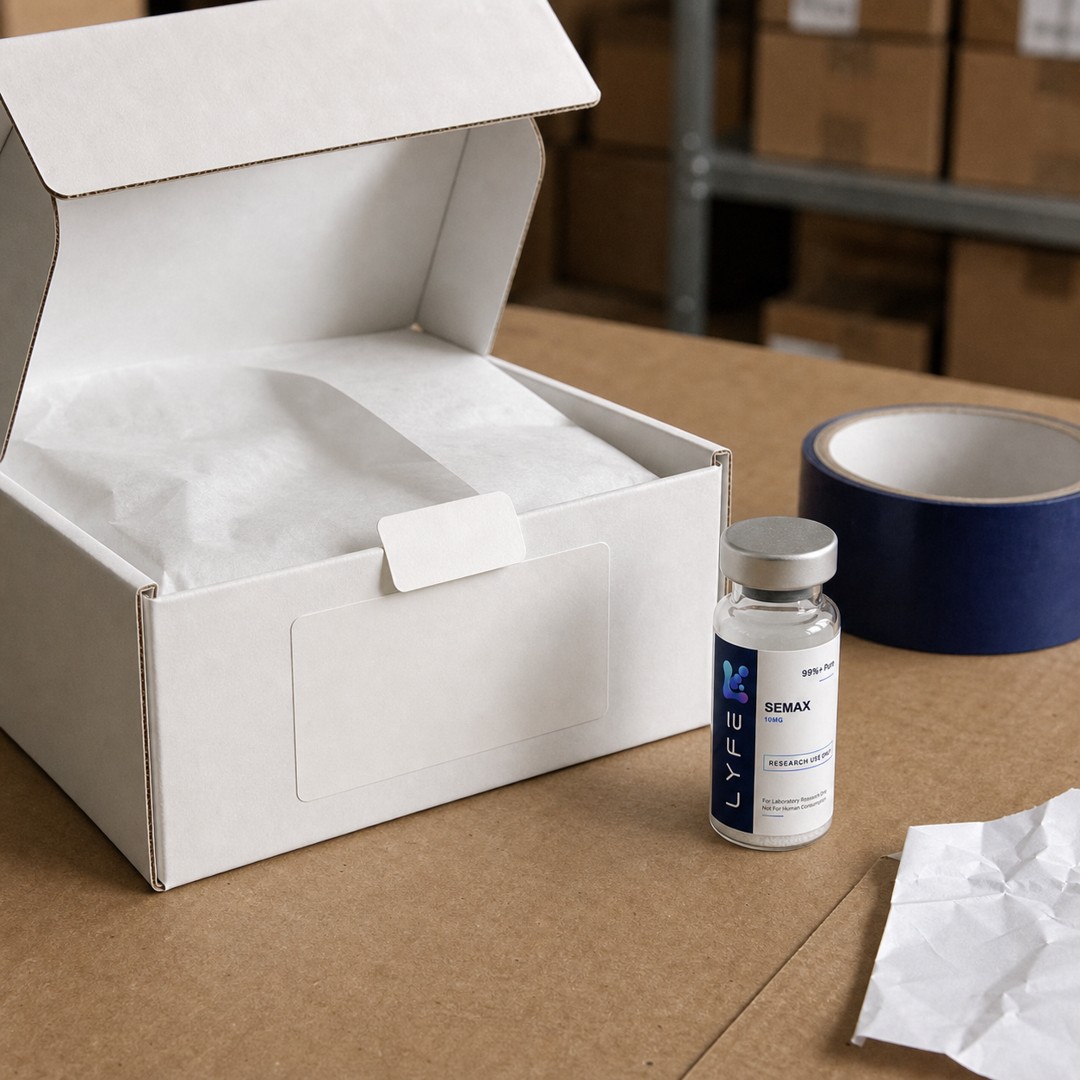
We ship GHK-Cu Canada-wide by Canada Post: a flat $25, free over $150, in neutral unbranded packaging, with same-day dispatch when you pay before noon ET. Payment is by Interac e-Transfer or crypto (BTC, ETH, SOL, USDC, USDT). For background on peptide handling and storage, the peptide guide is a good companion read.
If GHK-Cu is on your research list, it is in stock now.
Follow along
Research, lab-side
@lyfe_science →