Blog
Peptide Reclassification 2026: What Buyers Need

Talk of peptide reclassification tends to spread quickly, and 2026 has kept the topic front of mind. If you are buying research peptides in Canada, it pays to understand what reclassification means, how the regulatory landscape is shifting, and what stays constant no matter how the categories are drawn.
What reclassification means
Reclassification is the process of moving a substance from one regulatory category to another, which changes the rules that apply to it. For peptides this usually revolves around how a compound is treated: as a small-molecule drug, as a biologic, or as a substance eligible or ineligible for compounding. Where a peptide lands determines who can make it, how it must be characterised, and through what channels it can be supplied.
Peptides are an awkward fit for tidy categories. They are larger and more complex than typical small-molecule drugs, but often smaller and simpler than classic biologics. Regulators have been refining where the lines sit, and that refinement is what drives reclassification discussion.
Why the lines are moving
Several forces are pushing regulators to revisit peptide classification:
- Rapid growth. Interest in peptides has expanded across research and clinical settings, raising the stakes for clear rules.
- Quality and safety. Regulators want assurance around characterisation, purity and immunogenicity, which varies widely across compounds.
- Definitional edges. Advances in peptide chemistry have blurred the boundary between a peptide drug and a biologic, prompting review of thresholds such as amino-acid count.
Which compounds tend to be affected
Reclassification conversations most often touch compounds that are widely used and commercially significant, and those whose category is genuinely ambiguous. Larger or more complex sequences are more likely to be pulled toward biologic-style oversight, while simpler defined sequences may stay in the small-molecule frame. Because regulators generally proceed compound by compound, a change to one peptide does not automatically apply to another.
The Canada versus US distinction
A lot of the loudest regulatory news comes from the US FDA, but Canadian rules are set by Health Canada, which maintains its own framework and timelines. US developments are informative and can foreshadow wider trends, yet they do not directly change Canadian classification. Canadian researchers should track both, while keeping the jurisdictions clearly separated in their thinking.
What stays true regardless of category
Whatever the regulatory label, the fundamentals of good sourcing do not change:
- Verification. A compound should be confirmed by HPLC and mass spectrometry, with a certificate of analysis per lot establishing identity and purity.
- Documentation. Lot numbers and COAs keep your work traceable and defensible.
- Reputable supply. A transparent supplier who publishes analytical data is the safest choice in any regulatory climate.
Sourcing with confidence in Canada
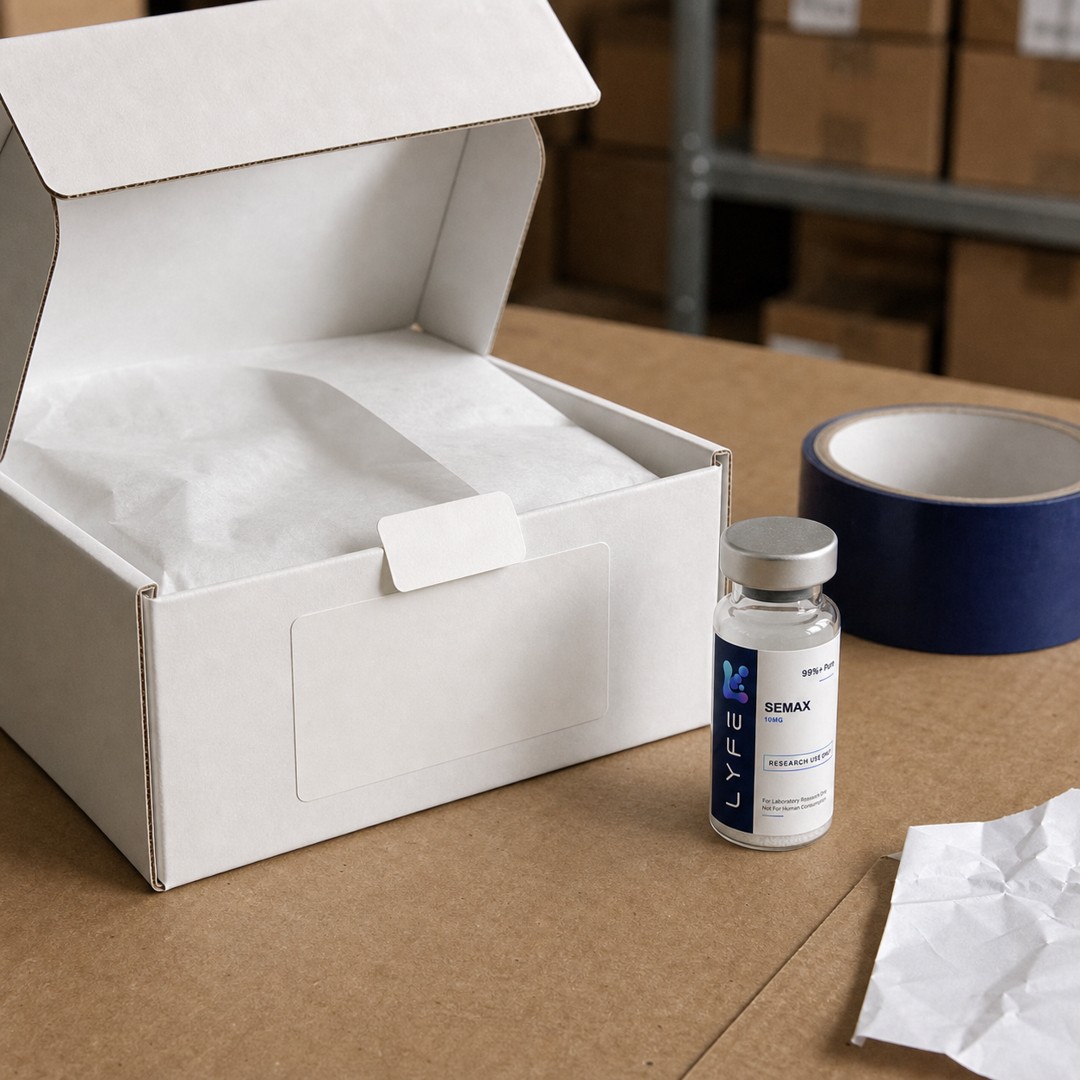
LYFE Science is a Canadian supplier shipping nationwide by Canada Post. Every lot is checked by HPLC and mass spectrometry with a COA available per lot, and orders arrive in neutral packaging. Shipping is a flat $25 and free over $150, with same-day dispatch when paid before noon Eastern and typical delivery of one to three business days for most of Canada. Payment is by Interac e-Transfer or crypto (BTC, ETH, SOL, USDC, USDT).
Regulatory categories will keep evolving as the science matures. The way to stay steady through it is simple: buy well-characterised material from a supplier who documents everything, and keep your own records tight.
Buy research peptides in Canada or start with the peptide guide for verification basics.
Follow along
Research, lab-side
@lyfe_science →