Blog
BPC-157 vs GHK-Cu: How the Two Compare

BPC-157 and GHK-Cu come up together often because both are studied in the broad area of tissue and repair research, yet they are very different molecules with different histories. This comparison lays out what each one is, where they overlap, and where they clearly part ways.
What each peptide is
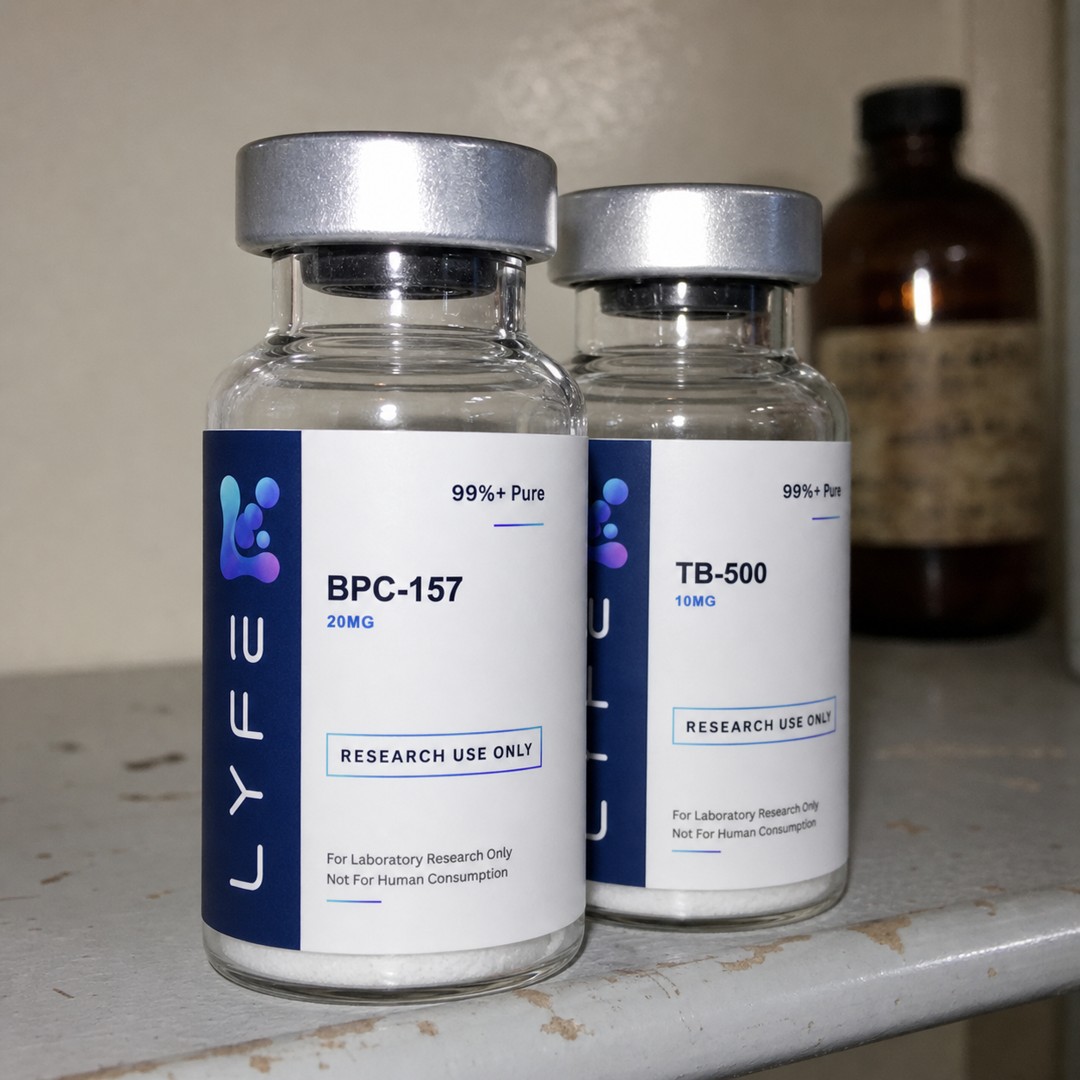
BPC-157 is a synthetic peptide derived from a sequence first identified in gastric juice. It is a chain of amino acids studied largely for its interest in connective-tissue and gastrointestinal research models.
GHK-Cu is a copper-binding tripeptide, meaning it is a very short three-amino-acid chain that carries a copper ion. It occurs naturally in human plasma and its concentration is known to fall with age. GHK-Cu is one of the most extensively studied peptides in skin, matrix and regeneration research, and it is a mainstay of the cosmetic and laboratory literature.
Structure at a glance
| Feature | BPC-157 | GHK-Cu |
|---|---|---|
| Type | Synthetic peptide | Copper-binding tripeptide |
| Length | Larger amino-acid chain | Three amino acids |
| Copper | No | Yes, carries a copper ion |
| Naturally present in the body | Derived from a natural sequence | Yes, found in plasma |
| Common research focus | Connective tissue, GI models | Skin, matrix, regeneration |
Where they overlap
Both peptides attract attention in repair and regeneration research, which is why they are frequently mentioned side by side. Both are small enough to be practical to work with in the lab, and both are typically supplied as a lyophilised powder that is kept cold and dark to preserve integrity.
Where they differ
The clearest difference is the copper. GHK-Cu is defined by its copper ion and much of its research interest centres on that copper-peptide chemistry, particularly in skin and extracellular-matrix contexts. BPC-157 has no metal component and its literature leans toward connective tissue and the gastrointestinal tract.
They also differ in pedigree. GHK-Cu is a naturally occurring human molecule with a long and well-documented research record, especially in dermatological and cosmetic science. BPC-157 is a synthetic sequence with a narrower, more specialised body of study.
Which one fits a given project
The choice usually comes down to the research question. Work oriented around skin, the extracellular matrix or copper-peptide chemistry points naturally to GHK-Cu. Work oriented around connective tissue or gastrointestinal models is where BPC-157 tends to appear. They are not interchangeable, and each has earned its place in a different corner of the literature.
Buying GHK-Cu in Canada
Of the two, GHK-Cu is the one LYFE Science stocks. LYFE Science is a Canadian supplier and ships coast to coast with Canada Post. Flat $25 shipping, free over $150, in neutral packaging. Orders paid before noon ET ship the same day, and most of Canada sees delivery in 1 to 3 business days. Payment is by Interac e-Transfer or crypto (BTC, ETH, SOL, USDC, USDT). Every lot is checked by HPLC and mass spectrometry, and a certificate of analysis (COA) is available for the lot you receive.
GHK-Cu sits in our Matrix & Copper Research category, where you can see the sizes we carry. If BPC-157 is what your project calls for, keep an eye on the shop as we continue to expand the catalogue.
Common questions
Are BPC-157 and GHK-Cu the same kind of peptide?
No. GHK-Cu is a copper-binding tripeptide that occurs naturally in the body, while BPC-157 is a larger synthetic peptide with no metal component. They belong to different families and are studied in different contexts.
Can they be used for the same research?
They overlap in the broad theme of repair and regeneration, but the specifics differ. GHK-Cu leans toward skin and extracellular-matrix work; BPC-157 leans toward connective-tissue and gastrointestinal models. The right choice depends entirely on the research question.
How should each be stored?
Both ship as a lyophilised powder and follow the same rules: keep them cold, dark and dry, protect them from heat and light, and keep freeze-thaw cycles to a minimum once in solution. Dry powder is the most stable form for either peptide.
Follow along
Research, lab-side
@lyfe_science →