Blog
Anti-Inflammatory Peptides: Research Compared

Inflammation sits underneath a huge range of biological questions, which is why several peptides are studied for how they interact with inflammatory signalling. They do not all work the same way, and lumping them together hides what makes each one useful as a research tool. This guide compares the main anti-inflammatory research peptides, explains their distinct mechanisms, and covers how to source them in Canada.
Why peptides are studied for inflammation
Inflammation is a coordinated cellular response, not a single event. It involves signalling molecules, immune cells, and tissue-level changes. Peptides enter this field because several of them appear, in laboratory models, to touch specific nodes in that network. The value of comparing them is that each targets a different part of the process.
The main compounds
KPV
KPV is a short tripeptide fragment derived from the larger alpha-MSH molecule. It is studied for its interaction with inflammatory signalling at the cellular level, and much of the research interest centres on gut and tissue models. Its small size makes it a clean tool for probing specific pathways.
BPC-157
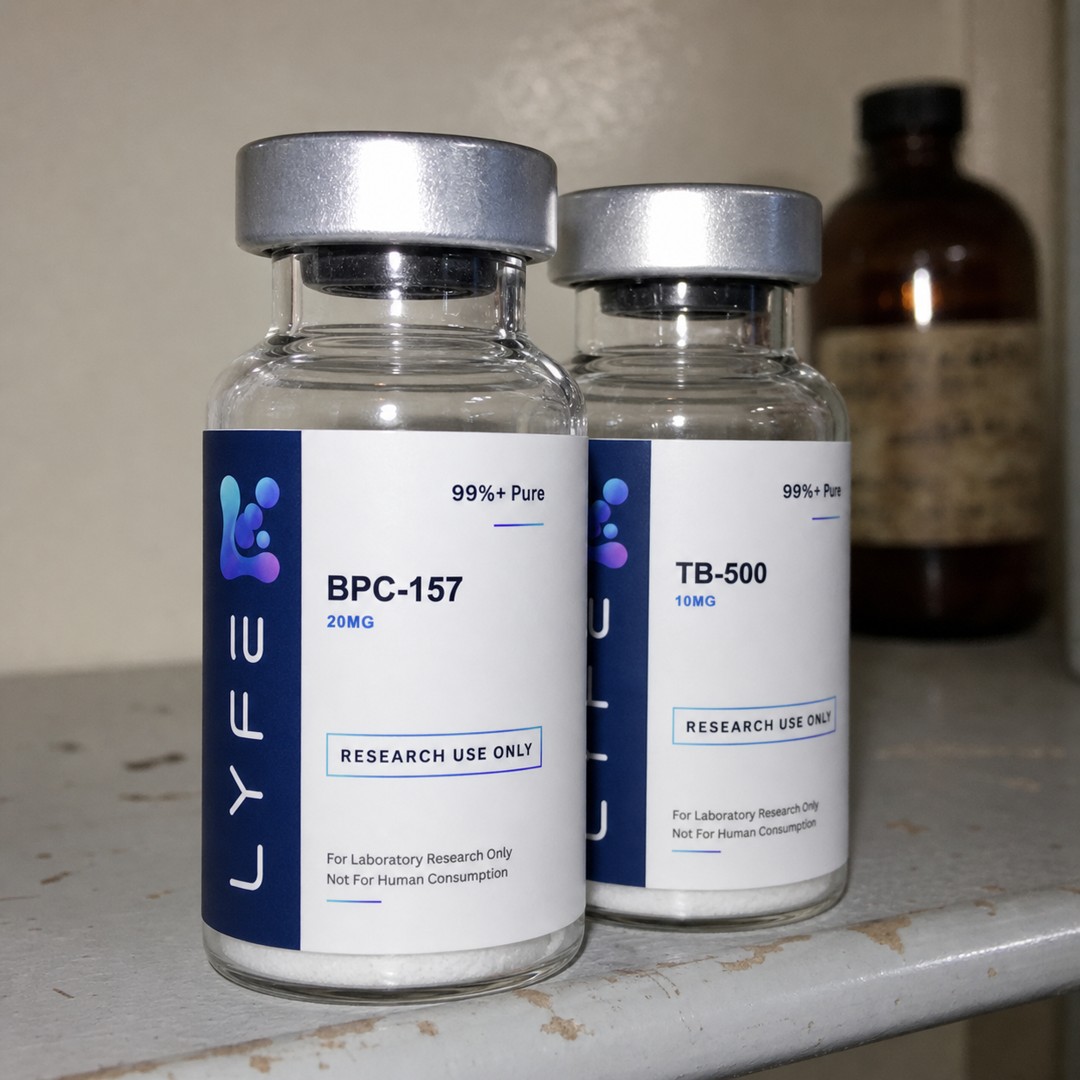
BPC-157 is a peptide derived from a protein found in gastric juice. In animal models it has been studied for effects on the gut and on connective tissue, and its research profile often connects repair with the modulation of inflammatory responses. It is one of the most frequently referenced repair peptides in the literature.
GHK-Cu
The copper tripeptide GHK-Cu is best known for matrix and skin research, but it is also studied in the context of tissue remodelling, where inflammatory and repair signalling overlap. Its role in extracellular matrix biology makes it a relevant comparison point in any anti-inflammatory survey.
TB-500
TB-500, a fragment related to thymosin beta-4, is studied for cytoskeletal dynamics, cell migration, and tissue repair. Because inflammation and repair are tightly linked biological processes, TB-500 features prominently in research that looks at how tissue resolves damage. It is a strong reference compound when comparing repair-oriented peptides.
Side by side
| Peptide | Origin | Primary research focus |
|---|---|---|
| KPV | Alpha-MSH fragment | Cellular inflammatory signalling |
| BPC-157 | Gastric juice protein | Gut and connective tissue |
| GHK-Cu | Natural copper tripeptide | Matrix and tissue remodelling |
| TB-500 | Thymosin beta-4 fragment | Cytoskeletal dynamics, repair |
How to choose for your research
The right compound depends on the question. If your model centres on cellular signalling, a compact fragment like KPV may fit. If it centres on tissue repair and how inflammation resolves, repair peptides such as TB-500 are more directly relevant. Matrix-focused work leans toward GHK-Cu. The point of comparison is not to crown a winner, it is to match the tool to the pathway.
Sourcing anti-inflammatory peptides in Canada
Across all of these compounds, verification is what separates usable research material from guesswork. Identity and purity should be confirmed analytically. LYFE Science tests research peptides by HPLC and mass spectrometry, and a certificate of analysis is available per lot so your documentation matches your material.
LYFE Science is a Canadian supplier shipping Canada-wide by Canada Post, flat $25 shipping and free over $150. Orders paid before noon Eastern dispatch the same day, and most of Canada receives delivery in one to three business days. Packaging is neutral, and payment is by Interac e-Transfer or crypto, including BTC, ETH, SOL, USDC, and USDT.
Key takeaways
- Anti-inflammatory peptides target different nodes of the inflammatory network
- KPV, BPC-157, GHK-Cu, and TB-500 each occupy a distinct research niche
- Repair and inflammation overlap, which is why TB-500 features so widely
- Analytical verification and per-lot COAs should guide any purchase
For repair-focused inflammation research, TB-500 is a well-documented starting point. Explore the cytoskeletal research range and browse the full LYFE Science catalogue.
Follow along
Research, lab-side
@lyfe_science →