Blog
Anti-Aging Peptides: A Complete Research Guide

Aging research is one of the busiest corners of peptide science, and it is easy to see why. A handful of peptides target the biology of skin, collagen, cellular energy, and repair, which are exactly the systems that change most visibly over time. This guide gives a grounded overview of the peptides most often studied in anti-aging research, what each one does at the mechanism level, and how to source them in Canada.
What anti-aging peptides actually target
The phrase covers a broad set of compounds, but most of them act on one of a few underlying systems: the extracellular matrix that gives tissue its structure, the growth hormone axis that declines with age, cellular energy pathways, and the machinery of tissue repair. Understanding which system a peptide touches is the fastest way to make sense of the category.
GHK-Cu, the flagship copper peptide
GHK-Cu is the compound most associated with anti-aging research. It is a naturally occurring tripeptide (glycyl-histidyl-lysine) that binds a copper ion. Levels of GHK in the body decline with age, which is part of what first drew researchers to it. In laboratory models it has been studied extensively for its effects on the extracellular matrix, including collagen and elastin, and on the signalling that governs skin and connective tissue remodelling.
Because so much of the anti-aging conversation centres on skin and matrix biology, GHK-Cu tends to be the starting point for research programs in this space. It is well characterised, widely studied, and the mechanism is unusually clear for a peptide.
Growth hormone secretagogues
The growth hormone axis winds down with age, and a family of peptides is studied for how it interacts with that system. The combination of a growth-hormone-releasing hormone analogue with a ghrelin-mimetic, studied in research as CJC-1295 with Ipamorelin, is a common reference point. These peptides are investigated for their influence on the pulsatile signalling of the axis rather than as blunt instruments.
Repair peptides
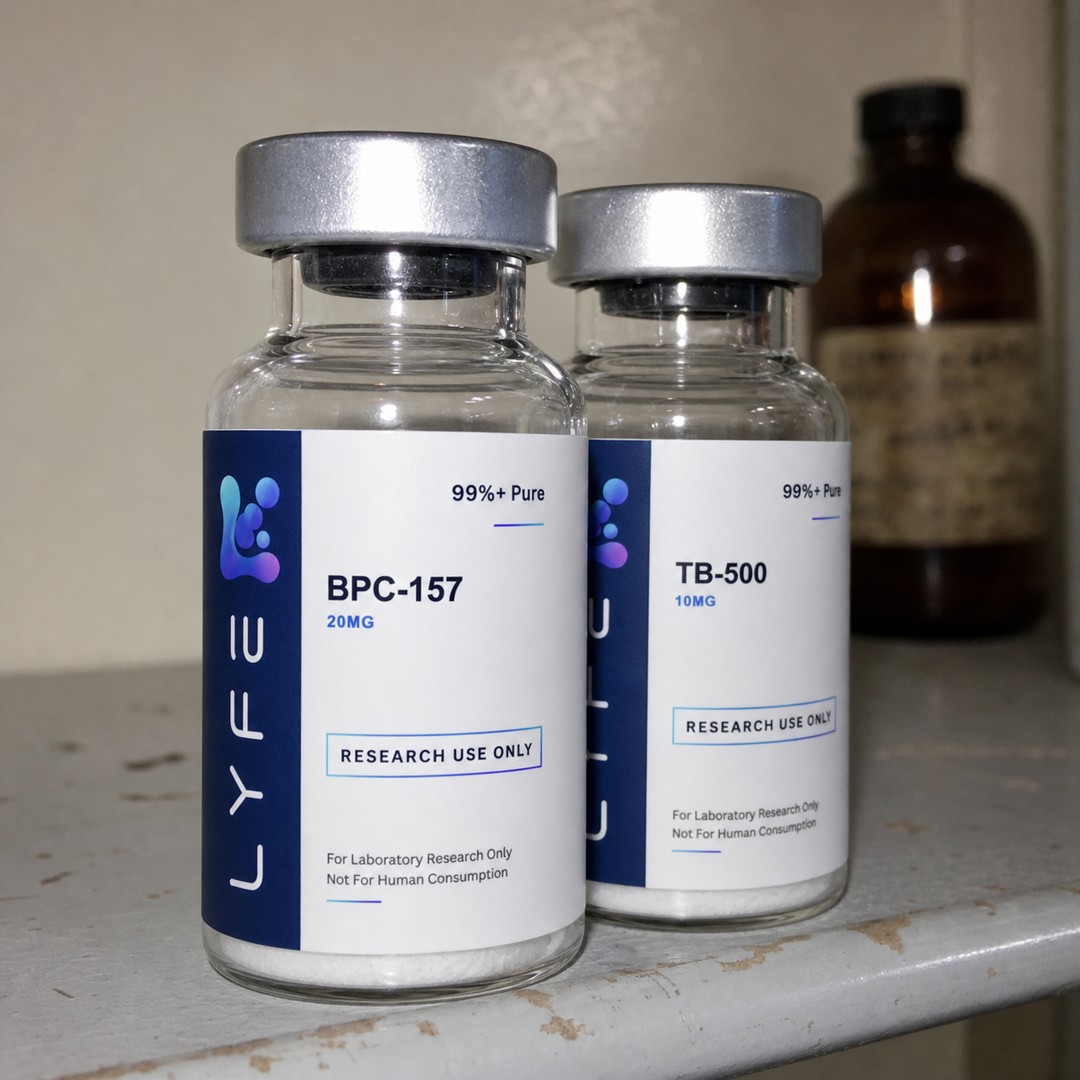
Tissue repair slows with age, so repair-oriented peptides feature heavily in the category. TB-500, a fragment related to thymosin beta-4, is studied for its role in cytoskeletal dynamics, cell migration, and tissue repair. It is frequently paired conceptually with matrix and copper research because the two touch complementary parts of tissue maintenance.
Metabolic peptides
Cellular energy is another axis of aging. Mitochondrial-derived peptides such as MOTS-c are studied in metabolic research for their role in energy regulation, which connects the anti-aging conversation to broader questions about how cells power themselves over a lifespan.
A quick map
| Peptide | Primary research area |
|---|---|
| GHK-Cu | Matrix, collagen, skin biology |
| CJC-1295 + Ipamorelin | Growth hormone axis signalling |
| TB-500 | Cytoskeletal dynamics, tissue repair |
| MOTS-c | Cellular energy and metabolism |
What to look for when buying
The science only holds up if the compound does. For any anti-aging peptide, identity and purity should be confirmed analytically rather than assumed from a label. LYFE Science verifies research peptides by HPLC and mass spectrometry, with a certificate of analysis available per lot so you can tie documentation to your specific material.
LYFE Science is a Canadian supplier and ships Canada-wide by Canada Post, flat $25 shipping and free over $150. Orders paid before noon Eastern dispatch the same day, and most of Canada receives delivery within one to three business days. Packaging is neutral. Payment is by Interac e-Transfer or crypto, including BTC, ETH, SOL, USDC, and USDT.
Getting started
If you are building an anti-aging research program, GHK-Cu is the natural first compound: well studied, mechanistically clear, and central to matrix biology. Read the peptide guide for background, then start your bench with a documented, purity-verified lot.
Follow along
Research, lab-side
@lyfe_science →